Mirella Dottori, Jessie Leung, Ann M. Turnley, Alice Pébay Ph.D.
{"title":"Lysophosphatidic Acid Inhibits Neuronal Differentiation of Neural Stem/Progenitor Cells Derived from Human Embryonic Stem Cells","authors":"Mirella Dottori, Jessie Leung, Ann M. Turnley, Alice Pébay Ph.D.","doi":"10.1634/stemcells.2007-1118","DOIUrl":null,"url":null,"abstract":"<p>Lysophospholipids are signaling molecules that play broad and major roles within the nervous system during both early development and neural injury. We used neural differentiation of human embryonic stem cells (hESC) as an in vitro model to examine the specific effects of lysophosphatidic acid (LPA) at various stages of neural development, from neural induction to mature neurons and glia. We report that LPA inhibits neurosphere formation and the differentiation of neural stem cells (NSC) toward neurons, without modifying NSC proliferation, apoptosis, or astrocytic differentiation. LPA acts through the activation of the Rho/ROCK and the phosphatidylinositol 3-kinase/Akt pathways to inhibit neuronal differentiation. This study is the first demonstration of a role for LPA signaling in neuronal differentiation of hESC. As LPA concentrations increase during inflammation, the inhibition of neuronal differentiation by LPA might contribute to the low level of neurogenesis observed following neurotrauma.</p><p>Disclosure of potential conflicts of interest is found at the end of this article.</p>","PeriodicalId":231,"journal":{"name":"STEM CELLS","volume":"26 5","pages":"1146-1154"},"PeriodicalIF":3.6000,"publicationDate":"2009-01-02","publicationTypes":"Journal Article","fieldsOfStudy":null,"isOpenAccess":false,"openAccessPdf":"https://sci-hub-pdf.com/10.1634/stemcells.2007-1118","citationCount":"68","resultStr":null,"platform":"Semanticscholar","paperid":null,"PeriodicalName":"STEM CELLS","FirstCategoryId":"3","ListUrlMain":"https://onlinelibrary.wiley.com/doi/10.1634/stemcells.2007-1118","RegionNum":2,"RegionCategory":"医学","ArticlePicture":[],"TitleCN":null,"AbstractTextCN":null,"PMCID":null,"EPubDate":"","PubModel":"","JCR":"Q2","JCRName":"BIOTECHNOLOGY & APPLIED MICROBIOLOGY","Score":null,"Total":0}
引用次数: 68
Abstract
Lysophospholipids are signaling molecules that play broad and major roles within the nervous system during both early development and neural injury. We used neural differentiation of human embryonic stem cells (hESC) as an in vitro model to examine the specific effects of lysophosphatidic acid (LPA) at various stages of neural development, from neural induction to mature neurons and glia. We report that LPA inhibits neurosphere formation and the differentiation of neural stem cells (NSC) toward neurons, without modifying NSC proliferation, apoptosis, or astrocytic differentiation. LPA acts through the activation of the Rho/ROCK and the phosphatidylinositol 3-kinase/Akt pathways to inhibit neuronal differentiation. This study is the first demonstration of a role for LPA signaling in neuronal differentiation of hESC. As LPA concentrations increase during inflammation, the inhibition of neuronal differentiation by LPA might contribute to the low level of neurogenesis observed following neurotrauma.
Disclosure of potential conflicts of interest is found at the end of this article.
期刊介绍:
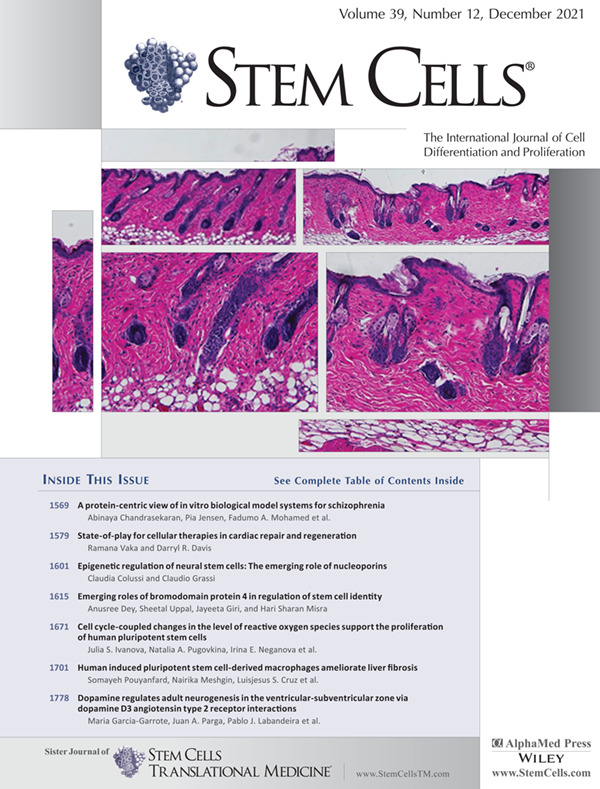
STEM CELLS, a peer reviewed journal published monthly, provides a forum for prompt publication of original investigative papers and concise reviews. STEM CELLS is read and written by clinical and basic scientists whose expertise encompasses the rapidly expanding fields of stem and progenitor cell biology.
STEM CELLS covers:
Cancer Stem Cells,
Embryonic Stem Cells/Induced Pluripotent Stem (iPS) Cells,
Regenerative Medicine,
Stem Cell Technology: Epigenetics, Genomics, Proteomics, and Metabonomics,
Tissue-Specific Stem Cells,
Translational and Clinical Research.



 京公网安备 11010802042870号
京ICP备2023020795号-1
京公网安备 11010802042870号
京ICP备2023020795号-1

 分享
分享
 求助内容:
求助内容: 应助结果提醒方式:
 扫码关注我们
