Wendell Adrian Lim, Razel Custodio, Monica Sunga, Abegail Jayne Amoranto, Raymond Francis Sarmiento
{"title":"General Characteristics and Design Taxonomy of Chatbots for COVID-19: Systematic Review.","authors":"Wendell Adrian Lim, Razel Custodio, Monica Sunga, Abegail Jayne Amoranto, Raymond Francis Sarmiento","doi":"10.2196/43112","DOIUrl":null,"url":null,"abstract":"<p><strong>Background: </strong>A conversational agent powered by artificial intelligence, commonly known as a chatbot, is one of the most recent innovations used to provide information and services during the COVID-19 pandemic. However, the multitude of conversational agents explicitly designed during the COVID-19 pandemic calls for characterization and analysis using rigorous technological frameworks and extensive systematic reviews.</p><p><strong>Objective: </strong>This study aims to describe the general characteristics of COVID-19 chatbots and examine their system designs using a modified adapted design taxonomy framework.</p><p><strong>Methods: </strong>We conducted a systematic review of the general characteristics and design taxonomy of COVID-19 chatbots, with 56 studies included in the final analysis. This review followed the PRISMA (Preferred Reporting Items for Systematic Reviews and Meta-Analyses) guidelines to select papers published between March 2020 and April 2022 from various databases and search engines.</p><p><strong>Results: </strong>Results showed that most studies on COVID-19 chatbot design and development worldwide are implemented in Asia and Europe. Most chatbots are also accessible on websites, internet messaging apps, and Android devices. The COVID-19 chatbots are further classified according to their temporal profiles, appearance, intelligence, interaction, and context for system design trends. From the temporal profile perspective, almost half of the COVID-19 chatbots interact with users for several weeks for >1 time and can remember information from previous user interactions. From the appearance perspective, most COVID-19 chatbots assume the expert role, are task oriented, and have no visual or avatar representation. From the intelligence perspective, almost half of the COVID-19 chatbots are artificially intelligent and can respond to textual inputs and a set of rules. In addition, more than half of these chatbots operate on a structured flow and do not portray any socioemotional behavior. Most chatbots can also process external data and broadcast resources. Regarding their interaction with users, most COVID-19 chatbots are adaptive, can communicate through text, can react to user input, are not gamified, and do not require additional human support. From the context perspective, all COVID-19 chatbots are goal oriented, although most fall under the health care application domain and are designed to provide information to the user.</p><p><strong>Conclusions: </strong>The conceptualization, development, implementation, and use of COVID-19 chatbots emerged to mitigate the effects of a global pandemic in societies worldwide. This study summarized the current system design trends of COVID-19 chatbots based on 5 design perspectives, which may help developers conveniently choose a future-proof chatbot archetype that will meet the needs of the public in the face of growing demand for a better pandemic response.</p>","PeriodicalId":37455,"journal":{"name":"Indian Journal of Transplantation","volume":"11 1","pages":"e43112"},"PeriodicalIF":0.2000,"publicationDate":"2024-01-05","publicationTypes":"Journal Article","fieldsOfStudy":null,"isOpenAccess":false,"openAccessPdf":"https://www.ncbi.nlm.nih.gov/pmc/articles/PMC10773556/pdf/","citationCount":"0","resultStr":null,"platform":"Semanticscholar","paperid":null,"PeriodicalName":"Indian Journal of Transplantation","FirstCategoryId":"1085","ListUrlMain":"https://doi.org/10.2196/43112","RegionNum":0,"RegionCategory":null,"ArticlePicture":[],"TitleCN":null,"AbstractTextCN":null,"PMCID":null,"EPubDate":"","PubModel":"","JCR":"Q4","JCRName":"TRANSPLANTATION","Score":null,"Total":0}
引用次数: 0
Abstract
Background: A conversational agent powered by artificial intelligence, commonly known as a chatbot, is one of the most recent innovations used to provide information and services during the COVID-19 pandemic. However, the multitude of conversational agents explicitly designed during the COVID-19 pandemic calls for characterization and analysis using rigorous technological frameworks and extensive systematic reviews.
Objective: This study aims to describe the general characteristics of COVID-19 chatbots and examine their system designs using a modified adapted design taxonomy framework.
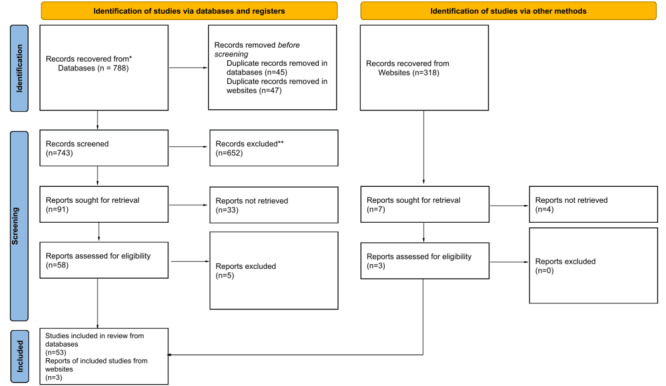
Methods: We conducted a systematic review of the general characteristics and design taxonomy of COVID-19 chatbots, with 56 studies included in the final analysis. This review followed the PRISMA (Preferred Reporting Items for Systematic Reviews and Meta-Analyses) guidelines to select papers published between March 2020 and April 2022 from various databases and search engines.
Results: Results showed that most studies on COVID-19 chatbot design and development worldwide are implemented in Asia and Europe. Most chatbots are also accessible on websites, internet messaging apps, and Android devices. The COVID-19 chatbots are further classified according to their temporal profiles, appearance, intelligence, interaction, and context for system design trends. From the temporal profile perspective, almost half of the COVID-19 chatbots interact with users for several weeks for >1 time and can remember information from previous user interactions. From the appearance perspective, most COVID-19 chatbots assume the expert role, are task oriented, and have no visual or avatar representation. From the intelligence perspective, almost half of the COVID-19 chatbots are artificially intelligent and can respond to textual inputs and a set of rules. In addition, more than half of these chatbots operate on a structured flow and do not portray any socioemotional behavior. Most chatbots can also process external data and broadcast resources. Regarding their interaction with users, most COVID-19 chatbots are adaptive, can communicate through text, can react to user input, are not gamified, and do not require additional human support. From the context perspective, all COVID-19 chatbots are goal oriented, although most fall under the health care application domain and are designed to provide information to the user.
Conclusions: The conceptualization, development, implementation, and use of COVID-19 chatbots emerged to mitigate the effects of a global pandemic in societies worldwide. This study summarized the current system design trends of COVID-19 chatbots based on 5 design perspectives, which may help developers conveniently choose a future-proof chatbot archetype that will meet the needs of the public in the face of growing demand for a better pandemic response.
期刊介绍:
Indian Journal of Transplantation, an official publication of Indian Society of Organ Transplantation (ISOT), is a peer-reviewed print + online quarterly national journal. The journal''s full text is available online at http://www.ijtonline.in. The journal allows free access (Open Access) to its contents and permits authors to self-archive final accepted version of the articles on any OAI-compliant institutional / subject-based repository. It has many articles which include original articIes, review articles, case reports etc and is very popular among the nephrologists, urologists and transplant surgeons alike. It has a very wide circulation among all the nephrologists, urologists, transplant surgeons and physicians iinvolved in kidney, heart, liver, lungs and pancreas transplantation.




 京公网安备 11010802042870号
京ICP备2023020795号-1
京公网安备 11010802042870号
京ICP备2023020795号-1

 分享
分享
 求助内容:
求助内容: 应助结果提醒方式:
 扫码关注我们
