Renin-Angiotensin Aldosterone System Inhibitors and COVID-19: A Systematic Review and Meta-Analysis Revealing Critical Bias Across a Body of Observational Research.
Jordan Loader, Frances C Taylor, Erik Lampa, Johan Sundström
{"title":"Renin-Angiotensin Aldosterone System Inhibitors and COVID-19: A Systematic Review and Meta-Analysis Revealing Critical Bias Across a Body of Observational Research.","authors":"Jordan Loader, Frances C Taylor, Erik Lampa, Johan Sundström","doi":"10.1161/JAHA.122.025289","DOIUrl":null,"url":null,"abstract":"<p><p>Background Renin-angiotensin aldosterone system (RAAS) inhibitor-COVID-19 studies, observational in design, appear to use biased methods that can distort the interaction between RAAS inhibitor use and COVID-19 risk. This study assessed the extent of bias in that research and reevaluated RAAS inhibitor-COVID-19 associations in studies without critical risk of bias. Methods and Results Searches were performed in MEDLINE, EMBASE, and CINAHL databases (December 1, 2019 to October 21, 2021) identifying studies that compared the risk of infection and/or severe COVID-19 outcomes between those using or not using RAAS inhibitors (ie, angiotensin-converting enzyme inhibitors or angiotensin II type-I receptor blockers). Weighted hazard ratios (HR) and 95% CIs were extracted and pooled in fixed-effects meta-analyses, only from studies without critical risk of bias that assessed severe COVID-19 outcomes. Of 169 relevant studies, 164 had critical risks of bias and were excluded. Ultimately, only two studies presented data relevant to the meta-analysis. In 1 351 633 people with uncomplicated hypertension using a RAAS inhibitor, calcium channel blocker, or thiazide diuretic in monotherapy, the risk of hospitalization (angiotensin-converting enzyme inhibitor: HR, 0.76; 95% CI, 0.66-0.87; <i>P</i><0.001; angiotensin II type-I receptor blockers: HR, 0.86; 95% CI, 0.77-0.97; <i>P</i>=0.015) and intubation or death (angiotensin-converting enzyme inhibitor: HR, 0.64; 95% CI, 0.48-0.85; <i>P</i>=0.002; angiotensin II type-I receptor blockers: HR, 0.74; 95% CI, 0.58-0.95; <i>P</i>=0.019) with COVID-19 was lower in those using a RAAS inhibitor. However, these protective effects are probably not clinically relevant. Conclusions This study reveals the critical risk of bias that exists across almost an entire body of COVID-19 research, raising an important question: Were research methods and/or peer-review processes temporarily weakened during the surge of COVID-19 research or is this lack of rigor a systemic problem that also exists outside pandemic-based research? Registration URL: www.crd.york.ac.uk/prospero/; Unique identifier: CRD42021237859.</p>","PeriodicalId":20731,"journal":{"name":"Protoplasma","volume":"254 1","pages":"e025289"},"PeriodicalIF":2.5000,"publicationDate":"2022-06-07","publicationTypes":"Journal Article","fieldsOfStudy":null,"isOpenAccess":false,"openAccessPdf":"https://www.ncbi.nlm.nih.gov/pmc/articles/PMC9238740/pdf/","citationCount":"0","resultStr":null,"platform":"Semanticscholar","paperid":null,"PeriodicalName":"Protoplasma","FirstCategoryId":"99","ListUrlMain":"https://doi.org/10.1161/JAHA.122.025289","RegionNum":3,"RegionCategory":"生物学","ArticlePicture":[],"TitleCN":null,"AbstractTextCN":null,"PMCID":null,"EPubDate":"2022/5/27 0:00:00","PubModel":"Epub","JCR":"Q3","JCRName":"CELL BIOLOGY","Score":null,"Total":0}
引用次数: 0
Abstract
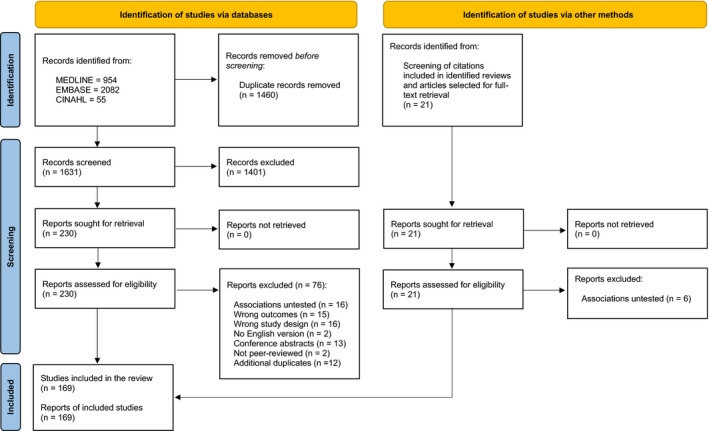
Background Renin-angiotensin aldosterone system (RAAS) inhibitor-COVID-19 studies, observational in design, appear to use biased methods that can distort the interaction between RAAS inhibitor use and COVID-19 risk. This study assessed the extent of bias in that research and reevaluated RAAS inhibitor-COVID-19 associations in studies without critical risk of bias. Methods and Results Searches were performed in MEDLINE, EMBASE, and CINAHL databases (December 1, 2019 to October 21, 2021) identifying studies that compared the risk of infection and/or severe COVID-19 outcomes between those using or not using RAAS inhibitors (ie, angiotensin-converting enzyme inhibitors or angiotensin II type-I receptor blockers). Weighted hazard ratios (HR) and 95% CIs were extracted and pooled in fixed-effects meta-analyses, only from studies without critical risk of bias that assessed severe COVID-19 outcomes. Of 169 relevant studies, 164 had critical risks of bias and were excluded. Ultimately, only two studies presented data relevant to the meta-analysis. In 1 351 633 people with uncomplicated hypertension using a RAAS inhibitor, calcium channel blocker, or thiazide diuretic in monotherapy, the risk of hospitalization (angiotensin-converting enzyme inhibitor: HR, 0.76; 95% CI, 0.66-0.87; P<0.001; angiotensin II type-I receptor blockers: HR, 0.86; 95% CI, 0.77-0.97; P=0.015) and intubation or death (angiotensin-converting enzyme inhibitor: HR, 0.64; 95% CI, 0.48-0.85; P=0.002; angiotensin II type-I receptor blockers: HR, 0.74; 95% CI, 0.58-0.95; P=0.019) with COVID-19 was lower in those using a RAAS inhibitor. However, these protective effects are probably not clinically relevant. Conclusions This study reveals the critical risk of bias that exists across almost an entire body of COVID-19 research, raising an important question: Were research methods and/or peer-review processes temporarily weakened during the surge of COVID-19 research or is this lack of rigor a systemic problem that also exists outside pandemic-based research? Registration URL: www.crd.york.ac.uk/prospero/; Unique identifier: CRD42021237859.
期刊介绍:
Protoplasma publishes original papers, short communications and review articles which are of interest to cell biology in all its scientific and applied aspects. We seek contributions dealing with plants and animals but also prokaryotes, protists and fungi, from the following fields:
cell biology of both single and multicellular organisms
molecular cytology
the cell cycle
membrane biology including biogenesis, dynamics, energetics and electrophysiology
inter- and intracellular transport
the cytoskeleton
organelles
experimental and quantitative ultrastructure
cyto- and histochemistry
Further, conceptual contributions such as new models or discoveries at the cutting edge of cell biology research will be published under the headings "New Ideas in Cell Biology".





 京公网安备 11010802042870号
京ICP备2023020795号-1
京公网安备 11010802042870号
京ICP备2023020795号-1

 分享
分享
 求助内容:
求助内容: 应助结果提醒方式:
 扫码关注我们
