Amira H. E. Moustafa, Mahmoud A. Mousa, Hanaa H. Abdelrahman, Mamdouh A. Fahmy, Dina G. Ebrahim
{"title":"A novel successful strategy for the detection of antibiotics and toxic heavy metals based on fluorescence silver/graphene quantum dots nanocomposites","authors":"Amira H. E. Moustafa, Mahmoud A. Mousa, Hanaa H. Abdelrahman, Mamdouh A. Fahmy, Dina G. Ebrahim","doi":"10.1007/s13204-023-02921-3","DOIUrl":null,"url":null,"abstract":"<div><p>Antibiotic residue and toxic heavy metals in aquaculture have a hazardous impact on human health and environmental safety. So the biggest challenge is designing a powerful detecting tool without harming fisheries and the environment. A novel dual-function silver/graphene quantum dots (<i>Ag@GQDs</i>)-based fluorescence nanosensor was developed to investigate unprecedented sensing strategies for sensitive and selective detection of antibiotics and heavy metals to ensure that they are present in the authorized percentage. Here, the fluorescence nanocomposites achieve a new successful sensitive and rapid detection for <i>Oxytetracycline</i> (<i>OTC</i>) and <i>Erythromycin</i> (<i>ERY</i>) antibiotics with detection limits of 2.714 nM and 3.306 nM, respectively. The proposed strategy provides an efficient detection way of tracing heavy metals <i>Hg</i>, <i>Cd</i>, and <i>Pb</i> with a detection limit of less than 5 ppm. Characterization of nanoprobe was by <i>UV/VIS</i> spectroscopy, X-ray Diffraction (<i>XRD</i>), Fourier-transform infrared spectroscopy (<i>FTIR</i>), and Transmission electron microscopy (<i>TEM</i>). The compared results were with graphene quantum dots (<i>GQDs</i>), graphene oxide quantum dots (<i>GOQDs</i>), and green synthesized silver nanoparticles (<i>AgNPs</i>) which were made from new extracts of aquatic plants and seaweeds from <i>Edku</i> and <i>Marriott</i> Lake. This novel Fluorescence quenching-based technique is sensitive, selective, less time-consuming and does not need expensive preparations to replace the commonly used chromatographic detecting techniques.</p></div>","PeriodicalId":471,"journal":{"name":"Applied Nanoscience","volume":"14 1","pages":"1 - 20"},"PeriodicalIF":3.6740,"publicationDate":"2023-09-01","publicationTypes":"Journal Article","fieldsOfStudy":null,"isOpenAccess":false,"openAccessPdf":"","citationCount":"0","resultStr":null,"platform":"Semanticscholar","paperid":null,"PeriodicalName":"Applied Nanoscience","FirstCategoryId":"5","ListUrlMain":"https://link.springer.com/article/10.1007/s13204-023-02921-3","RegionNum":4,"RegionCategory":"工程技术","ArticlePicture":[],"TitleCN":null,"AbstractTextCN":null,"PMCID":null,"EPubDate":"","PubModel":"","JCR":"Q1","JCRName":"Engineering","Score":null,"Total":0}
引用次数: 0
Abstract
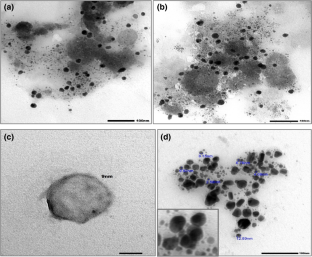
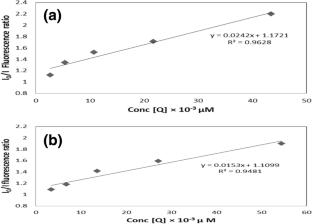
Antibiotic residue and toxic heavy metals in aquaculture have a hazardous impact on human health and environmental safety. So the biggest challenge is designing a powerful detecting tool without harming fisheries and the environment. A novel dual-function silver/graphene quantum dots (Ag@GQDs)-based fluorescence nanosensor was developed to investigate unprecedented sensing strategies for sensitive and selective detection of antibiotics and heavy metals to ensure that they are present in the authorized percentage. Here, the fluorescence nanocomposites achieve a new successful sensitive and rapid detection for Oxytetracycline (OTC) and Erythromycin (ERY) antibiotics with detection limits of 2.714 nM and 3.306 nM, respectively. The proposed strategy provides an efficient detection way of tracing heavy metals Hg, Cd, and Pb with a detection limit of less than 5 ppm. Characterization of nanoprobe was by UV/VIS spectroscopy, X-ray Diffraction (XRD), Fourier-transform infrared spectroscopy (FTIR), and Transmission electron microscopy (TEM). The compared results were with graphene quantum dots (GQDs), graphene oxide quantum dots (GOQDs), and green synthesized silver nanoparticles (AgNPs) which were made from new extracts of aquatic plants and seaweeds from Edku and Marriott Lake. This novel Fluorescence quenching-based technique is sensitive, selective, less time-consuming and does not need expensive preparations to replace the commonly used chromatographic detecting techniques.
期刊介绍:
Applied Nanoscience is a hybrid journal that publishes original articles about state of the art nanoscience and the application of emerging nanotechnologies to areas fundamental to building technologically advanced and sustainable civilization, including areas as diverse as water science, advanced materials, energy, electronics, environmental science and medicine. The journal accepts original and review articles as well as book reviews for publication. All the manuscripts are single-blind peer-reviewed for scientific quality and acceptance.



 京公网安备 11010802042870号
京ICP备2023020795号-1
京公网安备 11010802042870号
京ICP备2023020795号-1

 分享
分享
 求助内容:
求助内容: 应助结果提醒方式:
 扫码关注我们
