{"title":"Observing the behavioural effects of methylphenidate in children and adolescents with ASD-ADHD dual diagnosis: A mini review.","authors":"Danilo Dimitri, Giuliana Delia, Maurizio Arduino, Nazarena Turco, Franco Fioretto","doi":"10.3389/frcha.2023.1052115","DOIUrl":null,"url":null,"abstract":"<p><strong>Research aim: </strong>The aim of this study is to focus on the main neurophysiological aspects of attention-deficit/hyperactivity disorder (ADHD) and autism spectrum disorder (ASD) and the current pharmacological treatment used for the management of hyperactivity and attention deficits in children aged 6-20 years with a diagnosis of ASD, not associated with other genetic or epileptic disorders, such as Fragile X Syndrome (FXS), Tuberous Sclerosis, Kleefstra Syndrome or Angelman Syndrome.</p><p><strong>Methods: </strong>This mini review was conducted according to the <i>P</i>.I.C.O. model and according to the PRISMA guidelines. The keywords used were: <i>autism spectrum disorder</i>; <i>attention deficit hyperactivity disorder</i>; <i>attention deficit disorder</i>; <i>methylphenidate</i>; <i>ritalin</i>; <i>ADHD</i>; <i>youth autism</i>; <i>childhood autism</i>; <i>childhood autism spectrum disorder</i>; <i>adolescent autism</i>. The strings produced were compared and selected by a third independent clinician. The PubMed and PsycArticles search yielded a total of 3,200 articles. For their inclusion, the 3,200 articles were examined by two clinicians who ultimately selected 28 (15 clinical trials and 13 reviews/meta-analyses) articles analysed according to their consistency with the inclusion and exclusion criteria.</p><p><strong>Conclusions: </strong>Three main aspects emerged from the review: (1) According to the existing literature, new randomized controlled trials are needed to ensure a better understanding of the most effective drug treatments for dual-diagnosed ASD-ADHD patients and of the related behavioural effects. Currently, the use of drugs varies depending on psychiatric comorbidity, symptoms, age and gender and there is no univocal reference therapy; (2) Methylphenidate (MPH) has currently been shown to be the most suitable drug for the treatment of hyperactivity and inattention in individuals diagnosed with ASD and ADHD; (3) There is a need to create and evaluate appropriate tests to analyse more specific patterns of behaviour presented in the two conditions.</p>","PeriodicalId":73074,"journal":{"name":"Frontiers in child and adolescent psychiatry","volume":"58 1","pages":"1052115"},"PeriodicalIF":0.0000,"publicationDate":"2023-03-17","publicationTypes":"Journal Article","fieldsOfStudy":null,"isOpenAccess":false,"openAccessPdf":"https://www.ncbi.nlm.nih.gov/pmc/articles/PMC11732115/pdf/","citationCount":"0","resultStr":null,"platform":"Semanticscholar","paperid":null,"PeriodicalName":"Frontiers in child and adolescent psychiatry","FirstCategoryId":"1085","ListUrlMain":"https://doi.org/10.3389/frcha.2023.1052115","RegionNum":0,"RegionCategory":null,"ArticlePicture":[],"TitleCN":null,"AbstractTextCN":null,"PMCID":null,"EPubDate":"2023/1/1 0:00:00","PubModel":"eCollection","JCR":"","JCRName":"","Score":null,"Total":0}
引用次数: 0
Abstract
Research aim: The aim of this study is to focus on the main neurophysiological aspects of attention-deficit/hyperactivity disorder (ADHD) and autism spectrum disorder (ASD) and the current pharmacological treatment used for the management of hyperactivity and attention deficits in children aged 6-20 years with a diagnosis of ASD, not associated with other genetic or epileptic disorders, such as Fragile X Syndrome (FXS), Tuberous Sclerosis, Kleefstra Syndrome or Angelman Syndrome.
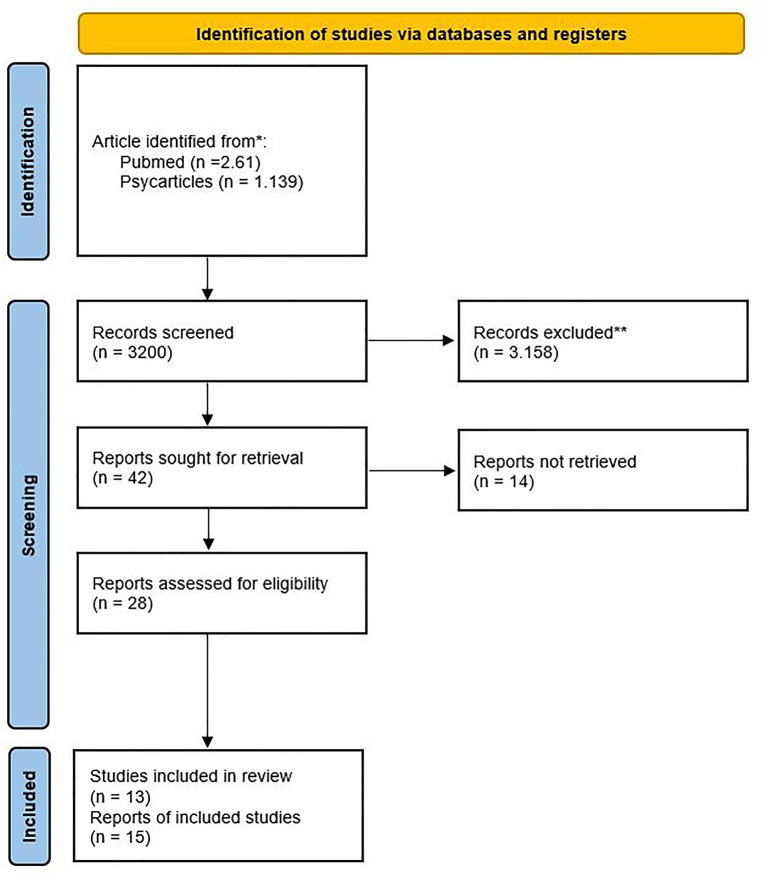
Methods: This mini review was conducted according to the P.I.C.O. model and according to the PRISMA guidelines. The keywords used were: autism spectrum disorder; attention deficit hyperactivity disorder; attention deficit disorder; methylphenidate; ritalin; ADHD; youth autism; childhood autism; childhood autism spectrum disorder; adolescent autism. The strings produced were compared and selected by a third independent clinician. The PubMed and PsycArticles search yielded a total of 3,200 articles. For their inclusion, the 3,200 articles were examined by two clinicians who ultimately selected 28 (15 clinical trials and 13 reviews/meta-analyses) articles analysed according to their consistency with the inclusion and exclusion criteria.
Conclusions: Three main aspects emerged from the review: (1) According to the existing literature, new randomized controlled trials are needed to ensure a better understanding of the most effective drug treatments for dual-diagnosed ASD-ADHD patients and of the related behavioural effects. Currently, the use of drugs varies depending on psychiatric comorbidity, symptoms, age and gender and there is no univocal reference therapy; (2) Methylphenidate (MPH) has currently been shown to be the most suitable drug for the treatment of hyperactivity and inattention in individuals diagnosed with ASD and ADHD; (3) There is a need to create and evaluate appropriate tests to analyse more specific patterns of behaviour presented in the two conditions.



 京公网安备 11010802042870号
京ICP备2023020795号-1
京公网安备 11010802042870号
京ICP备2023020795号-1

 分享
分享

 求助内容:
求助内容: 应助结果提醒方式:
 扫码关注我们
