{"title":"Exosomal circRNA_104948 Enhances the Progression of Glioma by Regulating miR-29b-3p and DNMT3B/MTSS1 Signaling.","authors":"Shoudan Zhang, Ning Guan, Xin Mao, Jingwen Cui, Xin Sui, Wenshi Guo","doi":"10.1615/JEnvironPatholToxicolOncol.2021039775","DOIUrl":null,"url":null,"abstract":"<p><p>Glioma is a common type of malignancy in the central nervous system. The pathogenesis of glioma is complex and the underlying mechanisms remain largely unknown. In our study, exosomes were exacted from patient samples, and the isolated exosomes were confirmed by transmission electron microscope. The expression of circRNA_104948, miR-29b-3p and DNMT3B were determined using RT-qPCR. Proliferative activity of cell was examined using CCK-8 assay. Cell apoptotic rate was evaluated by flow cytometry. The expression levels of proliferation or apop-tosis markers were determined using western blotting. Our data suggested that circRNA_104948 was upregulated in plasma exosomes/tissue samples of glioma patients and glioma cell lines. Furthermore, cell proliferation was enhanced and apoptosis was suppressed in normal astrocytes treated with exosomal circRNA_104948, and the effects were reversed by sh-circRNA_104948. In addition, miR-29b-3p is a novel target of circRNA_104948, and DNMT3B is a putative downstream molecule of miR-29b-3p. circRNA_104948 could regulate the proliferation/apoptosis of astrocytes through miR-29b-3p/DNMT3B/MTSS1 signaling, and the biological behavior changes induced by glioma-Exo were reversed by miR-29b-3p mimics; upregulated cell growth caused by miR-29b-3p inhibitors was abrogated by the knockdown of DNMT3B; the effects induced by miR-29b-3p mimics were abolished by the overexpression of DNMT3B. Our findings revealed the important roles of circRNA_104948 on the development of glioma, and circRNA_104948/miR-29b-3p/MTSS1/DNMT3B pathway may be a potential candidate for the target therapy of glioma patients.</p>","PeriodicalId":18787,"journal":{"name":"Nature","volume":"224 1","pages":"47-59"},"PeriodicalIF":48.5000,"publicationDate":"2022-01-01","publicationTypes":"Journal Article","fieldsOfStudy":null,"isOpenAccess":false,"openAccessPdf":"","citationCount":"5","resultStr":null,"platform":"Semanticscholar","paperid":null,"PeriodicalName":"Nature","FirstCategoryId":"1085","ListUrlMain":"https://doi.org/10.1615/JEnvironPatholToxicolOncol.2021039775","RegionNum":1,"RegionCategory":"综合性期刊","ArticlePicture":[],"TitleCN":null,"AbstractTextCN":null,"PMCID":null,"EPubDate":"","PubModel":"","JCR":"Q1","JCRName":"MULTIDISCIPLINARY SCIENCES","Score":null,"Total":0}
引用次数: 5
Abstract
Glioma is a common type of malignancy in the central nervous system. The pathogenesis of glioma is complex and the underlying mechanisms remain largely unknown. In our study, exosomes were exacted from patient samples, and the isolated exosomes were confirmed by transmission electron microscope. The expression of circRNA_104948, miR-29b-3p and DNMT3B were determined using RT-qPCR. Proliferative activity of cell was examined using CCK-8 assay. Cell apoptotic rate was evaluated by flow cytometry. The expression levels of proliferation or apop-tosis markers were determined using western blotting. Our data suggested that circRNA_104948 was upregulated in plasma exosomes/tissue samples of glioma patients and glioma cell lines. Furthermore, cell proliferation was enhanced and apoptosis was suppressed in normal astrocytes treated with exosomal circRNA_104948, and the effects were reversed by sh-circRNA_104948. In addition, miR-29b-3p is a novel target of circRNA_104948, and DNMT3B is a putative downstream molecule of miR-29b-3p. circRNA_104948 could regulate the proliferation/apoptosis of astrocytes through miR-29b-3p/DNMT3B/MTSS1 signaling, and the biological behavior changes induced by glioma-Exo were reversed by miR-29b-3p mimics; upregulated cell growth caused by miR-29b-3p inhibitors was abrogated by the knockdown of DNMT3B; the effects induced by miR-29b-3p mimics were abolished by the overexpression of DNMT3B. Our findings revealed the important roles of circRNA_104948 on the development of glioma, and circRNA_104948/miR-29b-3p/MTSS1/DNMT3B pathway may be a potential candidate for the target therapy of glioma patients.
期刊介绍:
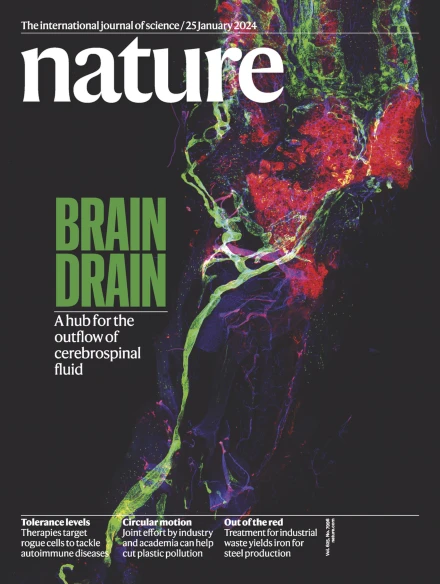
Nature is a prestigious international journal that publishes peer-reviewed research in various scientific and technological fields. The selection of articles is based on criteria such as originality, importance, interdisciplinary relevance, timeliness, accessibility, elegance, and surprising conclusions. In addition to showcasing significant scientific advances, Nature delivers rapid, authoritative, insightful news, and interpretation of current and upcoming trends impacting science, scientists, and the broader public. The journal serves a dual purpose: firstly, to promptly share noteworthy scientific advances and foster discussions among scientists, and secondly, to ensure the swift dissemination of scientific results globally, emphasizing their significance for knowledge, culture, and daily life.



 京公网安备 11010802042870号
京ICP备2023020795号-1
京公网安备 11010802042870号
京ICP备2023020795号-1

 分享
分享
 求助内容:
求助内容: 应助结果提醒方式:
 扫码关注我们
