S. Rubalya Valantina, S. Sriram, K. Arockia Jayalatha, S. Atchaya, Tejaswini Kethineni
{"title":"Influence of CuO nanoparticles in the enhancement of the rheological and insulation properties of enriched nanofluid","authors":"S. Rubalya Valantina, S. Sriram, K. Arockia Jayalatha, S. Atchaya, Tejaswini Kethineni","doi":"10.1007/s13204-023-02944-w","DOIUrl":null,"url":null,"abstract":"<div><p>Investigation of variations in rheological, acoustical and electrical properties of an eco-friendly nanofluids could be a substitute for a coolant/lubricant, in industry 4.0. Researchers in the past two decades have shown a greater interest in exploring the experiential changes of nanofluid based on volume fraction, and temperature suitable for a desired application. The present study observes, the influences of volume fractions of CuO nanoparticles in enriched coconut oil (CO) blended with<i> Moringa oleifera</i> seed oil (MOSO) (3:1). The surface morphology of CuO nanoparticles shows the average particle sizes are in between 11 nm and 70 nm. The X-ray diffraction showed a monoclinic structure without impurities which having crystallite size of 23 nm. Physical properties such as viscosity, shear rate, shear stress, torque and density were observed for the stable nanofluid at three different volume fractions (<i>φ</i> = 0.4, 0.8, and 1.0). The viscosity of the prepared nanofluid was enhanced to 22.1% at <i>φ</i> = 1. Acoustical behaviour was probed to estimate the decrease in ultrasonic wave transmission through nanofluid with upsurge in φ and a novel model equation (with <i>R</i><sup>2</sup> = 0.983) was developed. As an additional application, the defects in machines can be validated with an aid of ultrasonic velocity. The response of dielectric constant (DC) with φ and sustainability is in the range of 2.65–3 at 90 °C supports the usage of nanofluids in energy storage system and a replacement of transformer oil.</p></div>","PeriodicalId":471,"journal":{"name":"Applied Nanoscience","volume":"14 1","pages":"43 - 55"},"PeriodicalIF":3.6740,"publicationDate":"2023-09-02","publicationTypes":"Journal Article","fieldsOfStudy":null,"isOpenAccess":false,"openAccessPdf":"","citationCount":"0","resultStr":null,"platform":"Semanticscholar","paperid":null,"PeriodicalName":"Applied Nanoscience","FirstCategoryId":"5","ListUrlMain":"https://link.springer.com/article/10.1007/s13204-023-02944-w","RegionNum":4,"RegionCategory":"工程技术","ArticlePicture":[],"TitleCN":null,"AbstractTextCN":null,"PMCID":null,"EPubDate":"","PubModel":"","JCR":"Q1","JCRName":"Engineering","Score":null,"Total":0}
引用次数: 0
Abstract
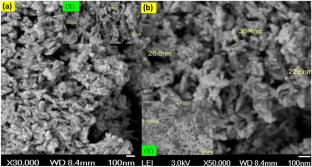
Investigation of variations in rheological, acoustical and electrical properties of an eco-friendly nanofluids could be a substitute for a coolant/lubricant, in industry 4.0. Researchers in the past two decades have shown a greater interest in exploring the experiential changes of nanofluid based on volume fraction, and temperature suitable for a desired application. The present study observes, the influences of volume fractions of CuO nanoparticles in enriched coconut oil (CO) blended with Moringa oleifera seed oil (MOSO) (3:1). The surface morphology of CuO nanoparticles shows the average particle sizes are in between 11 nm and 70 nm. The X-ray diffraction showed a monoclinic structure without impurities which having crystallite size of 23 nm. Physical properties such as viscosity, shear rate, shear stress, torque and density were observed for the stable nanofluid at three different volume fractions (φ = 0.4, 0.8, and 1.0). The viscosity of the prepared nanofluid was enhanced to 22.1% at φ = 1. Acoustical behaviour was probed to estimate the decrease in ultrasonic wave transmission through nanofluid with upsurge in φ and a novel model equation (with R2 = 0.983) was developed. As an additional application, the defects in machines can be validated with an aid of ultrasonic velocity. The response of dielectric constant (DC) with φ and sustainability is in the range of 2.65–3 at 90 °C supports the usage of nanofluids in energy storage system and a replacement of transformer oil.
期刊介绍:
Applied Nanoscience is a hybrid journal that publishes original articles about state of the art nanoscience and the application of emerging nanotechnologies to areas fundamental to building technologically advanced and sustainable civilization, including areas as diverse as water science, advanced materials, energy, electronics, environmental science and medicine. The journal accepts original and review articles as well as book reviews for publication. All the manuscripts are single-blind peer-reviewed for scientific quality and acceptance.




 京公网安备 11010802042870号
京ICP备2023020795号-1
京公网安备 11010802042870号
京ICP备2023020795号-1

 分享
分享
 求助内容:
求助内容: 应助结果提醒方式:
 扫码关注我们
