{"title":"Come and say what you think: reducing employees' self-censorship through procedural and interpersonal justice.","authors":"Krystyna Adamska, Paweł Jurek","doi":"10.5114/cipp.2021.110022","DOIUrl":null,"url":null,"abstract":"<p><strong>Background: </strong>Self-censorship in an organization may be defined as a conscious decision by employees to refrain from expressing opinions, criticism or suggestions in situations of perceived irregularities. There are at least two reasons for this decision: firstly, the fear that speaking up would prompt negative consequences, and secondly, the belief that it would not bring about a change in the situation. Procedural justice in an organization may encourage employees to limit that silence, thereby diminishing fear and undermining the belief that change is impossible.</p><p><strong>Participants and procedure: </strong>A set of three studies (total number of participants <i>N</i> = 710) was conducted in order to determine whether procedural justice predicts self-censorship and also to define the role of interpersonal justice in this relationship. It was assumed that procedural justice, while useful in the formation of an impartial and rigid legal system within an organization, is constrained by its disregard for personal relations.</p><p><strong>Results: </strong>It was found that when employees perceive a work environment as providing influence over procedures, they declare less self-censorship motivated by fear and resignation. In high interpersonal justice conditions the role of procedural justice in predicting employee self-censorship as well as employee silence beliefs increases.</p><p><strong>Conclusions: </strong>Both fair treatment of all employees and the contextual and need-centered nature of such treatment should be integrated if self-censorship is to be reduced. The results confirm this conclusion for self-censorship (decision) and employee silence beliefs (belief that relations within the organization do not encourage people to speak up).</p>","PeriodicalId":47134,"journal":{"name":"EDUCATIONAL THEORY","volume":"39 1","pages":"328-340"},"PeriodicalIF":0.9000,"publicationDate":"2021-10-29","publicationTypes":"Journal Article","fieldsOfStudy":null,"isOpenAccess":false,"openAccessPdf":"https://www.ncbi.nlm.nih.gov/pmc/articles/PMC10655780/pdf/","citationCount":"1","resultStr":null,"platform":"Semanticscholar","paperid":null,"PeriodicalName":"EDUCATIONAL THEORY","FirstCategoryId":"1085","ListUrlMain":"https://doi.org/10.5114/cipp.2021.110022","RegionNum":0,"RegionCategory":null,"ArticlePicture":[],"TitleCN":null,"AbstractTextCN":null,"PMCID":null,"EPubDate":"2021/1/1 0:00:00","PubModel":"eCollection","JCR":"Q3","JCRName":"EDUCATION & EDUCATIONAL RESEARCH","Score":null,"Total":0}
引用次数: 1
Abstract
Background: Self-censorship in an organization may be defined as a conscious decision by employees to refrain from expressing opinions, criticism or suggestions in situations of perceived irregularities. There are at least two reasons for this decision: firstly, the fear that speaking up would prompt negative consequences, and secondly, the belief that it would not bring about a change in the situation. Procedural justice in an organization may encourage employees to limit that silence, thereby diminishing fear and undermining the belief that change is impossible.
Participants and procedure: A set of three studies (total number of participants N = 710) was conducted in order to determine whether procedural justice predicts self-censorship and also to define the role of interpersonal justice in this relationship. It was assumed that procedural justice, while useful in the formation of an impartial and rigid legal system within an organization, is constrained by its disregard for personal relations.
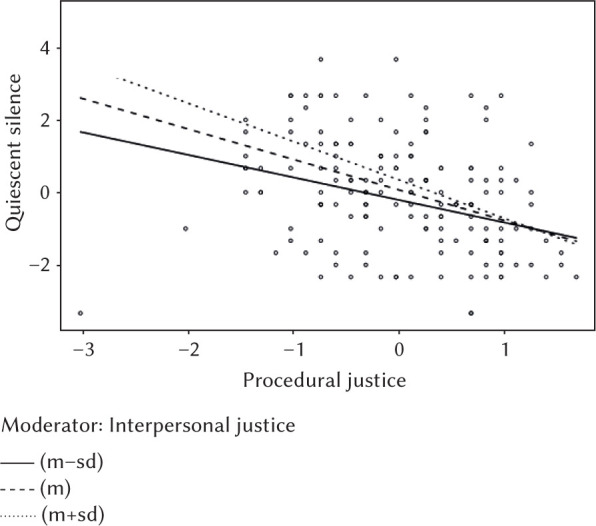
Results: It was found that when employees perceive a work environment as providing influence over procedures, they declare less self-censorship motivated by fear and resignation. In high interpersonal justice conditions the role of procedural justice in predicting employee self-censorship as well as employee silence beliefs increases.
Conclusions: Both fair treatment of all employees and the contextual and need-centered nature of such treatment should be integrated if self-censorship is to be reduced. The results confirm this conclusion for self-censorship (decision) and employee silence beliefs (belief that relations within the organization do not encourage people to speak up).
期刊介绍:
The general purposes of Educational Theory are to foster the continuing development of educational theory and to encourage wide and effective discussion of theoretical problems within the educational profession. In order to achieve these purposes, the journal is devoted to publishing scholarly articles and studies in the foundations of education, and in related disciplines outside the field of education, which contribute to the advancement of educational theory. It is the policy of the sponsoring organizations to maintain the journal as an open channel of communication and as an open forum for discussion.






 京公网安备 11010802042870号
京ICP备2023020795号-1
京公网安备 11010802042870号
京ICP备2023020795号-1

 分享
分享
 求助内容:
求助内容: 应助结果提醒方式:
 扫码关注我们
