Yanina Panzera, Santiago Mirazo, Mariana Baz, Claudia Techera, Sofía Grecco, Florencia Cancela, Eddie Fuques, Emma Condon, Lucía Calleros, Natalia Camilo, Andrea Fregossi, Inés Vaz, Paula Pessina, Nikita Deshpande, Ruben Pérez, Alejandro Benech
{"title":"Detection and genome characterisation of SARS-CoV-2 P.6 lineage in dogs and cats living with Uruguayan COVID-19 patients.","authors":"Yanina Panzera, Santiago Mirazo, Mariana Baz, Claudia Techera, Sofía Grecco, Florencia Cancela, Eddie Fuques, Emma Condon, Lucía Calleros, Natalia Camilo, Andrea Fregossi, Inés Vaz, Paula Pessina, Nikita Deshpande, Ruben Pérez, Alejandro Benech","doi":"10.1590/0074-02760220177","DOIUrl":null,"url":null,"abstract":"<p><strong>Background: </strong>Severe acute respiratory syndrome coronavirus 2 (SARS-CoV-2) infections in domestic animals have occurred from the beginning of the pandemic to the present time. Therefore, from the perspective of One Health, investigating this topic is of global scientific and public interest.</p><p><strong>Objectives: </strong>The present study aimed to determine the presence of SARS-CoV-2 in domestic animals whose owners had coronavirus disease 2019 (COVID-19).</p><p><strong>Methods: </strong>Nasopharyngeal and faecal samples were collected in Uruguay. Using quantitative polymerase chain reaction (qPCR), we analysed the presence of the SARS-CoV-2 genome. Complete genomes were obtained using ARTIC enrichment and Illumina sequencing. Sera samples were used for virus neutralisation assays.</p><p><strong>Findings: </strong>SARS-CoV-2 was detected in an asymptomatic dog and a cat. Viral genomes were identical and belonged to the P.6 Uruguayan SARS-CoV-2 lineage. Only antiserum from the infected cat contained neutralising antibodies against the ancestral SARS-CoV-2 strain and showed cross-reactivity against the Delta but not against the B.A.1 Omicron variant.</p><p><strong>Main conclusions: </strong>Domestic animals and the human SARS-CoV-2 P.6 variant comparison evidence a close relationship and gene flow between them. Different SARS-CoV-2 lineages infect dogs and cats, and no specific variants are adapted to domestic animals. This first record of SARS-CoV-2 in domestic animals from Uruguay supports regular surveillance of animals close to human hosts.</p>","PeriodicalId":18469,"journal":{"name":"Memorias do Instituto Oswaldo Cruz","volume":"117 ","pages":"e220177"},"PeriodicalIF":2.5000,"publicationDate":"2023-01-01","publicationTypes":"Journal Article","fieldsOfStudy":null,"isOpenAccess":false,"openAccessPdf":"https://www.ncbi.nlm.nih.gov/pmc/articles/PMC9870267/pdf/","citationCount":"1","resultStr":null,"platform":"Semanticscholar","paperid":null,"PeriodicalName":"Memorias do Instituto Oswaldo Cruz","FirstCategoryId":"3","ListUrlMain":"https://doi.org/10.1590/0074-02760220177","RegionNum":4,"RegionCategory":"医学","ArticlePicture":[],"TitleCN":null,"AbstractTextCN":null,"PMCID":null,"EPubDate":"","PubModel":"","JCR":"Q2","JCRName":"PARASITOLOGY","Score":null,"Total":0}
引用次数: 1
Abstract
Background: Severe acute respiratory syndrome coronavirus 2 (SARS-CoV-2) infections in domestic animals have occurred from the beginning of the pandemic to the present time. Therefore, from the perspective of One Health, investigating this topic is of global scientific and public interest.
Objectives: The present study aimed to determine the presence of SARS-CoV-2 in domestic animals whose owners had coronavirus disease 2019 (COVID-19).
Methods: Nasopharyngeal and faecal samples were collected in Uruguay. Using quantitative polymerase chain reaction (qPCR), we analysed the presence of the SARS-CoV-2 genome. Complete genomes were obtained using ARTIC enrichment and Illumina sequencing. Sera samples were used for virus neutralisation assays.
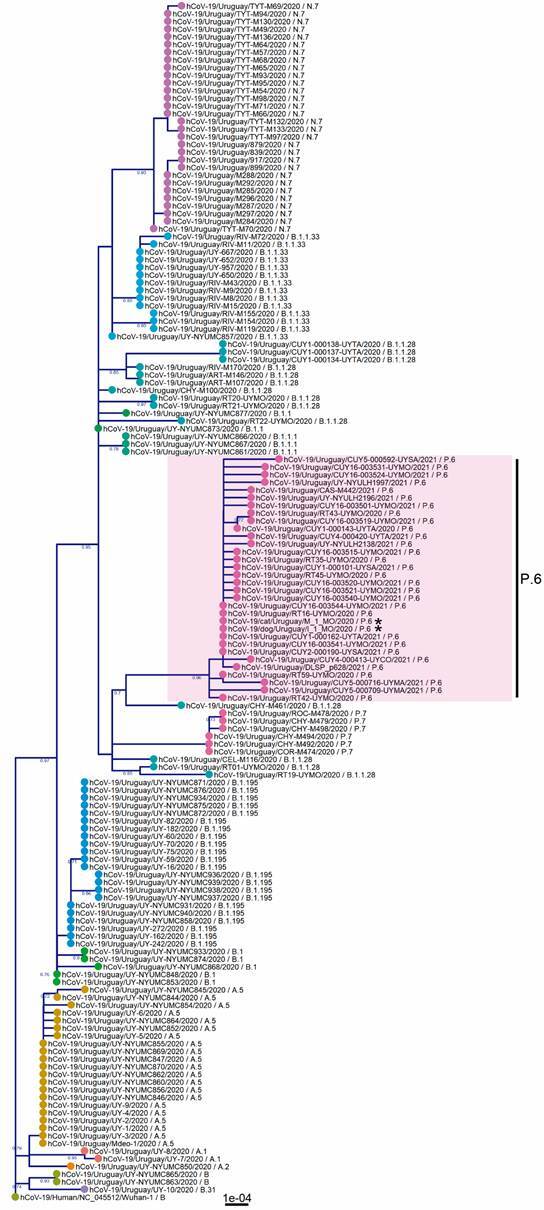
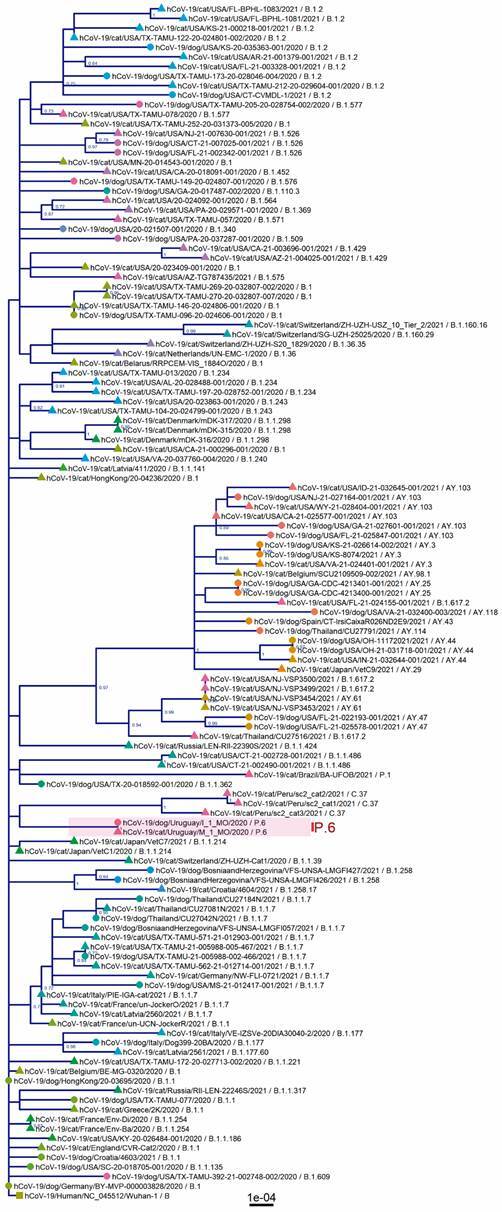
Findings: SARS-CoV-2 was detected in an asymptomatic dog and a cat. Viral genomes were identical and belonged to the P.6 Uruguayan SARS-CoV-2 lineage. Only antiserum from the infected cat contained neutralising antibodies against the ancestral SARS-CoV-2 strain and showed cross-reactivity against the Delta but not against the B.A.1 Omicron variant.
Main conclusions: Domestic animals and the human SARS-CoV-2 P.6 variant comparison evidence a close relationship and gene flow between them. Different SARS-CoV-2 lineages infect dogs and cats, and no specific variants are adapted to domestic animals. This first record of SARS-CoV-2 in domestic animals from Uruguay supports regular surveillance of animals close to human hosts.
背景:严重急性呼吸综合征冠状病毒2型(SARS-CoV-2)感染从大流行开始到现在一直发生在家畜中。因此,从同一个健康的角度来看,研究这一主题具有全球科学和公共利益。目的:本研究旨在确定主人患有2019冠状病毒病(COVID-19)的家畜中是否存在SARS-CoV-2。方法:在乌拉圭采集鼻咽及粪便标本。使用定量聚合酶链反应(qPCR),我们分析了SARS-CoV-2基因组的存在。通过ARTIC富集和Illumina测序获得全基因组。血清样本用于病毒中和试验。结果:在1只无症状的狗和1只猫中检测到SARS-CoV-2。病毒基因组相同,属于P.6乌拉圭SARS-CoV-2谱系。只有来自受感染猫的抗血清含有针对祖先SARS-CoV-2菌株的中和抗体,并且对Delta病毒表现出交叉反应性,但对B.A.1病毒没有交叉反应性ο变体。主要结论:家畜与人SARS-CoV-2 p - 6变异比较表明两者之间存在密切的关系和基因流。不同的SARS-CoV-2谱系感染狗和猫,没有特定的变体适合家养动物。这是乌拉圭家畜中首次出现SARS-CoV-2的记录,支持对与人类宿主接近的动物进行定期监测。
期刊介绍:
Memórias do Instituto Oswaldo Cruz is a journal specialized in microbes & their vectors causing human infections. This means that we accept manuscripts covering multidisciplinary approaches and findings in the basic aspects of infectious diseases, e.g. basic in research in prokariotes, eukaryotes, and/or virus. Articles must clearly show what is the main question to be answered, the hypothesis raised, and the contribution given by the study.
Priority is given to manuscripts reporting novel mechanisms and general findings concerning the biology of human infectious prokariotes, eukariotes or virus. Papers reporting innovative methods for diagnostics or that advance the basic research with these infectious agents are also welcome.
It is important to mention what we do not publish: veterinary infectious agents research, taxonomic analysis and re-description of species, epidemiological studies or surveys or case reports and data re-analysis. Manuscripts that fall in these cases or that are considered of low priority by the journal editorial board, will be returned to the author(s) for submission to another journal.



 京公网安备 11010802042870号
京ICP备2023020795号-1
京公网安备 11010802042870号
京ICP备2023020795号-1

 分享
分享
 求助内容:
求助内容: 应助结果提醒方式:
 扫码关注我们
