Spatial analysis and optimization of self-pickup points of a new retail model in the Post-Epidemic Era: the case of Community-Group-Buying in Xi'an City.
Zhe Lin, Gang Li, Muhammad Sajid Mehmood, Qifan Nie, Ziwan Zheng
{"title":"Spatial analysis and optimization of self-pickup points of a new retail model in the Post-Epidemic Era: the case of Community-Group-Buying in Xi'an City.","authors":"Zhe Lin, Gang Li, Muhammad Sajid Mehmood, Qifan Nie, Ziwan Zheng","doi":"10.1007/s43762-023-00089-8","DOIUrl":null,"url":null,"abstract":"<p><p>The Community-Group-Buying Points (CGBPs) flourished during COVID-19, safeguarding the daily lives of community residents in community lockdowns, and continuing to serve as a popular daily shopping channel in the Post-Epidemic Era with its advantages of low price, convenience and neighborhood trust. These CGBPs are allocated on location preferences however spatial distribution is not equal. Therefore, in this study, we used point of interest (POI) data of 2,433 CGBPs to analyze spatial distribution, operation mode and accessibility of CGBPs in Xi'an city, China as well as proposed the location optimization model. The results showed that the CGBPs were spatially distributed as clusters at α = 0.01 (<i>Moran's I</i> = 0.44). The CGBPs operation mode was divided into preparation, marketing, transportation, and self-pickup. Further CGBPs were mainly operating in the form of joint ventures, and the relying targets presented the characteristic of 'convenience store-based and multi-type coexistence'. Influenced by urban planning, land use, and cultural relics protection regulations, they showed an elliptic distribution pattern with a small oblateness, and the density showed a low-high-low circular distribution pattern from the Palace of Tang Dynasty outwards. Furthermore, the number of communities, population density, GDP, and housing type were important driving factors of the spatial pattern of CGBPs. Finally, to maximize attendance, it was suggested to add 248 new CGBPs, retain 394 existing CGBPs, and replace the remaining CGBPs with farmers' markets, mobile vendors, and supermarkets. The findings of this study would be beneficial to CGB companies in increasing the efficiency of self-pick-up facilities, to city planners in improving urban community-life cycle planning, and to policymakers in formulating relevant policies to balance the interests of stakeholders: CGB enterprises, residents, and vendors.</p>","PeriodicalId":72667,"journal":{"name":"Computational urban science","volume":"3 1","pages":"13"},"PeriodicalIF":3.2000,"publicationDate":"2023-01-01","publicationTypes":"Journal Article","fieldsOfStudy":null,"isOpenAccess":false,"openAccessPdf":"https://www.ncbi.nlm.nih.gov/pmc/articles/PMC10025067/pdf/","citationCount":"2","resultStr":null,"platform":"Semanticscholar","paperid":null,"PeriodicalName":"Computational urban science","FirstCategoryId":"1085","ListUrlMain":"https://doi.org/10.1007/s43762-023-00089-8","RegionNum":0,"RegionCategory":null,"ArticlePicture":[],"TitleCN":null,"AbstractTextCN":null,"PMCID":null,"EPubDate":"","PubModel":"","JCR":"Q2","JCRName":"COMPUTER SCIENCE, INTERDISCIPLINARY APPLICATIONS","Score":null,"Total":0}
引用次数: 2
Abstract
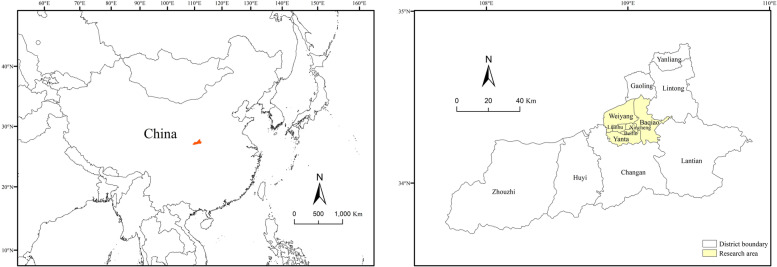
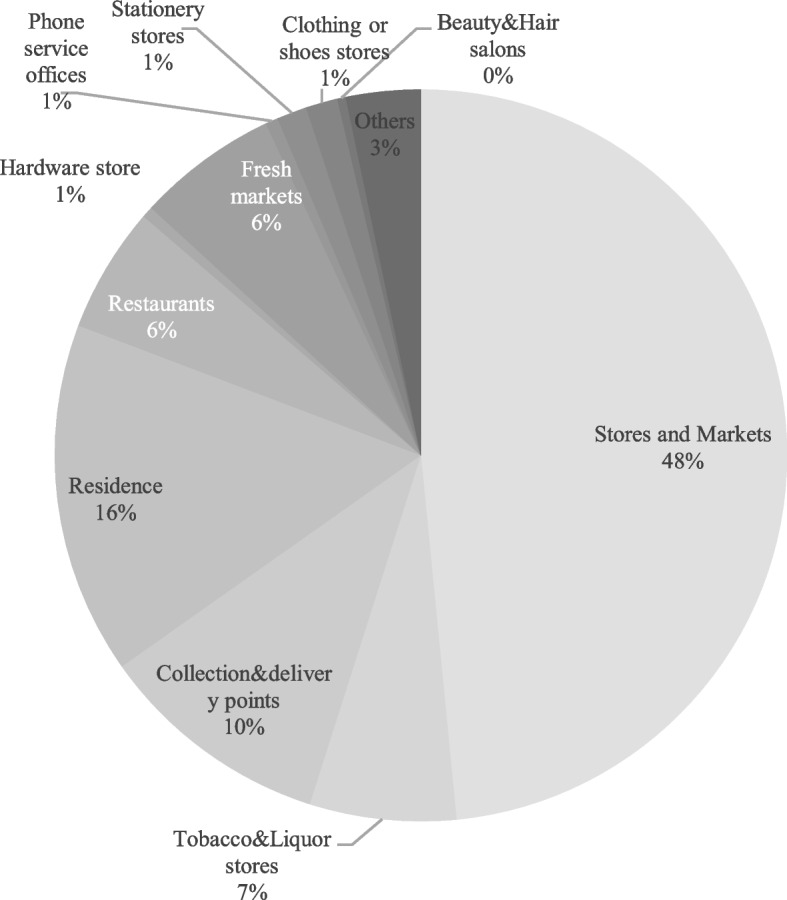
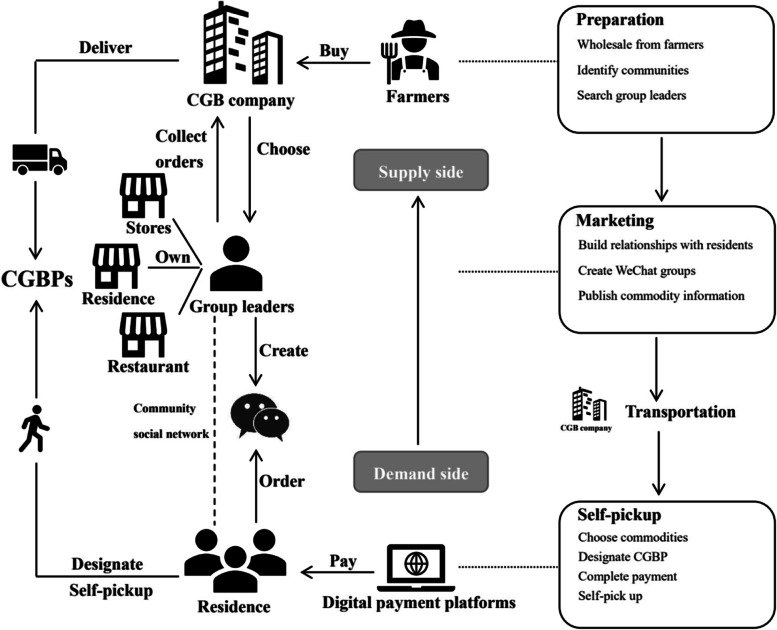
The Community-Group-Buying Points (CGBPs) flourished during COVID-19, safeguarding the daily lives of community residents in community lockdowns, and continuing to serve as a popular daily shopping channel in the Post-Epidemic Era with its advantages of low price, convenience and neighborhood trust. These CGBPs are allocated on location preferences however spatial distribution is not equal. Therefore, in this study, we used point of interest (POI) data of 2,433 CGBPs to analyze spatial distribution, operation mode and accessibility of CGBPs in Xi'an city, China as well as proposed the location optimization model. The results showed that the CGBPs were spatially distributed as clusters at α = 0.01 (Moran's I = 0.44). The CGBPs operation mode was divided into preparation, marketing, transportation, and self-pickup. Further CGBPs were mainly operating in the form of joint ventures, and the relying targets presented the characteristic of 'convenience store-based and multi-type coexistence'. Influenced by urban planning, land use, and cultural relics protection regulations, they showed an elliptic distribution pattern with a small oblateness, and the density showed a low-high-low circular distribution pattern from the Palace of Tang Dynasty outwards. Furthermore, the number of communities, population density, GDP, and housing type were important driving factors of the spatial pattern of CGBPs. Finally, to maximize attendance, it was suggested to add 248 new CGBPs, retain 394 existing CGBPs, and replace the remaining CGBPs with farmers' markets, mobile vendors, and supermarkets. The findings of this study would be beneficial to CGB companies in increasing the efficiency of self-pick-up facilities, to city planners in improving urban community-life cycle planning, and to policymakers in formulating relevant policies to balance the interests of stakeholders: CGB enterprises, residents, and vendors.



 京公网安备 11010802042870号
京ICP备2023020795号-1
京公网安备 11010802042870号
京ICP备2023020795号-1

 分享
分享

 求助内容:
求助内容: 应助结果提醒方式:
 扫码关注我们
