{"title":"Capillary-Mitochondrial Oxygen Transport in Muscle: Paradigm Shifts.","authors":"David C Poole, Timothy I Musch","doi":"10.1093/function/zqad013","DOIUrl":null,"url":null,"abstract":"<p><p>When exercising humans increase their oxygen uptake (V̇O<sub>2</sub>) 20-fold above rest the numbers are staggering: Each minute the O<sub>2</sub> transport system - lungs, cardiovascular, active muscles - transports and utilizes 161 sextillion (10 <sup>21</sup>) O<sub>2</sub> molecules. Leg extension exercise increases the quadriceps muscles' blood flow 100-times; transporting 17 sextillion O<sub>2</sub> molecules per kilogram per minute from microcirculation (capillaries) to mitochondria powering their cellular energetics. Within these muscles, the capillary network constitutes a prodigious blood-tissue interface essential to exchange O<sub>2</sub> and carbon dioxide requisite for muscle function. In disease, microcirculatory dysfunction underlies the pathophysiology of heart failure, diabetes, hypertension, pulmonary disease, sepsis, stroke and senile dementia. Effective therapeutic countermeasure design demands knowledge of microvascular/capillary function in health to recognize and combat pathological dysfunction. Dated concepts of skeletal muscle capillary (from the Latin <i>capillus</i> meaning 'hair') function prevail despite rigorous data-supported contemporary models; hindering progress in the field for future and current students, researchers and clinicians. Following closely the 100th anniversary of August Krogh's 1920 Nobel Prize for capillary function this Evidence Review presents an anatomical and physiological development of this dynamic field: Constructing a scientifically defensible platform for our current understanding of microcirculatory physiological function in supporting blood-mitochondrial O<sub>2</sub> transport. New developments include: 1. Putative roles of red blood cell aquaporin and rhesus channels in determining tissue O<sub>2</sub> diffusion. 2. Recent discoveries regarding intramyocyte O<sub>2</sub> transport. 3. Developing a comprehensive capillary functional model for muscle O<sub>2</sub> delivery-to-V̇O<sub>2</sub> matching. 4. Use of kinetics analysis to discriminate control mechanisms from collateral or pathological phenomena.</p>","PeriodicalId":73119,"journal":{"name":"Function (Oxford, England)","volume":"4 3","pages":"zqad013"},"PeriodicalIF":3.8000,"publicationDate":"2023-01-01","publicationTypes":"Journal Article","fieldsOfStudy":null,"isOpenAccess":false,"openAccessPdf":"https://www.ncbi.nlm.nih.gov/pmc/articles/PMC10165549/pdf/","citationCount":"1","resultStr":null,"platform":"Semanticscholar","paperid":null,"PeriodicalName":"Function (Oxford, England)","FirstCategoryId":"1085","ListUrlMain":"https://doi.org/10.1093/function/zqad013","RegionNum":0,"RegionCategory":null,"ArticlePicture":[],"TitleCN":null,"AbstractTextCN":null,"PMCID":null,"EPubDate":"","PubModel":"","JCR":"Q2","JCRName":"CELL BIOLOGY","Score":null,"Total":0}
引用次数: 1
Abstract
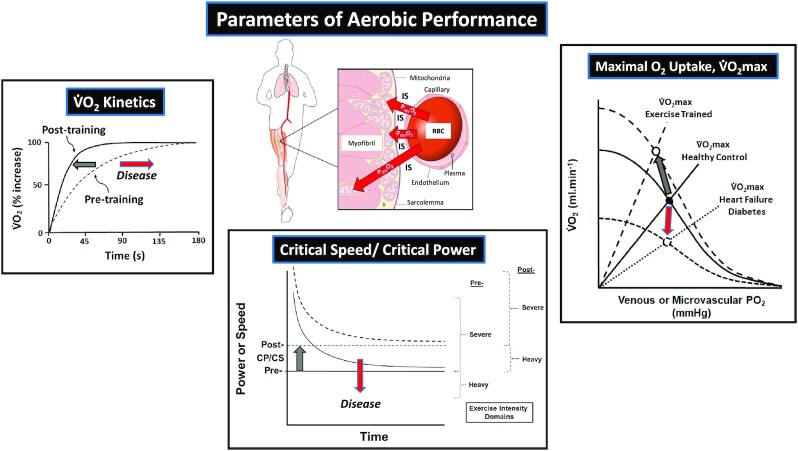
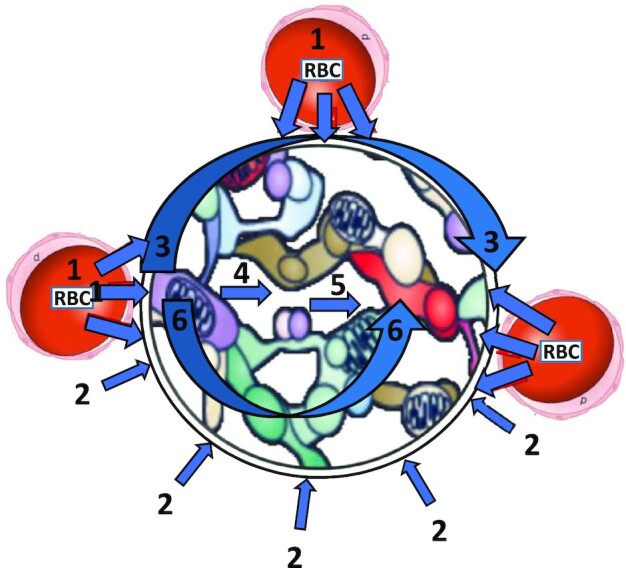
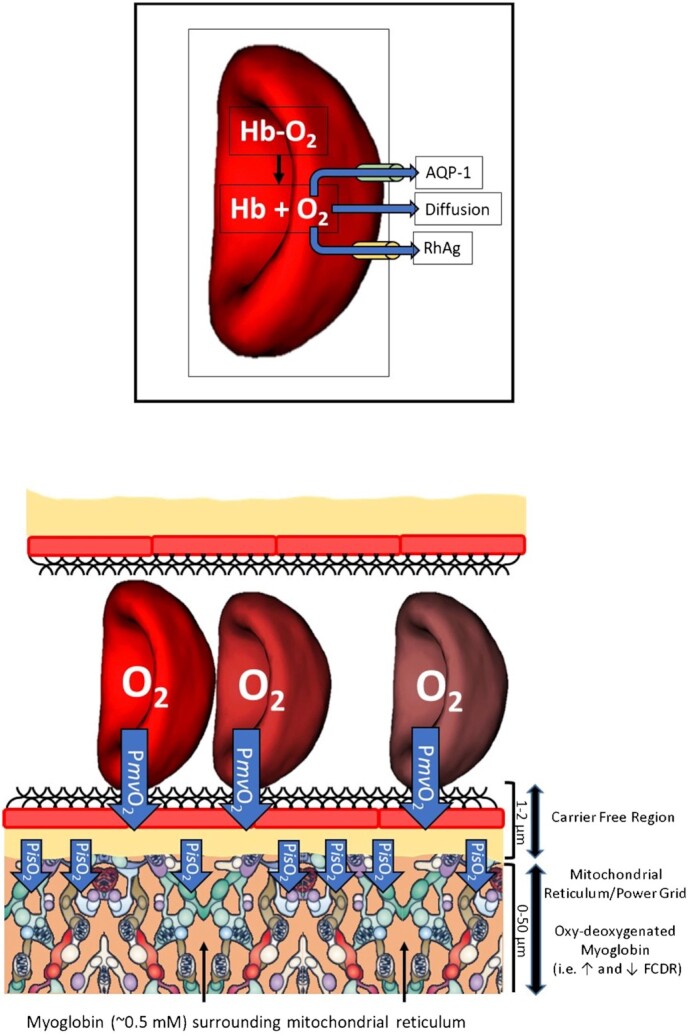
When exercising humans increase their oxygen uptake (V̇O2) 20-fold above rest the numbers are staggering: Each minute the O2 transport system - lungs, cardiovascular, active muscles - transports and utilizes 161 sextillion (10 21) O2 molecules. Leg extension exercise increases the quadriceps muscles' blood flow 100-times; transporting 17 sextillion O2 molecules per kilogram per minute from microcirculation (capillaries) to mitochondria powering their cellular energetics. Within these muscles, the capillary network constitutes a prodigious blood-tissue interface essential to exchange O2 and carbon dioxide requisite for muscle function. In disease, microcirculatory dysfunction underlies the pathophysiology of heart failure, diabetes, hypertension, pulmonary disease, sepsis, stroke and senile dementia. Effective therapeutic countermeasure design demands knowledge of microvascular/capillary function in health to recognize and combat pathological dysfunction. Dated concepts of skeletal muscle capillary (from the Latin capillus meaning 'hair') function prevail despite rigorous data-supported contemporary models; hindering progress in the field for future and current students, researchers and clinicians. Following closely the 100th anniversary of August Krogh's 1920 Nobel Prize for capillary function this Evidence Review presents an anatomical and physiological development of this dynamic field: Constructing a scientifically defensible platform for our current understanding of microcirculatory physiological function in supporting blood-mitochondrial O2 transport. New developments include: 1. Putative roles of red blood cell aquaporin and rhesus channels in determining tissue O2 diffusion. 2. Recent discoveries regarding intramyocyte O2 transport. 3. Developing a comprehensive capillary functional model for muscle O2 delivery-to-V̇O2 matching. 4. Use of kinetics analysis to discriminate control mechanisms from collateral or pathological phenomena.



 京公网安备 11010802042870号
京ICP备2023020795号-1
京公网安备 11010802042870号
京ICP备2023020795号-1

 分享
分享

 求助内容:
求助内容: 应助结果提醒方式:
 扫码关注我们
