Igor Fijalkowski, Patrick Willems, Veronique Jonckheere, Laure Simoens, Petra Van Damme
{"title":"Hidden in plain sight: challenges in proteomics detection of small ORF-encoded polypeptides.","authors":"Igor Fijalkowski, Patrick Willems, Veronique Jonckheere, Laure Simoens, Petra Van Damme","doi":"10.1093/femsml/uqac005","DOIUrl":null,"url":null,"abstract":"<p><p>Genomic studies of bacteria have long pointed toward widespread prevalence of small open reading frames (sORFs) encoding for short proteins, <100 amino acids in length. Despite the mounting genomic evidence of their robust expression, relatively little progress has been made in their mass spectrometry-based detection and various blanket statements have been used to explain this observed discrepancy. In this study, we provide a large-scale riboproteogenomics investigation of the challenging nature of proteomic detection of such small proteins as informed by conditional translation data. A panel of physiochemical properties alongside recently developed mass spectrometry detectability metrics was interrogated to provide a comprehensive evidence-based assessment of sORF-encoded polypeptide (SEP) detectability. Moreover, a large-scale proteomics and translatomics compendium of proteins produced by <i>Salmonella</i> Typhimurium (<i>S</i>. Typhimurium), a model human pathogen, across a panel of growth conditions is presented and used in support of our <i>in silico</i> SEP detectability analysis. This integrative approach is used to provide a data-driven census of small proteins expressed by <i>S</i>. Typhimurium across growth phases and infection-relevant conditions. Taken together, our study pinpoints current limitations in proteomics-based detection of novel small proteins currently missing from bacterial genome annotations.</p>","PeriodicalId":74189,"journal":{"name":"microLife","volume":"3 ","pages":"uqac005"},"PeriodicalIF":0.0000,"publicationDate":"2022-05-14","publicationTypes":"Journal Article","fieldsOfStudy":null,"isOpenAccess":false,"openAccessPdf":"https://www.ncbi.nlm.nih.gov/pmc/articles/PMC10117744/pdf/","citationCount":"0","resultStr":null,"platform":"Semanticscholar","paperid":null,"PeriodicalName":"microLife","FirstCategoryId":"1085","ListUrlMain":"https://doi.org/10.1093/femsml/uqac005","RegionNum":0,"RegionCategory":null,"ArticlePicture":[],"TitleCN":null,"AbstractTextCN":null,"PMCID":null,"EPubDate":"2022/1/1 0:00:00","PubModel":"eCollection","JCR":"","JCRName":"","Score":null,"Total":0}
引用次数: 0
Abstract
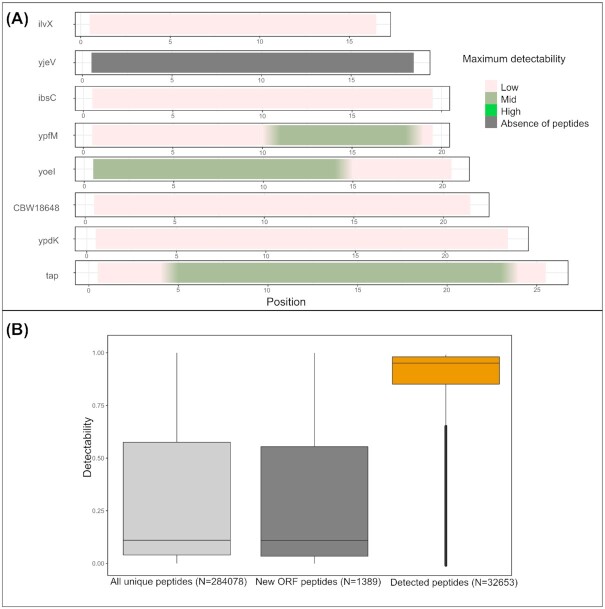
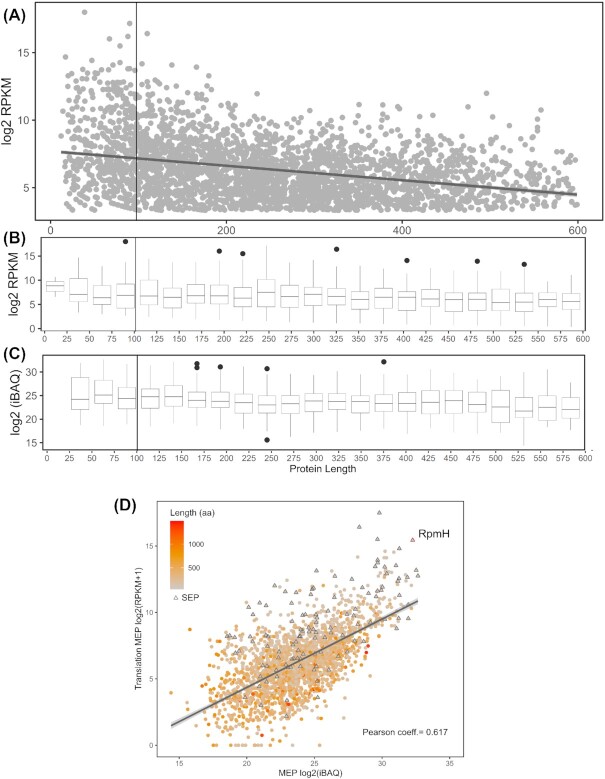
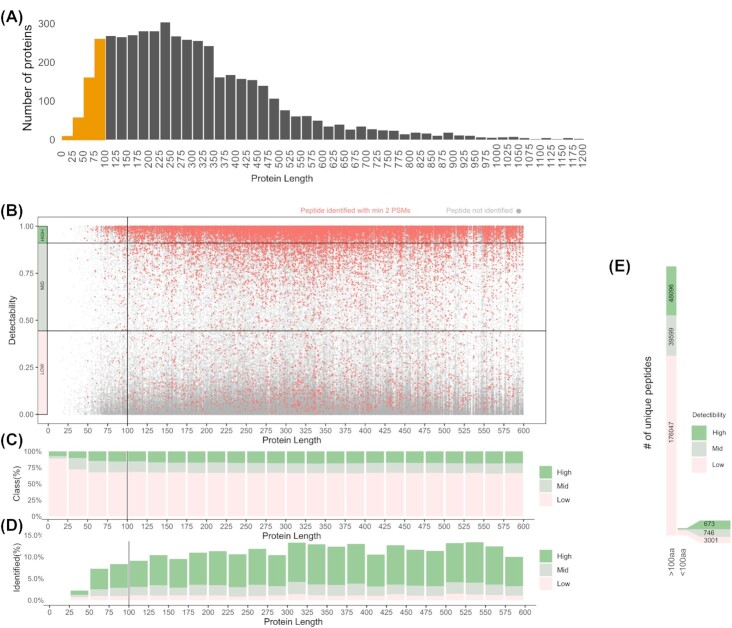
Genomic studies of bacteria have long pointed toward widespread prevalence of small open reading frames (sORFs) encoding for short proteins, <100 amino acids in length. Despite the mounting genomic evidence of their robust expression, relatively little progress has been made in their mass spectrometry-based detection and various blanket statements have been used to explain this observed discrepancy. In this study, we provide a large-scale riboproteogenomics investigation of the challenging nature of proteomic detection of such small proteins as informed by conditional translation data. A panel of physiochemical properties alongside recently developed mass spectrometry detectability metrics was interrogated to provide a comprehensive evidence-based assessment of sORF-encoded polypeptide (SEP) detectability. Moreover, a large-scale proteomics and translatomics compendium of proteins produced by Salmonella Typhimurium (S. Typhimurium), a model human pathogen, across a panel of growth conditions is presented and used in support of our in silico SEP detectability analysis. This integrative approach is used to provide a data-driven census of small proteins expressed by S. Typhimurium across growth phases and infection-relevant conditions. Taken together, our study pinpoints current limitations in proteomics-based detection of novel small proteins currently missing from bacterial genome annotations.



 京公网安备 11010802042870号
京ICP备2023020795号-1
京公网安备 11010802042870号
京ICP备2023020795号-1

 分享
分享

 求助内容:
求助内容: 应助结果提醒方式:
 扫码关注我们
