Alaa Abd-Alrazaq, Rawan AlSaad, Dari Alhuwail, Arfan Ahmed, Padraig Mark Healy, Syed Latifi, Sarah Aziz, Rafat Damseh, Sadam Alabed Alrazak, Javaid Sheikh
{"title":"Large Language Models in Medical Education: Opportunities, Challenges, and Future Directions.","authors":"Alaa Abd-Alrazaq, Rawan AlSaad, Dari Alhuwail, Arfan Ahmed, Padraig Mark Healy, Syed Latifi, Sarah Aziz, Rafat Damseh, Sadam Alabed Alrazak, Javaid Sheikh","doi":"10.2196/48291","DOIUrl":null,"url":null,"abstract":"<p><p>The integration of large language models (LLMs), such as those in the Generative Pre-trained Transformers (GPT) series, into medical education has the potential to transform learning experiences for students and elevate their knowledge, skills, and competence. Drawing on a wealth of professional and academic experience, we propose that LLMs hold promise for revolutionizing medical curriculum development, teaching methodologies, personalized study plans and learning materials, student assessments, and more. However, we also critically examine the challenges that such integration might pose by addressing issues of algorithmic bias, overreliance, plagiarism, misinformation, inequity, privacy, and copyright concerns in medical education. As we navigate the shift from an information-driven educational paradigm to an artificial intelligence (AI)-driven educational paradigm, we argue that it is paramount to understand both the potential and the pitfalls of LLMs in medical education. This paper thus offers our perspective on the opportunities and challenges of using LLMs in this context. We believe that the insights gleaned from this analysis will serve as a foundation for future recommendations and best practices in the field, fostering the responsible and effective use of AI technologies in medical education.</p>","PeriodicalId":36236,"journal":{"name":"JMIR Medical Education","volume":"9 ","pages":"e48291"},"PeriodicalIF":3.2000,"publicationDate":"2023-06-01","publicationTypes":"Journal Article","fieldsOfStudy":null,"isOpenAccess":false,"openAccessPdf":"https://www.ncbi.nlm.nih.gov/pmc/articles/PMC10273039/pdf/","citationCount":"29","resultStr":null,"platform":"Semanticscholar","paperid":null,"PeriodicalName":"JMIR Medical Education","FirstCategoryId":"1085","ListUrlMain":"https://doi.org/10.2196/48291","RegionNum":0,"RegionCategory":null,"ArticlePicture":[],"TitleCN":null,"AbstractTextCN":null,"PMCID":null,"EPubDate":"","PubModel":"","JCR":"Q1","JCRName":"EDUCATION, SCIENTIFIC DISCIPLINES","Score":null,"Total":0}
引用次数: 29
Abstract
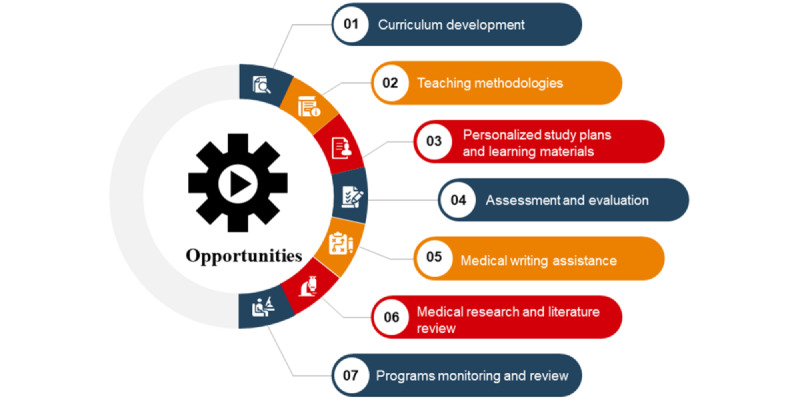
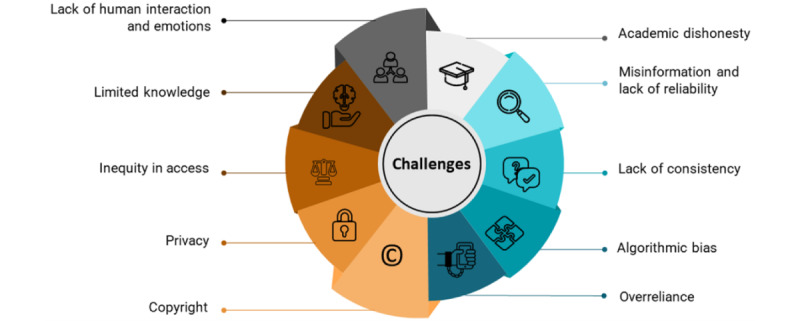
The integration of large language models (LLMs), such as those in the Generative Pre-trained Transformers (GPT) series, into medical education has the potential to transform learning experiences for students and elevate their knowledge, skills, and competence. Drawing on a wealth of professional and academic experience, we propose that LLMs hold promise for revolutionizing medical curriculum development, teaching methodologies, personalized study plans and learning materials, student assessments, and more. However, we also critically examine the challenges that such integration might pose by addressing issues of algorithmic bias, overreliance, plagiarism, misinformation, inequity, privacy, and copyright concerns in medical education. As we navigate the shift from an information-driven educational paradigm to an artificial intelligence (AI)-driven educational paradigm, we argue that it is paramount to understand both the potential and the pitfalls of LLMs in medical education. This paper thus offers our perspective on the opportunities and challenges of using LLMs in this context. We believe that the insights gleaned from this analysis will serve as a foundation for future recommendations and best practices in the field, fostering the responsible and effective use of AI technologies in medical education.




 京公网安备 11010802042870号
京ICP备2023020795号-1
京公网安备 11010802042870号
京ICP备2023020795号-1

 分享
分享
 求助内容:
求助内容: 应助结果提醒方式:
 扫码关注我们
