{"title":"治疗性低温对缺氧缺血性脑病新生儿促红细胞生成素的影响。","authors":"Tzu-Hua Lin, Chia-Huei Chen, Mary Hsin-Ju Ko, Jeng-Daw Tsai, Mei-Jy Jeng","doi":"10.1097/JCMA.0000000000000898","DOIUrl":null,"url":null,"abstract":"<p><strong>Background: </strong>Minimizing multiple organ dysfunction-related mortality and morbidity is a critical issue for patients with hypoxic-ischemic encephalopathy (HIE) receiving therapeutic hypothermia (TH). Although erythropoietin (EPO) has demonstrated protective effects on various hypoxic-ischemic organs in animal studies and clinical trials in adults, its effects on neonates with HIE require further investigation.</p><p><strong>Methods: </strong>This study retrospectively analyzed the medical records of neonates with HIE who received TH with or without EPO (TH+EPO vs TH groups) administration in a tertiary referral hospital from January 2016 to January 2021. Data regarding patient characteristics, medical treatment, and clinical (neurological, cardiac, respiratory, gastrointestinal, hepatic, and renal) function assessments were collected. To control for confounding factors and selection bias between the two groups, a 1:1 propensity matching method was applied.</p><p><strong>Results: </strong>A total of 45 neonates with HIE received TH during the study period, with 24 patients (53%) in the TH+EPO group. After matching, each group enrolled 13 cases. No significant difference in mortality or hospital stay between the two groups was noted. During the first 3 days, the patients in the TH+EPO group showed significantly higher blood pressure (BP) than those in the TH group ( p < 0.05 on day 1). The TH+EPO group showed trends of higher blood hemoglobin ( p > 0.05) and creatinine ( p > 0.05) levels and lower estimated glomerular filtration rate ( p > 0.05) and urine output ( p > 0.05) during the first 2 weeks than TH group.</p><p><strong>Conclusion: </strong>The use of EPO in addition to TH is safe for neonates with HIE. The neonates with moderate or severe HIE who received EPO may have a lesser risk of hypotension than those who received TH alone. Further clinical studies on renal and cardiac functions and long-term neurological effects of EPO are required.</p>","PeriodicalId":17251,"journal":{"name":"Journal of the Chinese Medical Association","volume":"86 5","pages":"515-522"},"PeriodicalIF":2.4000,"publicationDate":"2023-05-01","publicationTypes":"Journal Article","fieldsOfStudy":null,"isOpenAccess":false,"openAccessPdf":"https://www.ncbi.nlm.nih.gov/pmc/articles/PMC12755588/pdf/","citationCount":"0","resultStr":"{\"title\":\"Effects of erythropoietin in neonates with hypoxic-ischemic encephalopathy receiving therapeutic hypothermia.\",\"authors\":\"Tzu-Hua Lin, Chia-Huei Chen, Mary Hsin-Ju Ko, Jeng-Daw Tsai, Mei-Jy Jeng\",\"doi\":\"10.1097/JCMA.0000000000000898\",\"DOIUrl\":null,\"url\":null,\"abstract\":\"<p><strong>Background: </strong>Minimizing multiple organ dysfunction-related mortality and morbidity is a critical issue for patients with hypoxic-ischemic encephalopathy (HIE) receiving therapeutic hypothermia (TH). Although erythropoietin (EPO) has demonstrated protective effects on various hypoxic-ischemic organs in animal studies and clinical trials in adults, its effects on neonates with HIE require further investigation.</p><p><strong>Methods: </strong>This study retrospectively analyzed the medical records of neonates with HIE who received TH with or without EPO (TH+EPO vs TH groups) administration in a tertiary referral hospital from January 2016 to January 2021. Data regarding patient characteristics, medical treatment, and clinical (neurological, cardiac, respiratory, gastrointestinal, hepatic, and renal) function assessments were collected. To control for confounding factors and selection bias between the two groups, a 1:1 propensity matching method was applied.</p><p><strong>Results: </strong>A total of 45 neonates with HIE received TH during the study period, with 24 patients (53%) in the TH+EPO group. After matching, each group enrolled 13 cases. No significant difference in mortality or hospital stay between the two groups was noted. During the first 3 days, the patients in the TH+EPO group showed significantly higher blood pressure (BP) than those in the TH group ( p < 0.05 on day 1). The TH+EPO group showed trends of higher blood hemoglobin ( p > 0.05) and creatinine ( p > 0.05) levels and lower estimated glomerular filtration rate ( p > 0.05) and urine output ( p > 0.05) during the first 2 weeks than TH group.</p><p><strong>Conclusion: </strong>The use of EPO in addition to TH is safe for neonates with HIE. The neonates with moderate or severe HIE who received EPO may have a lesser risk of hypotension than those who received TH alone. Further clinical studies on renal and cardiac functions and long-term neurological effects of EPO are required.</p>\",\"PeriodicalId\":17251,\"journal\":{\"name\":\"Journal of the Chinese Medical Association\",\"volume\":\"86 5\",\"pages\":\"515-522\"},\"PeriodicalIF\":2.4000,\"publicationDate\":\"2023-05-01\",\"publicationTypes\":\"Journal Article\",\"fieldsOfStudy\":null,\"isOpenAccess\":false,\"openAccessPdf\":\"https://www.ncbi.nlm.nih.gov/pmc/articles/PMC12755588/pdf/\",\"citationCount\":\"0\",\"resultStr\":null,\"platform\":\"Semanticscholar\",\"paperid\":null,\"PeriodicalName\":\"Journal of the Chinese Medical Association\",\"FirstCategoryId\":\"3\",\"ListUrlMain\":\"https://doi.org/10.1097/JCMA.0000000000000898\",\"RegionNum\":4,\"RegionCategory\":\"医学\",\"ArticlePicture\":[],\"TitleCN\":null,\"AbstractTextCN\":null,\"PMCID\":null,\"EPubDate\":\"2023/2/10 0:00:00\",\"PubModel\":\"Epub\",\"JCR\":\"Q2\",\"JCRName\":\"MEDICINE, GENERAL & INTERNAL\",\"Score\":null,\"Total\":0}","platform":"Semanticscholar","paperid":null,"PeriodicalName":"Journal of the Chinese Medical Association","FirstCategoryId":"3","ListUrlMain":"https://doi.org/10.1097/JCMA.0000000000000898","RegionNum":4,"RegionCategory":"医学","ArticlePicture":[],"TitleCN":null,"AbstractTextCN":null,"PMCID":null,"EPubDate":"2023/2/10 0:00:00","PubModel":"Epub","JCR":"Q2","JCRName":"MEDICINE, GENERAL & INTERNAL","Score":null,"Total":0}
引用次数: 0
摘要
背景:减少多器官功能障碍相关的死亡率和发病率是缺氧缺血性脑病(HIE)患者接受低温治疗(TH)的关键问题。虽然在动物研究和成人临床试验中,促红细胞生成素(EPO)已显示出对各种缺氧缺血性器官的保护作用,但其对新生儿HIE的作用还有待进一步研究。方法:本研究回顾性分析2016年1月至2021年1月在某三级转诊医院接受TH联合或不联合EPO (TH+EPO vs TH组)治疗的HIE新生儿的病历。收集有关患者特征、药物治疗和临床(神经、心脏、呼吸、胃肠、肝脏和肾脏)功能评估的数据。为了控制两组之间的混杂因素和选择偏差,采用1:1倾向匹配方法。结果:研究期间共有45例HIE新生儿接受了TH治疗,其中TH+EPO组24例(53%)。配对后,每组入组13例。两组之间的死亡率和住院时间没有显著差异。在治疗前3天,TH+EPO组患者的血压(BP)明显高于TH组(p < 0.05)。与TH组相比,TH+EPO组前2周血血红蛋白(p >.05)和肌酐(p >0.05)水平升高,肾小球滤过率(p >0.05)和尿量(p >0.05)降低。结论:促生成素加TH治疗新生儿HIE是安全的。中度或重度HIE新生儿接受EPO治疗比单独接受TH治疗有更低的低血压风险。需要对促生成素的肾脏和心脏功能以及长期神经系统影响进行进一步的临床研究。
Effects of erythropoietin in neonates with hypoxic-ischemic encephalopathy receiving therapeutic hypothermia.
Background: Minimizing multiple organ dysfunction-related mortality and morbidity is a critical issue for patients with hypoxic-ischemic encephalopathy (HIE) receiving therapeutic hypothermia (TH). Although erythropoietin (EPO) has demonstrated protective effects on various hypoxic-ischemic organs in animal studies and clinical trials in adults, its effects on neonates with HIE require further investigation.
Methods: This study retrospectively analyzed the medical records of neonates with HIE who received TH with or without EPO (TH+EPO vs TH groups) administration in a tertiary referral hospital from January 2016 to January 2021. Data regarding patient characteristics, medical treatment, and clinical (neurological, cardiac, respiratory, gastrointestinal, hepatic, and renal) function assessments were collected. To control for confounding factors and selection bias between the two groups, a 1:1 propensity matching method was applied.
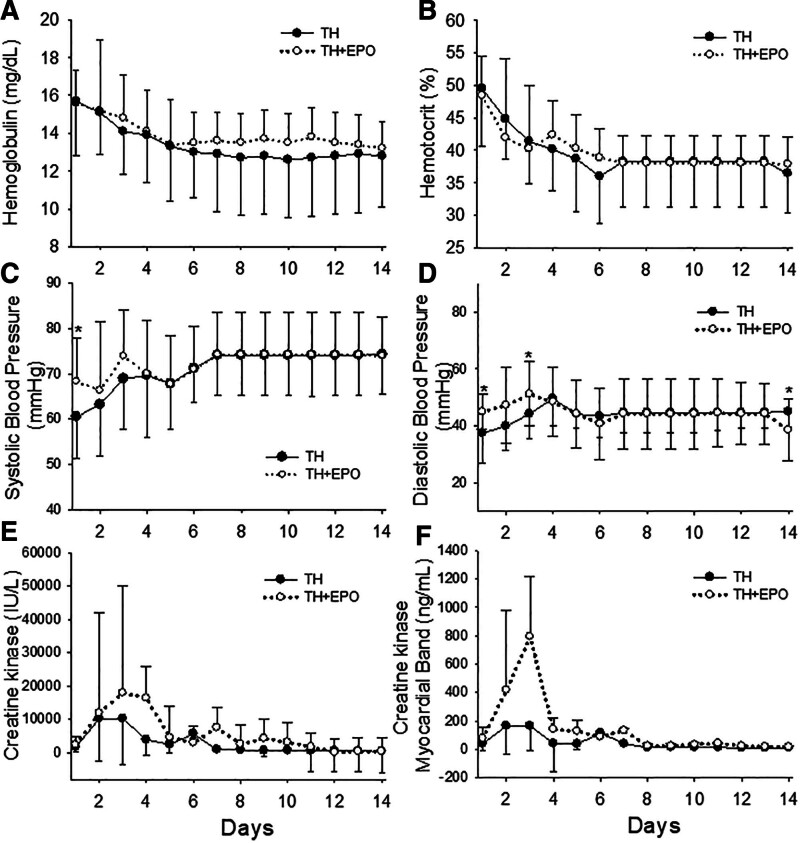
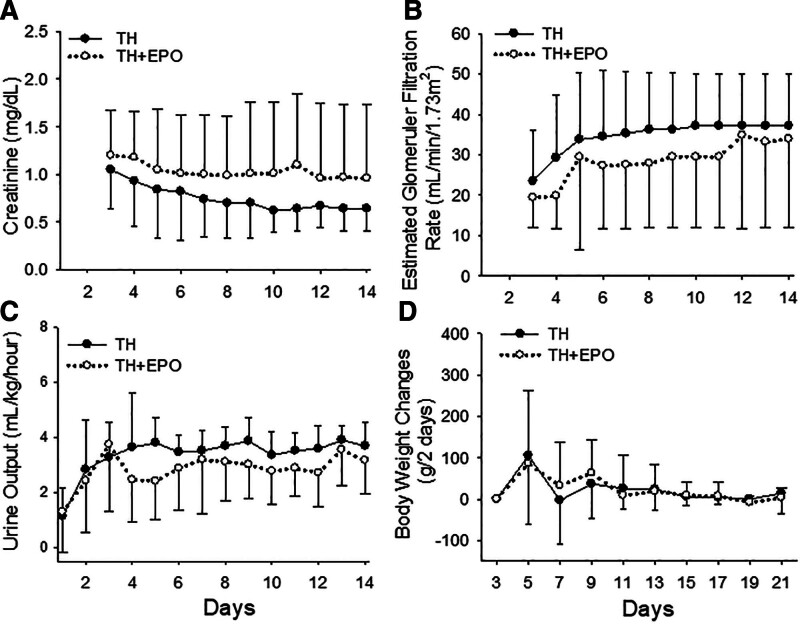
Results: A total of 45 neonates with HIE received TH during the study period, with 24 patients (53%) in the TH+EPO group. After matching, each group enrolled 13 cases. No significant difference in mortality or hospital stay between the two groups was noted. During the first 3 days, the patients in the TH+EPO group showed significantly higher blood pressure (BP) than those in the TH group ( p < 0.05 on day 1). The TH+EPO group showed trends of higher blood hemoglobin ( p > 0.05) and creatinine ( p > 0.05) levels and lower estimated glomerular filtration rate ( p > 0.05) and urine output ( p > 0.05) during the first 2 weeks than TH group.
Conclusion: The use of EPO in addition to TH is safe for neonates with HIE. The neonates with moderate or severe HIE who received EPO may have a lesser risk of hypotension than those who received TH alone. Further clinical studies on renal and cardiac functions and long-term neurological effects of EPO are required.
期刊介绍:
Journal of the Chinese Medical Association, previously known as the Chinese Medical Journal (Taipei), has a long history of publishing scientific papers and has continuously made substantial contribution in the understanding and progress of a broad range of biomedical sciences. It is published monthly by Wolters Kluwer Health and indexed in Science Citation Index Expanded (SCIE), MEDLINE®, Index Medicus, EMBASE, CAB Abstracts, Sociedad Iberoamericana de Informacion Cientifica (SIIC) Data Bases, ScienceDirect, Scopus and Global Health.
JCMA is the official and open access journal of the Chinese Medical Association, Taipei, Taiwan, Republic of China and is an international forum for scholarly reports in medicine, surgery, dentistry and basic research in biomedical science. As a vehicle of communication and education among physicians and scientists, the journal is open to the use of diverse methodological approaches. Reports of professional practice will need to demonstrate academic robustness and scientific rigor. Outstanding scholars are invited to give their update reviews on the perspectives of the evidence-based science in the related research field. Article types accepted include review articles, original articles, case reports, brief communications and letters to the editor




 京公网安备 11010802042870号
京ICP备2023020795号-1
京公网安备 11010802042870号
京ICP备2023020795号-1

 分享
分享
 求助内容:
求助内容: 应助结果提醒方式:
 扫码关注我们
