Ali Seifi, Seyed Hossein Hosseini, Mehrdad Tarafdar Hagh, Majid Hosseinpour
{"title":"基于缩小开关基本单元的新型多电平逆变器,适用于高电压等级","authors":"Ali Seifi, Seyed Hossein Hosseini, Mehrdad Tarafdar Hagh, Majid Hosseinpour","doi":"10.1049/pel2.12673","DOIUrl":null,"url":null,"abstract":"<p>In this study, to solve total harmonic distortion (THD) and voltage stress on switches, challenges have been made by presenting a new multi-level inverter (MLI). The proposed topology can operate with both symmetric and asymmetric sources. The proposed topology in symmetric and asymmetric mode with 18 switches can produce 17 and 49 voltage levels, respectively, with THD values of 4.14% and 1.45%, which passes the IEEE harmonic standard. The main advantage of the proposed topology is reducing the number of circuit devices, which reduces the price, volume, and complexity of the circuit by reducing the number of circuit devices. The proposed topology reduces the THD, the number of power electronics components, and voltage stress by increasing the output levels. The proposed topology is compared with other topologies and the advantage of the proposed topology is shown in terms of the number of switches and drivers. In addition, the proposed topology is compared in terms of the cost function. The power losses based on the thermal model of the proposed topology have been analysed and simulated. Simulation and experimental results are presented for different scenarios such as load type, load changes, and modulation index changes to validate the proposed topology.</p>","PeriodicalId":56302,"journal":{"name":"IET Power Electronics","volume":"17 4","pages":"551-563"},"PeriodicalIF":1.9000,"publicationDate":"2024-02-17","publicationTypes":"Journal Article","fieldsOfStudy":null,"isOpenAccess":false,"openAccessPdf":"https://onlinelibrary.wiley.com/doi/epdf/10.1049/pel2.12673","citationCount":"0","resultStr":"{\"title\":\"New multilevel inverter based on reduced switch basic cell for high voltage levels\",\"authors\":\"Ali Seifi, Seyed Hossein Hosseini, Mehrdad Tarafdar Hagh, Majid Hosseinpour\",\"doi\":\"10.1049/pel2.12673\",\"DOIUrl\":null,\"url\":null,\"abstract\":\"<p>In this study, to solve total harmonic distortion (THD) and voltage stress on switches, challenges have been made by presenting a new multi-level inverter (MLI). The proposed topology can operate with both symmetric and asymmetric sources. The proposed topology in symmetric and asymmetric mode with 18 switches can produce 17 and 49 voltage levels, respectively, with THD values of 4.14% and 1.45%, which passes the IEEE harmonic standard. The main advantage of the proposed topology is reducing the number of circuit devices, which reduces the price, volume, and complexity of the circuit by reducing the number of circuit devices. The proposed topology reduces the THD, the number of power electronics components, and voltage stress by increasing the output levels. The proposed topology is compared with other topologies and the advantage of the proposed topology is shown in terms of the number of switches and drivers. In addition, the proposed topology is compared in terms of the cost function. The power losses based on the thermal model of the proposed topology have been analysed and simulated. Simulation and experimental results are presented for different scenarios such as load type, load changes, and modulation index changes to validate the proposed topology.</p>\",\"PeriodicalId\":56302,\"journal\":{\"name\":\"IET Power Electronics\",\"volume\":\"17 4\",\"pages\":\"551-563\"},\"PeriodicalIF\":1.9000,\"publicationDate\":\"2024-02-17\",\"publicationTypes\":\"Journal Article\",\"fieldsOfStudy\":null,\"isOpenAccess\":false,\"openAccessPdf\":\"https://onlinelibrary.wiley.com/doi/epdf/10.1049/pel2.12673\",\"citationCount\":\"0\",\"resultStr\":null,\"platform\":\"Semanticscholar\",\"paperid\":null,\"PeriodicalName\":\"IET Power Electronics\",\"FirstCategoryId\":\"5\",\"ListUrlMain\":\"https://ietresearch.onlinelibrary.wiley.com/doi/10.1049/pel2.12673\",\"RegionNum\":4,\"RegionCategory\":\"工程技术\",\"ArticlePicture\":[],\"TitleCN\":null,\"AbstractTextCN\":null,\"PMCID\":null,\"EPubDate\":\"\",\"PubModel\":\"\",\"JCR\":\"Q3\",\"JCRName\":\"ENGINEERING, ELECTRICAL & ELECTRONIC\",\"Score\":null,\"Total\":0}","platform":"Semanticscholar","paperid":null,"PeriodicalName":"IET Power Electronics","FirstCategoryId":"5","ListUrlMain":"https://ietresearch.onlinelibrary.wiley.com/doi/10.1049/pel2.12673","RegionNum":4,"RegionCategory":"工程技术","ArticlePicture":[],"TitleCN":null,"AbstractTextCN":null,"PMCID":null,"EPubDate":"","PubModel":"","JCR":"Q3","JCRName":"ENGINEERING, ELECTRICAL & ELECTRONIC","Score":null,"Total":0}
New multilevel inverter based on reduced switch basic cell for high voltage levels
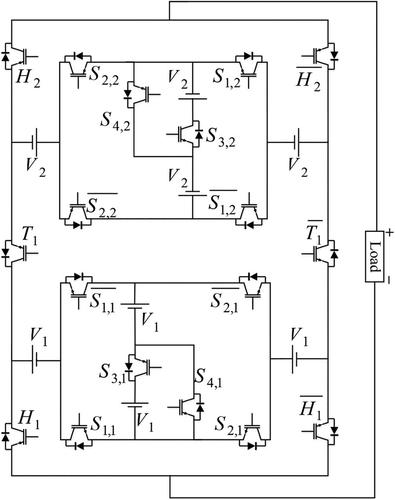
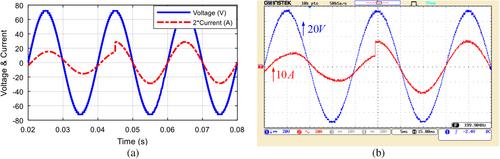
In this study, to solve total harmonic distortion (THD) and voltage stress on switches, challenges have been made by presenting a new multi-level inverter (MLI). The proposed topology can operate with both symmetric and asymmetric sources. The proposed topology in symmetric and asymmetric mode with 18 switches can produce 17 and 49 voltage levels, respectively, with THD values of 4.14% and 1.45%, which passes the IEEE harmonic standard. The main advantage of the proposed topology is reducing the number of circuit devices, which reduces the price, volume, and complexity of the circuit by reducing the number of circuit devices. The proposed topology reduces the THD, the number of power electronics components, and voltage stress by increasing the output levels. The proposed topology is compared with other topologies and the advantage of the proposed topology is shown in terms of the number of switches and drivers. In addition, the proposed topology is compared in terms of the cost function. The power losses based on the thermal model of the proposed topology have been analysed and simulated. Simulation and experimental results are presented for different scenarios such as load type, load changes, and modulation index changes to validate the proposed topology.
期刊介绍:
IET Power Electronics aims to attract original research papers, short communications, review articles and power electronics related educational studies. The scope covers applications and technologies in the field of power electronics with special focus on cost-effective, efficient, power dense, environmental friendly and robust solutions, which includes:
Applications:
Electric drives/generators, renewable energy, industrial and consumable applications (including lighting, welding, heating, sub-sea applications, drilling and others), medical and military apparatus, utility applications, transport and space application, energy harvesting, telecommunications, energy storage management systems, home appliances.
Technologies:
Circuits: all type of converter topologies for low and high power applications including but not limited to: inverter, rectifier, dc/dc converter, power supplies, UPS, ac/ac converter, resonant converter, high frequency converter, hybrid converter, multilevel converter, power factor correction circuits and other advanced topologies.
Components and Materials: switching devices and their control, inductors, sensors, transformers, capacitors, resistors, thermal management, filters, fuses and protection elements and other novel low-cost efficient components/materials.
Control: techniques for controlling, analysing, modelling and/or simulation of power electronics circuits and complete power electronics systems.
Design/Manufacturing/Testing: new multi-domain modelling, assembling and packaging technologies, advanced testing techniques.
Environmental Impact: Electromagnetic Interference (EMI) reduction techniques, Electromagnetic Compatibility (EMC), limiting acoustic noise and vibration, recycling techniques, use of non-rare material.
Education: teaching methods, programme and course design, use of technology in power electronics teaching, virtual laboratory and e-learning and fields within the scope of interest.
Special Issues. Current Call for papers:
Harmonic Mitigation Techniques and Grid Robustness in Power Electronic-Based Power Systems - https://digital-library.theiet.org/files/IET_PEL_CFP_HMTGRPEPS.pdf






 京公网安备 11010802042870号
京ICP备2023020795号-1
京公网安备 11010802042870号
京ICP备2023020795号-1

 分享
分享
 求助内容:
求助内容: 应助结果提醒方式:
 扫码关注我们
