Karabo Innocent Matumba, Teboho Clement Mokhena, Vincent Ojijo, Emmanuel Rotimi Sadiku, Suprakas Sinha Ray
{"title":"聚乳酸/聚(ε-己内酯)共混物及其复合材料的形态特征、性能和应用--综述","authors":"Karabo Innocent Matumba, Teboho Clement Mokhena, Vincent Ojijo, Emmanuel Rotimi Sadiku, Suprakas Sinha Ray","doi":"10.1002/mame.202400056","DOIUrl":null,"url":null,"abstract":"<p>Over the past years, poly(lactic acid) or polylactide (PLA) is commonly researched as a possible replacement for traditional fossil-based polymers because of its compostability, biocompatibility, and high mechanical properties. PLA has a variety of applications in packaging, biomedical, and structural. However, PLA has limitations, such as high brittleness, low thermal stability, and a slow crystallization rate, which limits the wide range of applications. To overcome these limitations, the literature reports that blending PLA with other polymers, such as poly(ε-caprolactone) (PCL), is an economically viable approach. Although blending PLA with PCL is considered a feasible approach, the blend system still suffers from immiscibility, depending on the blend composition. This review aims to highlight recent developments from 2014 to date on the processing of PLA/PCL blends, including their composites, with a primary focus on morphological characteristics and mechanical and thermal properties, including their potential applications in various sectors.</p>","PeriodicalId":18151,"journal":{"name":"Macromolecular Materials and Engineering","volume":"309 8","pages":""},"PeriodicalIF":4.6000,"publicationDate":"2024-03-23","publicationTypes":"Journal Article","fieldsOfStudy":null,"isOpenAccess":false,"openAccessPdf":"https://onlinelibrary.wiley.com/doi/epdf/10.1002/mame.202400056","citationCount":"0","resultStr":"{\"title\":\"Morphological Characteristics, Properties, and Applications of Polylactide/Poly(ε-caprolactone) Blends and Their Composites—A Review\",\"authors\":\"Karabo Innocent Matumba, Teboho Clement Mokhena, Vincent Ojijo, Emmanuel Rotimi Sadiku, Suprakas Sinha Ray\",\"doi\":\"10.1002/mame.202400056\",\"DOIUrl\":null,\"url\":null,\"abstract\":\"<p>Over the past years, poly(lactic acid) or polylactide (PLA) is commonly researched as a possible replacement for traditional fossil-based polymers because of its compostability, biocompatibility, and high mechanical properties. PLA has a variety of applications in packaging, biomedical, and structural. However, PLA has limitations, such as high brittleness, low thermal stability, and a slow crystallization rate, which limits the wide range of applications. To overcome these limitations, the literature reports that blending PLA with other polymers, such as poly(ε-caprolactone) (PCL), is an economically viable approach. Although blending PLA with PCL is considered a feasible approach, the blend system still suffers from immiscibility, depending on the blend composition. This review aims to highlight recent developments from 2014 to date on the processing of PLA/PCL blends, including their composites, with a primary focus on morphological characteristics and mechanical and thermal properties, including their potential applications in various sectors.</p>\",\"PeriodicalId\":18151,\"journal\":{\"name\":\"Macromolecular Materials and Engineering\",\"volume\":\"309 8\",\"pages\":\"\"},\"PeriodicalIF\":4.6000,\"publicationDate\":\"2024-03-23\",\"publicationTypes\":\"Journal Article\",\"fieldsOfStudy\":null,\"isOpenAccess\":false,\"openAccessPdf\":\"https://onlinelibrary.wiley.com/doi/epdf/10.1002/mame.202400056\",\"citationCount\":\"0\",\"resultStr\":null,\"platform\":\"Semanticscholar\",\"paperid\":null,\"PeriodicalName\":\"Macromolecular Materials and Engineering\",\"FirstCategoryId\":\"88\",\"ListUrlMain\":\"https://onlinelibrary.wiley.com/doi/10.1002/mame.202400056\",\"RegionNum\":3,\"RegionCategory\":\"材料科学\",\"ArticlePicture\":[],\"TitleCN\":null,\"AbstractTextCN\":null,\"PMCID\":null,\"EPubDate\":\"\",\"PubModel\":\"\",\"JCR\":\"Q2\",\"JCRName\":\"MATERIALS SCIENCE, MULTIDISCIPLINARY\",\"Score\":null,\"Total\":0}","platform":"Semanticscholar","paperid":null,"PeriodicalName":"Macromolecular Materials and Engineering","FirstCategoryId":"88","ListUrlMain":"https://onlinelibrary.wiley.com/doi/10.1002/mame.202400056","RegionNum":3,"RegionCategory":"材料科学","ArticlePicture":[],"TitleCN":null,"AbstractTextCN":null,"PMCID":null,"EPubDate":"","PubModel":"","JCR":"Q2","JCRName":"MATERIALS SCIENCE, MULTIDISCIPLINARY","Score":null,"Total":0}
Morphological Characteristics, Properties, and Applications of Polylactide/Poly(ε-caprolactone) Blends and Their Composites—A Review
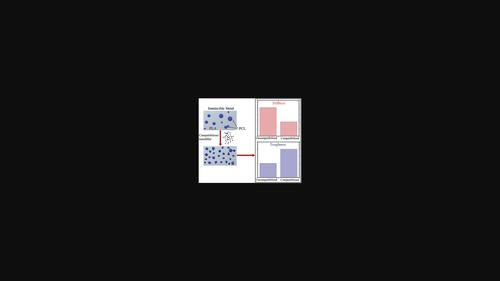
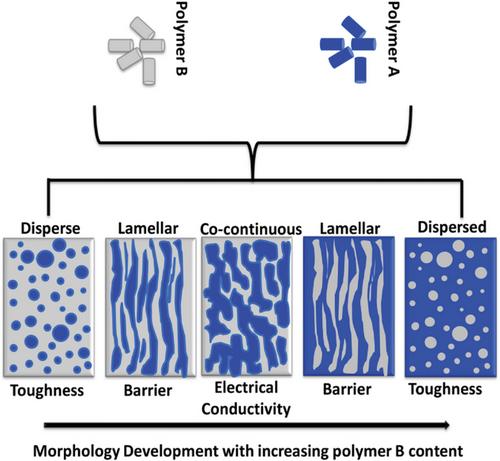
Over the past years, poly(lactic acid) or polylactide (PLA) is commonly researched as a possible replacement for traditional fossil-based polymers because of its compostability, biocompatibility, and high mechanical properties. PLA has a variety of applications in packaging, biomedical, and structural. However, PLA has limitations, such as high brittleness, low thermal stability, and a slow crystallization rate, which limits the wide range of applications. To overcome these limitations, the literature reports that blending PLA with other polymers, such as poly(ε-caprolactone) (PCL), is an economically viable approach. Although blending PLA with PCL is considered a feasible approach, the blend system still suffers from immiscibility, depending on the blend composition. This review aims to highlight recent developments from 2014 to date on the processing of PLA/PCL blends, including their composites, with a primary focus on morphological characteristics and mechanical and thermal properties, including their potential applications in various sectors.
期刊介绍:
Macromolecular Materials and Engineering is the high-quality polymer science journal dedicated to the design, modification, characterization, processing and application of advanced polymeric materials, including membranes, sensors, sustainability, composites, fibers, foams, 3D printing, actuators as well as energy and electronic applications.
Macromolecular Materials and Engineering is among the top journals publishing original research in polymer science.
The journal presents strictly peer-reviewed Research Articles, Reviews, Perspectives and Comments.
ISSN: 1438-7492 (print). 1439-2054 (online).
Readership:Polymer scientists, chemists, physicists, materials scientists, engineers
Abstracting and Indexing Information:
CAS: Chemical Abstracts Service (ACS)
CCR Database (Clarivate Analytics)
Chemical Abstracts Service/SciFinder (ACS)
Chemistry Server Reaction Center (Clarivate Analytics)
ChemWeb (ChemIndustry.com)
Chimica Database (Elsevier)
COMPENDEX (Elsevier)
Current Contents: Physical, Chemical & Earth Sciences (Clarivate Analytics)
Directory of Open Access Journals (DOAJ)
INSPEC (IET)
Journal Citation Reports/Science Edition (Clarivate Analytics)
Materials Science & Engineering Database (ProQuest)
PASCAL Database (INIST/CNRS)
Polymer Library (iSmithers RAPRA)
Reaction Citation Index (Clarivate Analytics)
Science Citation Index (Clarivate Analytics)
Science Citation Index Expanded (Clarivate Analytics)
SciTech Premium Collection (ProQuest)
SCOPUS (Elsevier)
Technology Collection (ProQuest)
Web of Science (Clarivate Analytics)




 京公网安备 11010802042870号
京ICP备2023020795号-1
京公网安备 11010802042870号
京ICP备2023020795号-1

 分享
分享
 求助内容:
求助内容: 应助结果提醒方式:
 扫码关注我们
