Nan Zhang, Qiqi Sun, Junhua Li, Jing Li, Lei Tang, Q. Zhao, Yujie Pu, Gaofeng Liang, Bin He, Wenxia Gao, Jianlin Chen
{"title":"重塑肿瘤免疫微环境的脂质/PLGA 纳米复合物用于结肠癌治疗","authors":"Nan Zhang, Qiqi Sun, Junhua Li, Jing Li, Lei Tang, Q. Zhao, Yujie Pu, Gaofeng Liang, Bin He, Wenxia Gao, Jianlin Chen","doi":"10.1093/rb/rbae036","DOIUrl":null,"url":null,"abstract":"\n Immune checkpoint blockade therapy provides a new strategy for tumor treatment, however, the insufficient infiltration of cytotoxic T cells and immunosuppression in tumor microenvironment lead to unsatisfied effects. Herein, we reported a lipid/PLGA nanocomplex (RDCM) co-loaded with the photosensitizer Ce6 and the indoleamine 2,3-dioxygenase (IDO) inhibitor 1MT to improve immunotherapy of colon cancer. Arginine-glycine-aspartic acid (RGD) as the targeting moiety was conjugated on 1,2-distearoyl-snglycero-3-phosphoethanolamine lipid via PEG, and programmed cell death-ligand 1 (PD-L1) peptide inhibitor DPPA was immobilized on the terminal group of PEG via matrix metalloproteinase 2 sensitive peptide linker. The Ce6 and 1MT were encapsulated in PLGA nanoparticles. The drug loaded nanoparticles were composited with RGD and DPPA modified lipid and lecithin to form lipid/PLGA nanocomplexes. When the nanocomplexes were delivered to tumor, DPPA was released by the cleavage of a matrix metalloproteinase 2-sensitive peptide linker for PD-L1 binding. RGD facilitated the cellular internalization of nanocomplexes via avβ3 integrin. Strong immunogenic cell death was induced by 1O2 generated from Ce6 irradiation under 660 nm laser. 1MT inhibited the activity of IDO and reduced the inhibition of cytotoxic T cells caused by kynurenine accumulation in the tumor microenvironment. The RDCM facilitated the maturation of dendritic cells, inhibited the activity of IDO, and markedly recruited the proportion of tumor-infiltrating cytotoxic T cells in CT26 tumor-bearing mice, triggering a robust immunological memory effect, thus effectively preventing tumor metastasis. The results indicated that the RDCM with dual IDO and PD-L1 inhibition effects is a promising platform for targeted photoimmunotherapy of colon cancer.","PeriodicalId":5,"journal":{"name":"ACS Applied Materials & Interfaces","volume":"29 47","pages":""},"PeriodicalIF":8.2000,"publicationDate":"2024-03-28","publicationTypes":"Journal Article","fieldsOfStudy":null,"isOpenAccess":false,"openAccessPdf":"","citationCount":"0","resultStr":"{\"title\":\"A lipid/PLGA nanocomplex to reshape tumor immune microenvironment for Colon cancer therapy\",\"authors\":\"Nan Zhang, Qiqi Sun, Junhua Li, Jing Li, Lei Tang, Q. Zhao, Yujie Pu, Gaofeng Liang, Bin He, Wenxia Gao, Jianlin Chen\",\"doi\":\"10.1093/rb/rbae036\",\"DOIUrl\":null,\"url\":null,\"abstract\":\"\\n Immune checkpoint blockade therapy provides a new strategy for tumor treatment, however, the insufficient infiltration of cytotoxic T cells and immunosuppression in tumor microenvironment lead to unsatisfied effects. Herein, we reported a lipid/PLGA nanocomplex (RDCM) co-loaded with the photosensitizer Ce6 and the indoleamine 2,3-dioxygenase (IDO) inhibitor 1MT to improve immunotherapy of colon cancer. Arginine-glycine-aspartic acid (RGD) as the targeting moiety was conjugated on 1,2-distearoyl-snglycero-3-phosphoethanolamine lipid via PEG, and programmed cell death-ligand 1 (PD-L1) peptide inhibitor DPPA was immobilized on the terminal group of PEG via matrix metalloproteinase 2 sensitive peptide linker. The Ce6 and 1MT were encapsulated in PLGA nanoparticles. The drug loaded nanoparticles were composited with RGD and DPPA modified lipid and lecithin to form lipid/PLGA nanocomplexes. When the nanocomplexes were delivered to tumor, DPPA was released by the cleavage of a matrix metalloproteinase 2-sensitive peptide linker for PD-L1 binding. RGD facilitated the cellular internalization of nanocomplexes via avβ3 integrin. Strong immunogenic cell death was induced by 1O2 generated from Ce6 irradiation under 660 nm laser. 1MT inhibited the activity of IDO and reduced the inhibition of cytotoxic T cells caused by kynurenine accumulation in the tumor microenvironment. The RDCM facilitated the maturation of dendritic cells, inhibited the activity of IDO, and markedly recruited the proportion of tumor-infiltrating cytotoxic T cells in CT26 tumor-bearing mice, triggering a robust immunological memory effect, thus effectively preventing tumor metastasis. The results indicated that the RDCM with dual IDO and PD-L1 inhibition effects is a promising platform for targeted photoimmunotherapy of colon cancer.\",\"PeriodicalId\":5,\"journal\":{\"name\":\"ACS Applied Materials & Interfaces\",\"volume\":\"29 47\",\"pages\":\"\"},\"PeriodicalIF\":8.2000,\"publicationDate\":\"2024-03-28\",\"publicationTypes\":\"Journal Article\",\"fieldsOfStudy\":null,\"isOpenAccess\":false,\"openAccessPdf\":\"\",\"citationCount\":\"0\",\"resultStr\":null,\"platform\":\"Semanticscholar\",\"paperid\":null,\"PeriodicalName\":\"ACS Applied Materials & Interfaces\",\"FirstCategoryId\":\"5\",\"ListUrlMain\":\"https://doi.org/10.1093/rb/rbae036\",\"RegionNum\":2,\"RegionCategory\":\"材料科学\",\"ArticlePicture\":[],\"TitleCN\":null,\"AbstractTextCN\":null,\"PMCID\":null,\"EPubDate\":\"\",\"PubModel\":\"\",\"JCR\":\"Q1\",\"JCRName\":\"MATERIALS SCIENCE, MULTIDISCIPLINARY\",\"Score\":null,\"Total\":0}","platform":"Semanticscholar","paperid":null,"PeriodicalName":"ACS Applied Materials & Interfaces","FirstCategoryId":"5","ListUrlMain":"https://doi.org/10.1093/rb/rbae036","RegionNum":2,"RegionCategory":"材料科学","ArticlePicture":[],"TitleCN":null,"AbstractTextCN":null,"PMCID":null,"EPubDate":"","PubModel":"","JCR":"Q1","JCRName":"MATERIALS SCIENCE, MULTIDISCIPLINARY","Score":null,"Total":0}
A lipid/PLGA nanocomplex to reshape tumor immune microenvironment for Colon cancer therapy
Immune checkpoint blockade therapy provides a new strategy for tumor treatment, however, the insufficient infiltration of cytotoxic T cells and immunosuppression in tumor microenvironment lead to unsatisfied effects. Herein, we reported a lipid/PLGA nanocomplex (RDCM) co-loaded with the photosensitizer Ce6 and the indoleamine 2,3-dioxygenase (IDO) inhibitor 1MT to improve immunotherapy of colon cancer. Arginine-glycine-aspartic acid (RGD) as the targeting moiety was conjugated on 1,2-distearoyl-snglycero-3-phosphoethanolamine lipid via PEG, and programmed cell death-ligand 1 (PD-L1) peptide inhibitor DPPA was immobilized on the terminal group of PEG via matrix metalloproteinase 2 sensitive peptide linker. The Ce6 and 1MT were encapsulated in PLGA nanoparticles. The drug loaded nanoparticles were composited with RGD and DPPA modified lipid and lecithin to form lipid/PLGA nanocomplexes. When the nanocomplexes were delivered to tumor, DPPA was released by the cleavage of a matrix metalloproteinase 2-sensitive peptide linker for PD-L1 binding. RGD facilitated the cellular internalization of nanocomplexes via avβ3 integrin. Strong immunogenic cell death was induced by 1O2 generated from Ce6 irradiation under 660 nm laser. 1MT inhibited the activity of IDO and reduced the inhibition of cytotoxic T cells caused by kynurenine accumulation in the tumor microenvironment. The RDCM facilitated the maturation of dendritic cells, inhibited the activity of IDO, and markedly recruited the proportion of tumor-infiltrating cytotoxic T cells in CT26 tumor-bearing mice, triggering a robust immunological memory effect, thus effectively preventing tumor metastasis. The results indicated that the RDCM with dual IDO and PD-L1 inhibition effects is a promising platform for targeted photoimmunotherapy of colon cancer.
期刊介绍:
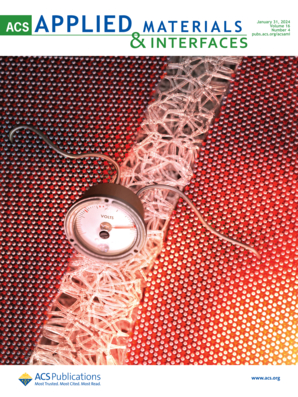
ACS Applied Materials & Interfaces is a leading interdisciplinary journal that brings together chemists, engineers, physicists, and biologists to explore the development and utilization of newly-discovered materials and interfacial processes for specific applications. Our journal has experienced remarkable growth since its establishment in 2009, both in terms of the number of articles published and the impact of the research showcased. We are proud to foster a truly global community, with the majority of published articles originating from outside the United States, reflecting the rapid growth of applied research worldwide.




 京公网安备 11010802042870号
京ICP备2023020795号-1
京公网安备 11010802042870号
京ICP备2023020795号-1

 分享
分享
 求助内容:
求助内容: 应助结果提醒方式:
 扫码关注我们
