Antonia F. Langenhoff, Mahesh Srinivasan, Jan M. Engelmann
{"title":"意见分歧会降低幼儿的过度自信,并促使他们进行探索","authors":"Antonia F. Langenhoff, Mahesh Srinivasan, Jan M. Engelmann","doi":"10.1111/cdev.14098","DOIUrl":null,"url":null,"abstract":"<p>Can the experience of disagreement lead young children to reason in more sophisticated ways? Across two preregistered studies, four- to six-year-old US children (<i>N</i> = 136, 50% female, mixed ethnicities, data collected 2020–2022) experienced either a disagreement or an agreement with a confederate about a causal mechanism after being presented with ambiguous evidence. We measured (1) children's confidence in their belief before and after the (dis)agreement, and (2) how long children searched for information about the correct answer. Disagreement, especially with an expert (Experiment 2), reduced overconfidence and prompted children to search longer for information, compared to agreement. Together, our findings suggest possibilities for interventions aimed at fostering humility and learning across the lifespan.</p>","PeriodicalId":10109,"journal":{"name":"Child development","volume":"95 5","pages":"1616-1627"},"PeriodicalIF":3.6000,"publicationDate":"2024-04-08","publicationTypes":"Journal Article","fieldsOfStudy":null,"isOpenAccess":false,"openAccessPdf":"https://onlinelibrary.wiley.com/doi/epdf/10.1111/cdev.14098","citationCount":"0","resultStr":"{\"title\":\"Disagreement reduces overconfidence and prompts exploration in young children\",\"authors\":\"Antonia F. Langenhoff, Mahesh Srinivasan, Jan M. Engelmann\",\"doi\":\"10.1111/cdev.14098\",\"DOIUrl\":null,\"url\":null,\"abstract\":\"<p>Can the experience of disagreement lead young children to reason in more sophisticated ways? Across two preregistered studies, four- to six-year-old US children (<i>N</i> = 136, 50% female, mixed ethnicities, data collected 2020–2022) experienced either a disagreement or an agreement with a confederate about a causal mechanism after being presented with ambiguous evidence. We measured (1) children's confidence in their belief before and after the (dis)agreement, and (2) how long children searched for information about the correct answer. Disagreement, especially with an expert (Experiment 2), reduced overconfidence and prompted children to search longer for information, compared to agreement. Together, our findings suggest possibilities for interventions aimed at fostering humility and learning across the lifespan.</p>\",\"PeriodicalId\":10109,\"journal\":{\"name\":\"Child development\",\"volume\":\"95 5\",\"pages\":\"1616-1627\"},\"PeriodicalIF\":3.6000,\"publicationDate\":\"2024-04-08\",\"publicationTypes\":\"Journal Article\",\"fieldsOfStudy\":null,\"isOpenAccess\":false,\"openAccessPdf\":\"https://onlinelibrary.wiley.com/doi/epdf/10.1111/cdev.14098\",\"citationCount\":\"0\",\"resultStr\":null,\"platform\":\"Semanticscholar\",\"paperid\":null,\"PeriodicalName\":\"Child development\",\"FirstCategoryId\":\"102\",\"ListUrlMain\":\"https://srcd.onlinelibrary.wiley.com/doi/10.1111/cdev.14098\",\"RegionNum\":1,\"RegionCategory\":\"心理学\",\"ArticlePicture\":[],\"TitleCN\":null,\"AbstractTextCN\":null,\"PMCID\":null,\"EPubDate\":\"\",\"PubModel\":\"\",\"JCR\":\"Q1\",\"JCRName\":\"PSYCHOLOGY, DEVELOPMENTAL\",\"Score\":null,\"Total\":0}","platform":"Semanticscholar","paperid":null,"PeriodicalName":"Child development","FirstCategoryId":"102","ListUrlMain":"https://srcd.onlinelibrary.wiley.com/doi/10.1111/cdev.14098","RegionNum":1,"RegionCategory":"心理学","ArticlePicture":[],"TitleCN":null,"AbstractTextCN":null,"PMCID":null,"EPubDate":"","PubModel":"","JCR":"Q1","JCRName":"PSYCHOLOGY, DEVELOPMENTAL","Score":null,"Total":0}
Disagreement reduces overconfidence and prompts exploration in young children
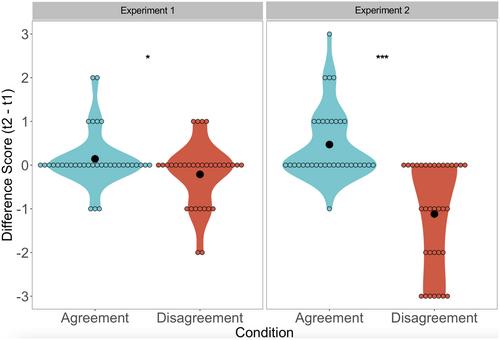
Can the experience of disagreement lead young children to reason in more sophisticated ways? Across two preregistered studies, four- to six-year-old US children (N = 136, 50% female, mixed ethnicities, data collected 2020–2022) experienced either a disagreement or an agreement with a confederate about a causal mechanism after being presented with ambiguous evidence. We measured (1) children's confidence in their belief before and after the (dis)agreement, and (2) how long children searched for information about the correct answer. Disagreement, especially with an expert (Experiment 2), reduced overconfidence and prompted children to search longer for information, compared to agreement. Together, our findings suggest possibilities for interventions aimed at fostering humility and learning across the lifespan.
期刊介绍:
As the flagship journal of the Society for Research in Child Development (SRCD), Child Development has published articles, essays, reviews, and tutorials on various topics in the field of child development since 1930. Spanning many disciplines, the journal provides the latest research, not only for researchers and theoreticians, but also for child psychiatrists, clinical psychologists, psychiatric social workers, specialists in early childhood education, educational psychologists, special education teachers, and other researchers. In addition to six issues per year of Child Development, subscribers to the journal also receive a full subscription to Child Development Perspectives and Monographs of the Society for Research in Child Development.






 京公网安备 11010802042870号
京ICP备2023020795号-1
京公网安备 11010802042870号
京ICP备2023020795号-1

 分享
分享
 求助内容:
求助内容: 应助结果提醒方式:
 扫码关注我们
