{"title":"藏红花花瓣废弃物花青素提取物的价值、微胶囊贮存动力学稳定性以及花青素微胶囊的体外释放行为","authors":"Amir Gull, F. A. Masoodi, Adil Gani","doi":"10.1007/s13399-024-05599-x","DOIUrl":null,"url":null,"abstract":"<div><p>In this research, saffron petal anthocyanin extract was encapsulated using wall matrices consisting of sodium alginate (SA), maltodextrin (MD), and combination of sodium alginate and maltodextrin (SA:MD) at various ratios by freeze-drying method. The microcapsules were characterized in relation to moisture content, water activity, hygroscopicity, particle size, color, and encapsulation efficiency. Results showed moisture content ranged from 2.14 to 4.01%, a<sub>w</sub> 0.23 to 0.58, hygroscopicity 10.31 to 21.12%, and particle size 188.53 to 304.30 µm, respectively. Among wall matrices, SA:MD encapsulates exhibited highest encapsulation efficiency 80.10%, anthocyanin stability 153 mg/g, and lowest ΔΕ value after 35-day storage. All the wall matrices increased the half-life of encapsulated microcapsules compared to non-encapsulated during storage. Morphological analysis showed microcapsules were smooth, uniform, and displayed little agglomeration and surface dents. The in vitro gastric conditions showed that microcapsules exhibited high anthocyanin retention than free extracts. To conclude, freeze drying could be recommended as a suitable encapsulation method for stabilizing the saffron petal anthocyanin extract.</p><h3>Graphical Abstract</h3><div><figure><div><div><picture><source><img></source></picture></div></div></figure></div></div>","PeriodicalId":488,"journal":{"name":"Biomass Conversion and Biorefinery","volume":"15 4","pages":"5481 - 5492"},"PeriodicalIF":4.3000,"publicationDate":"2024-04-25","publicationTypes":"Journal Article","fieldsOfStudy":null,"isOpenAccess":false,"openAccessPdf":"","citationCount":"0","resultStr":"{\"title\":\"Valorization of saffron petal waste anthocyanin extract, microencapsulation storage kinetic stability, and in vitro release behavior of anthocyanin microcapsules\",\"authors\":\"Amir Gull, F. A. Masoodi, Adil Gani\",\"doi\":\"10.1007/s13399-024-05599-x\",\"DOIUrl\":null,\"url\":null,\"abstract\":\"<div><p>In this research, saffron petal anthocyanin extract was encapsulated using wall matrices consisting of sodium alginate (SA), maltodextrin (MD), and combination of sodium alginate and maltodextrin (SA:MD) at various ratios by freeze-drying method. The microcapsules were characterized in relation to moisture content, water activity, hygroscopicity, particle size, color, and encapsulation efficiency. Results showed moisture content ranged from 2.14 to 4.01%, a<sub>w</sub> 0.23 to 0.58, hygroscopicity 10.31 to 21.12%, and particle size 188.53 to 304.30 µm, respectively. Among wall matrices, SA:MD encapsulates exhibited highest encapsulation efficiency 80.10%, anthocyanin stability 153 mg/g, and lowest ΔΕ value after 35-day storage. All the wall matrices increased the half-life of encapsulated microcapsules compared to non-encapsulated during storage. Morphological analysis showed microcapsules were smooth, uniform, and displayed little agglomeration and surface dents. The in vitro gastric conditions showed that microcapsules exhibited high anthocyanin retention than free extracts. To conclude, freeze drying could be recommended as a suitable encapsulation method for stabilizing the saffron petal anthocyanin extract.</p><h3>Graphical Abstract</h3><div><figure><div><div><picture><source><img></source></picture></div></div></figure></div></div>\",\"PeriodicalId\":488,\"journal\":{\"name\":\"Biomass Conversion and Biorefinery\",\"volume\":\"15 4\",\"pages\":\"5481 - 5492\"},\"PeriodicalIF\":4.3000,\"publicationDate\":\"2024-04-25\",\"publicationTypes\":\"Journal Article\",\"fieldsOfStudy\":null,\"isOpenAccess\":false,\"openAccessPdf\":\"\",\"citationCount\":\"0\",\"resultStr\":null,\"platform\":\"Semanticscholar\",\"paperid\":null,\"PeriodicalName\":\"Biomass Conversion and Biorefinery\",\"FirstCategoryId\":\"5\",\"ListUrlMain\":\"https://link.springer.com/article/10.1007/s13399-024-05599-x\",\"RegionNum\":4,\"RegionCategory\":\"工程技术\",\"ArticlePicture\":[],\"TitleCN\":null,\"AbstractTextCN\":null,\"PMCID\":null,\"EPubDate\":\"\",\"PubModel\":\"\",\"JCR\":\"Q3\",\"JCRName\":\"ENERGY & FUELS\",\"Score\":null,\"Total\":0}","platform":"Semanticscholar","paperid":null,"PeriodicalName":"Biomass Conversion and Biorefinery","FirstCategoryId":"5","ListUrlMain":"https://link.springer.com/article/10.1007/s13399-024-05599-x","RegionNum":4,"RegionCategory":"工程技术","ArticlePicture":[],"TitleCN":null,"AbstractTextCN":null,"PMCID":null,"EPubDate":"","PubModel":"","JCR":"Q3","JCRName":"ENERGY & FUELS","Score":null,"Total":0}
Valorization of saffron petal waste anthocyanin extract, microencapsulation storage kinetic stability, and in vitro release behavior of anthocyanin microcapsules
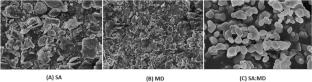
In this research, saffron petal anthocyanin extract was encapsulated using wall matrices consisting of sodium alginate (SA), maltodextrin (MD), and combination of sodium alginate and maltodextrin (SA:MD) at various ratios by freeze-drying method. The microcapsules were characterized in relation to moisture content, water activity, hygroscopicity, particle size, color, and encapsulation efficiency. Results showed moisture content ranged from 2.14 to 4.01%, aw 0.23 to 0.58, hygroscopicity 10.31 to 21.12%, and particle size 188.53 to 304.30 µm, respectively. Among wall matrices, SA:MD encapsulates exhibited highest encapsulation efficiency 80.10%, anthocyanin stability 153 mg/g, and lowest ΔΕ value after 35-day storage. All the wall matrices increased the half-life of encapsulated microcapsules compared to non-encapsulated during storage. Morphological analysis showed microcapsules were smooth, uniform, and displayed little agglomeration and surface dents. The in vitro gastric conditions showed that microcapsules exhibited high anthocyanin retention than free extracts. To conclude, freeze drying could be recommended as a suitable encapsulation method for stabilizing the saffron petal anthocyanin extract.
期刊介绍:
Biomass Conversion and Biorefinery presents articles and information on research, development and applications in thermo-chemical conversion; physico-chemical conversion and bio-chemical conversion, including all necessary steps for the provision and preparation of the biomass as well as all possible downstream processing steps for the environmentally sound and economically viable provision of energy and chemical products.




 京公网安备 11010802042870号
京ICP备2023020795号-1
京公网安备 11010802042870号
京ICP备2023020795号-1

 分享
分享
 求助内容:
求助内容: 应助结果提醒方式:
 扫码关注我们
