{"title":"利用未修饰的掺硼金刚石电极建立一种环境友好型天然水中泼尼松龙的测定方法","authors":"Sérgio Souza Leme, Tiago Luiz Ferreira, Eliana Maíra Agostini Valle, Lucia Codognoto","doi":"10.1007/s10008-024-05904-8","DOIUrl":null,"url":null,"abstract":"<div><p>Water pollution by endocrine disruptors (EDs) is becoming a global environmental problem. The main ecotoxicological concern with these substances involves their evident capacity to affect the reproduction of the species and interfere with their healthy development. This work developed an electroanalytical method for determining prednisolone (PDN) in natural waters using the boron-doped diamond working electrode (BDDE). Studies by cyclic voltammetry showed that PDN presents three oxidation peaks, at 0.7, 0.9, and 1.1 V vs<i>.</i> Ag/AgCl (KCl 3.0 mol L<sup>−1</sup>), which depend on the reduction peak at − 1.1 V, with characteristics of irreversible processes, controlled by diffusion of the species. Using the square wave voltammetry technique, the analytical curve obtained for ultrapure water showed linearity from 5.00 to 123.46 μmol L<sup>−1</sup>. In ultrapure water, the limit of detection (LD) and limit of quantification (LQ) values were 1.22 μmol L<sup>−1</sup> and 4.02 μmol L<sup>−1</sup>, respectively. In natural waters, it presented an LD of 1.19 μmol L<sup>−1</sup> and LQ of 3.94 μmol L<sup>−1</sup>, with 88.6% and 108.2% recovery tests. The results indicated that this low-cost method, with fewer sample preparation steps and without organic solvents, can be used to determine PDN in natural waters.</p></div>","PeriodicalId":665,"journal":{"name":"Journal of Solid State Electrochemistry","volume":"29 8","pages":"3139 - 3147"},"PeriodicalIF":3.1000,"publicationDate":"2024-04-18","publicationTypes":"Journal Article","fieldsOfStudy":null,"isOpenAccess":false,"openAccessPdf":"","citationCount":"0","resultStr":"{\"title\":\"Development of an environmentally friendly method for the determination of prednisolone in natural waters using unmodified boron-doped diamond electrode\",\"authors\":\"Sérgio Souza Leme, Tiago Luiz Ferreira, Eliana Maíra Agostini Valle, Lucia Codognoto\",\"doi\":\"10.1007/s10008-024-05904-8\",\"DOIUrl\":null,\"url\":null,\"abstract\":\"<div><p>Water pollution by endocrine disruptors (EDs) is becoming a global environmental problem. The main ecotoxicological concern with these substances involves their evident capacity to affect the reproduction of the species and interfere with their healthy development. This work developed an electroanalytical method for determining prednisolone (PDN) in natural waters using the boron-doped diamond working electrode (BDDE). Studies by cyclic voltammetry showed that PDN presents three oxidation peaks, at 0.7, 0.9, and 1.1 V vs<i>.</i> Ag/AgCl (KCl 3.0 mol L<sup>−1</sup>), which depend on the reduction peak at − 1.1 V, with characteristics of irreversible processes, controlled by diffusion of the species. Using the square wave voltammetry technique, the analytical curve obtained for ultrapure water showed linearity from 5.00 to 123.46 μmol L<sup>−1</sup>. In ultrapure water, the limit of detection (LD) and limit of quantification (LQ) values were 1.22 μmol L<sup>−1</sup> and 4.02 μmol L<sup>−1</sup>, respectively. In natural waters, it presented an LD of 1.19 μmol L<sup>−1</sup> and LQ of 3.94 μmol L<sup>−1</sup>, with 88.6% and 108.2% recovery tests. The results indicated that this low-cost method, with fewer sample preparation steps and without organic solvents, can be used to determine PDN in natural waters.</p></div>\",\"PeriodicalId\":665,\"journal\":{\"name\":\"Journal of Solid State Electrochemistry\",\"volume\":\"29 8\",\"pages\":\"3139 - 3147\"},\"PeriodicalIF\":3.1000,\"publicationDate\":\"2024-04-18\",\"publicationTypes\":\"Journal Article\",\"fieldsOfStudy\":null,\"isOpenAccess\":false,\"openAccessPdf\":\"\",\"citationCount\":\"0\",\"resultStr\":null,\"platform\":\"Semanticscholar\",\"paperid\":null,\"PeriodicalName\":\"Journal of Solid State Electrochemistry\",\"FirstCategoryId\":\"5\",\"ListUrlMain\":\"https://link.springer.com/article/10.1007/s10008-024-05904-8\",\"RegionNum\":4,\"RegionCategory\":\"化学\",\"ArticlePicture\":[],\"TitleCN\":null,\"AbstractTextCN\":null,\"PMCID\":null,\"EPubDate\":\"\",\"PubModel\":\"\",\"JCR\":\"Q3\",\"JCRName\":\"ELECTROCHEMISTRY\",\"Score\":null,\"Total\":0}","platform":"Semanticscholar","paperid":null,"PeriodicalName":"Journal of Solid State Electrochemistry","FirstCategoryId":"5","ListUrlMain":"https://link.springer.com/article/10.1007/s10008-024-05904-8","RegionNum":4,"RegionCategory":"化学","ArticlePicture":[],"TitleCN":null,"AbstractTextCN":null,"PMCID":null,"EPubDate":"","PubModel":"","JCR":"Q3","JCRName":"ELECTROCHEMISTRY","Score":null,"Total":0}
Development of an environmentally friendly method for the determination of prednisolone in natural waters using unmodified boron-doped diamond electrode
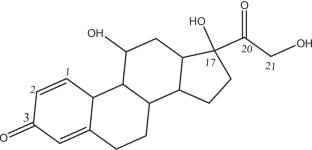
Water pollution by endocrine disruptors (EDs) is becoming a global environmental problem. The main ecotoxicological concern with these substances involves their evident capacity to affect the reproduction of the species and interfere with their healthy development. This work developed an electroanalytical method for determining prednisolone (PDN) in natural waters using the boron-doped diamond working electrode (BDDE). Studies by cyclic voltammetry showed that PDN presents three oxidation peaks, at 0.7, 0.9, and 1.1 V vs. Ag/AgCl (KCl 3.0 mol L−1), which depend on the reduction peak at − 1.1 V, with characteristics of irreversible processes, controlled by diffusion of the species. Using the square wave voltammetry technique, the analytical curve obtained for ultrapure water showed linearity from 5.00 to 123.46 μmol L−1. In ultrapure water, the limit of detection (LD) and limit of quantification (LQ) values were 1.22 μmol L−1 and 4.02 μmol L−1, respectively. In natural waters, it presented an LD of 1.19 μmol L−1 and LQ of 3.94 μmol L−1, with 88.6% and 108.2% recovery tests. The results indicated that this low-cost method, with fewer sample preparation steps and without organic solvents, can be used to determine PDN in natural waters.
期刊介绍:
The Journal of Solid State Electrochemistry is devoted to all aspects of solid-state chemistry and solid-state physics in electrochemistry.
The Journal of Solid State Electrochemistry publishes papers on all aspects of electrochemistry of solid compounds, including experimental and theoretical, basic and applied work. It equally publishes papers on the thermodynamics and kinetics of electrochemical reactions if at least one actively participating phase is solid. Also of interest are articles on the transport of ions and electrons in solids whenever these processes are relevant to electrochemical reactions and on the use of solid-state electrochemical reactions in the analysis of solids and their surfaces.
The journal covers solid-state electrochemistry and focusses on the following fields: mechanisms of solid-state electrochemical reactions, semiconductor electrochemistry, electrochemical batteries, accumulators and fuel cells, electrochemical mineral leaching, galvanic metal plating, electrochemical potential memory devices, solid-state electrochemical sensors, ion and electron transport in solid materials and polymers, electrocatalysis, photoelectrochemistry, corrosion of solid materials, solid-state electroanalysis, electrochemical machining of materials, electrochromism and electrochromic devices, new electrochemical solid-state synthesis.
The Journal of Solid State Electrochemistry makes the professional in research and industry aware of this swift progress and its importance for future developments and success in the above-mentioned fields.




 京公网安备 11010802042870号
京ICP备2023020795号-1
京公网安备 11010802042870号
京ICP备2023020795号-1

 分享
分享
 求助内容:
求助内容: 应助结果提醒方式:
 扫码关注我们
