Gyusang Yi, Marisa Hoffmann, Sezer Seçkin, Tobias A. F. König, Ilka Hermes, Christian Rossner, Andreas Fery
{"title":"跨无机/有机杂化界面的耦合:以 4-氨基苯硫酚为金锚定分子的聚苯胺涂层金纳米粒子","authors":"Gyusang Yi, Marisa Hoffmann, Sezer Seçkin, Tobias A. F. König, Ilka Hermes, Christian Rossner, Andreas Fery","doi":"10.1007/s00396-024-05262-x","DOIUrl":null,"url":null,"abstract":"<div><p>The chemical binding between metal nanoparticles and (semi-)conductive polymer layers is essential to control the (opto-)electronic properties of such hybrid materials. Current approaches that achieve a conjugated binding of organic (semi-)conductive ligands to metal nanoparticles demonstrated promising functional properties, but are based on tedious multi-step organic synthesis to incorporate the required binding moieties at the chain ends of targeted macromolecular species. Herein, we explore the pre-functionalization of gold nanoparticles with <i>p</i>-aminothiophenol and subsequent surfactant-assisted formation of a poly(aniline) (PANI) shell as a means to access gold/PANI core–shell-type nanoparticles with enhanced conductive properties. Controlled surface deposition of these hybrid nanoparticles is achieved via template-assisted self-assembly. For these surface-deposited nanoparticles, charge transport properties are characterized at the nanoscale by conductive atomic force microscopy measurements and show a significant conductivity increase of our core–shell particles as compared to reference particles formed by conventional surfactant-assisted PANI-shell formation.</p><h3>Graphical Abstract</h3>\n<div><figure><div><div><picture><source><img></source></picture></div></div></figure></div></div>","PeriodicalId":520,"journal":{"name":"Colloid and Polymer Science","volume":"303 dedicated","pages":"1743 - 1751"},"PeriodicalIF":2.3000,"publicationDate":"2024-05-15","publicationTypes":"Journal Article","fieldsOfStudy":null,"isOpenAccess":false,"openAccessPdf":"https://link.springer.com/content/pdf/10.1007/s00396-024-05262-x.pdf","citationCount":"0","resultStr":"{\"title\":\"Toward coupling across inorganic/organic hybrid interfaces: polyaniline-coated gold nanoparticles with 4-aminothiophenol as gold-anchoring moieties\",\"authors\":\"Gyusang Yi, Marisa Hoffmann, Sezer Seçkin, Tobias A. F. König, Ilka Hermes, Christian Rossner, Andreas Fery\",\"doi\":\"10.1007/s00396-024-05262-x\",\"DOIUrl\":null,\"url\":null,\"abstract\":\"<div><p>The chemical binding between metal nanoparticles and (semi-)conductive polymer layers is essential to control the (opto-)electronic properties of such hybrid materials. Current approaches that achieve a conjugated binding of organic (semi-)conductive ligands to metal nanoparticles demonstrated promising functional properties, but are based on tedious multi-step organic synthesis to incorporate the required binding moieties at the chain ends of targeted macromolecular species. Herein, we explore the pre-functionalization of gold nanoparticles with <i>p</i>-aminothiophenol and subsequent surfactant-assisted formation of a poly(aniline) (PANI) shell as a means to access gold/PANI core–shell-type nanoparticles with enhanced conductive properties. Controlled surface deposition of these hybrid nanoparticles is achieved via template-assisted self-assembly. For these surface-deposited nanoparticles, charge transport properties are characterized at the nanoscale by conductive atomic force microscopy measurements and show a significant conductivity increase of our core–shell particles as compared to reference particles formed by conventional surfactant-assisted PANI-shell formation.</p><h3>Graphical Abstract</h3>\\n<div><figure><div><div><picture><source><img></source></picture></div></div></figure></div></div>\",\"PeriodicalId\":520,\"journal\":{\"name\":\"Colloid and Polymer Science\",\"volume\":\"303 dedicated\",\"pages\":\"1743 - 1751\"},\"PeriodicalIF\":2.3000,\"publicationDate\":\"2024-05-15\",\"publicationTypes\":\"Journal Article\",\"fieldsOfStudy\":null,\"isOpenAccess\":false,\"openAccessPdf\":\"https://link.springer.com/content/pdf/10.1007/s00396-024-05262-x.pdf\",\"citationCount\":\"0\",\"resultStr\":null,\"platform\":\"Semanticscholar\",\"paperid\":null,\"PeriodicalName\":\"Colloid and Polymer Science\",\"FirstCategoryId\":\"92\",\"ListUrlMain\":\"https://link.springer.com/article/10.1007/s00396-024-05262-x\",\"RegionNum\":4,\"RegionCategory\":\"化学\",\"ArticlePicture\":[],\"TitleCN\":null,\"AbstractTextCN\":null,\"PMCID\":null,\"EPubDate\":\"\",\"PubModel\":\"\",\"JCR\":\"Q3\",\"JCRName\":\"CHEMISTRY, PHYSICAL\",\"Score\":null,\"Total\":0}","platform":"Semanticscholar","paperid":null,"PeriodicalName":"Colloid and Polymer Science","FirstCategoryId":"92","ListUrlMain":"https://link.springer.com/article/10.1007/s00396-024-05262-x","RegionNum":4,"RegionCategory":"化学","ArticlePicture":[],"TitleCN":null,"AbstractTextCN":null,"PMCID":null,"EPubDate":"","PubModel":"","JCR":"Q3","JCRName":"CHEMISTRY, PHYSICAL","Score":null,"Total":0}
Toward coupling across inorganic/organic hybrid interfaces: polyaniline-coated gold nanoparticles with 4-aminothiophenol as gold-anchoring moieties
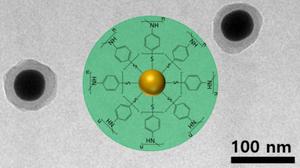
The chemical binding between metal nanoparticles and (semi-)conductive polymer layers is essential to control the (opto-)electronic properties of such hybrid materials. Current approaches that achieve a conjugated binding of organic (semi-)conductive ligands to metal nanoparticles demonstrated promising functional properties, but are based on tedious multi-step organic synthesis to incorporate the required binding moieties at the chain ends of targeted macromolecular species. Herein, we explore the pre-functionalization of gold nanoparticles with p-aminothiophenol and subsequent surfactant-assisted formation of a poly(aniline) (PANI) shell as a means to access gold/PANI core–shell-type nanoparticles with enhanced conductive properties. Controlled surface deposition of these hybrid nanoparticles is achieved via template-assisted self-assembly. For these surface-deposited nanoparticles, charge transport properties are characterized at the nanoscale by conductive atomic force microscopy measurements and show a significant conductivity increase of our core–shell particles as compared to reference particles formed by conventional surfactant-assisted PANI-shell formation.
期刊介绍:
Colloid and Polymer Science - a leading international journal of longstanding tradition - is devoted to colloid and polymer science and its interdisciplinary interactions. As such, it responds to a demand which has lost none of its actuality as revealed in the trends of contemporary materials science.




 京公网安备 11010802042870号
京ICP备2023020795号-1
京公网安备 11010802042870号
京ICP备2023020795号-1

 分享
分享
 求助内容:
求助内容: 应助结果提醒方式:
 扫码关注我们
