{"title":"用于超灵敏 NH3 检测的可重构单片芯片式微波气体传感器","authors":"","doi":"10.1016/j.matt.2024.04.040","DOIUrl":null,"url":null,"abstract":"<div><p><span><span>Microwave gas sensors (MGSs) have attracted the interest of researchers because of their low power consumption, non-contact operation, and room temperature detection capabilities. However, the practical use of sensitive circuits is currently inadequate. In this context, we propose a reconfigurable rectangular </span>waveguide microwave gas sensor (RWMGS). This RWMGS is achieved by designing a high Q-factor waveguide sensitive circuit and employing an In</span><sub>2</sub>O<sub>3</sub>/Al<sub>2</sub>O<sub>3</sub> monolith as the sensitive material. The prepared RWMGS exhibited an ultra-low detection limit of 10 ppb, high selectivity for NH<sub>3</sub>, and a remarkable sensitivity of 116.1 dB ppm<sup>−1</sup><span><span> for concentrations lower than 50 ppb. Importantly, we introduce a chip-type sensor mode that can be used for complex system detection. This simplifies the sensing system and provides significant advantages in MGS design. These advantages can be attributed to the unique hierarchical porous structure of the monolith and the high Q-factor waveguide </span>resonator.</span></p></div>","PeriodicalId":388,"journal":{"name":"Matter","volume":"7 9","pages":"Pages 3083-3096"},"PeriodicalIF":17.5000,"publicationDate":"2024-09-04","publicationTypes":"Journal Article","fieldsOfStudy":null,"isOpenAccess":false,"openAccessPdf":"","citationCount":"0","resultStr":"{\"title\":\"A reconfigurable monolith chip-type microwave gas sensor for ultrasensitive NH3 detection\",\"authors\":\"\",\"doi\":\"10.1016/j.matt.2024.04.040\",\"DOIUrl\":null,\"url\":null,\"abstract\":\"<div><p><span><span>Microwave gas sensors (MGSs) have attracted the interest of researchers because of their low power consumption, non-contact operation, and room temperature detection capabilities. However, the practical use of sensitive circuits is currently inadequate. In this context, we propose a reconfigurable rectangular </span>waveguide microwave gas sensor (RWMGS). This RWMGS is achieved by designing a high Q-factor waveguide sensitive circuit and employing an In</span><sub>2</sub>O<sub>3</sub>/Al<sub>2</sub>O<sub>3</sub> monolith as the sensitive material. The prepared RWMGS exhibited an ultra-low detection limit of 10 ppb, high selectivity for NH<sub>3</sub>, and a remarkable sensitivity of 116.1 dB ppm<sup>−1</sup><span><span> for concentrations lower than 50 ppb. Importantly, we introduce a chip-type sensor mode that can be used for complex system detection. This simplifies the sensing system and provides significant advantages in MGS design. These advantages can be attributed to the unique hierarchical porous structure of the monolith and the high Q-factor waveguide </span>resonator.</span></p></div>\",\"PeriodicalId\":388,\"journal\":{\"name\":\"Matter\",\"volume\":\"7 9\",\"pages\":\"Pages 3083-3096\"},\"PeriodicalIF\":17.5000,\"publicationDate\":\"2024-09-04\",\"publicationTypes\":\"Journal Article\",\"fieldsOfStudy\":null,\"isOpenAccess\":false,\"openAccessPdf\":\"\",\"citationCount\":\"0\",\"resultStr\":null,\"platform\":\"Semanticscholar\",\"paperid\":null,\"PeriodicalName\":\"Matter\",\"FirstCategoryId\":\"88\",\"ListUrlMain\":\"https://www.sciencedirect.com/science/article/pii/S2590238524002133\",\"RegionNum\":1,\"RegionCategory\":\"材料科学\",\"ArticlePicture\":[],\"TitleCN\":null,\"AbstractTextCN\":null,\"PMCID\":null,\"EPubDate\":\"2024/5/21 0:00:00\",\"PubModel\":\"Epub\",\"JCR\":\"Q1\",\"JCRName\":\"MATERIALS SCIENCE, MULTIDISCIPLINARY\",\"Score\":null,\"Total\":0}","platform":"Semanticscholar","paperid":null,"PeriodicalName":"Matter","FirstCategoryId":"88","ListUrlMain":"https://www.sciencedirect.com/science/article/pii/S2590238524002133","RegionNum":1,"RegionCategory":"材料科学","ArticlePicture":[],"TitleCN":null,"AbstractTextCN":null,"PMCID":null,"EPubDate":"2024/5/21 0:00:00","PubModel":"Epub","JCR":"Q1","JCRName":"MATERIALS SCIENCE, MULTIDISCIPLINARY","Score":null,"Total":0}
A reconfigurable monolith chip-type microwave gas sensor for ultrasensitive NH3 detection
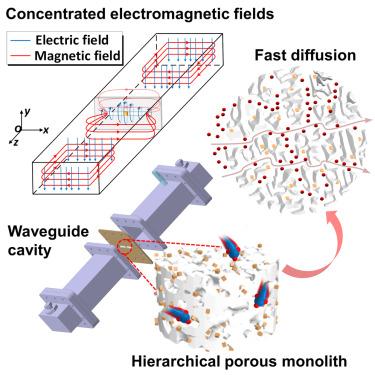
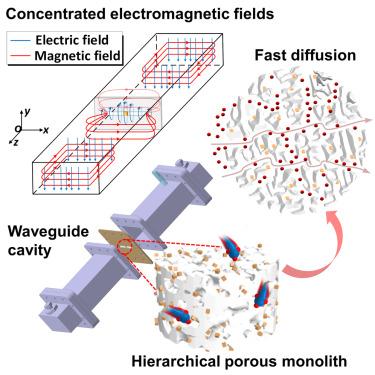
Microwave gas sensors (MGSs) have attracted the interest of researchers because of their low power consumption, non-contact operation, and room temperature detection capabilities. However, the practical use of sensitive circuits is currently inadequate. In this context, we propose a reconfigurable rectangular waveguide microwave gas sensor (RWMGS). This RWMGS is achieved by designing a high Q-factor waveguide sensitive circuit and employing an In2O3/Al2O3 monolith as the sensitive material. The prepared RWMGS exhibited an ultra-low detection limit of 10 ppb, high selectivity for NH3, and a remarkable sensitivity of 116.1 dB ppm−1 for concentrations lower than 50 ppb. Importantly, we introduce a chip-type sensor mode that can be used for complex system detection. This simplifies the sensing system and provides significant advantages in MGS design. These advantages can be attributed to the unique hierarchical porous structure of the monolith and the high Q-factor waveguide resonator.
期刊介绍:
Matter, a monthly journal affiliated with Cell, spans the broad field of materials science from nano to macro levels,covering fundamentals to applications. Embracing groundbreaking technologies,it includes full-length research articles,reviews, perspectives,previews, opinions, personnel stories, and general editorial content.
Matter aims to be the primary resource for researchers in academia and industry, inspiring the next generation of materials scientists.





 京公网安备 11010802042870号
京ICP备2023020795号-1
京公网安备 11010802042870号
京ICP备2023020795号-1

 分享
分享
 求助内容:
求助内容: 应助结果提醒方式:
 扫码关注我们
