Huyun Chen , Bradley W. Ellis , Antonia T. Dinicu , Mohammadreza Mojoudi , Benjamin T. Wilks , Shannon N. Tessier , Mehmet Toner , Korkut Uygun , Basak E. Uygun
{"title":"聚乙二醇和 Caspase 抑制剂 Emricasan 可减轻原代大鼠肝细胞的冷损伤","authors":"Huyun Chen , Bradley W. Ellis , Antonia T. Dinicu , Mohammadreza Mojoudi , Benjamin T. Wilks , Shannon N. Tessier , Mehmet Toner , Korkut Uygun , Basak E. Uygun","doi":"10.1016/j.cryobiol.2024.104926","DOIUrl":null,"url":null,"abstract":"<div><p>Current methods of storing explanted donor livers at 4 °C in University of Wisconsin (UW) solution result in loss of graft function and ultimately lead to less-than-ideal outcomes post transplantation. Our lab has previously shown that supplementing UW solution with 35-kilodalton polyethylene glycol (PEG) has membrane stabilizing effects for cold stored primary rat hepatocytes in suspension. Expanding on past studies, we here investigate if PEG has the same beneficial effects in an adherent primary rat hepatocyte cold storage model. In addition, we investigated the extent of cold-induced apoptosis through treating cold-stored hepatocytes with pan caspase inhibitor emricasan. In parallel to storage at the current cold storage standard of 4 °C, we investigated the effects of lowering the storage temperature to −4 °C, at which the storage solution remains ice-free due to the supercooling phenomenon. We show the addition of 5 % PEG to the storage medium significantly reduced the release of lactate dehydrogenase (LDH) in plated rat hepatocytes and a combinatorial treatment with emricasan maintains hepatocyte viability and morphology following recovery from cold storage. These results show that cold-stored hepatocytes undergo multiple mechanisms of cold-induced injury and that PEG and emricasan treatment in combination with supercooling may improve cell and organ preservation.</p></div>","PeriodicalId":10897,"journal":{"name":"Cryobiology","volume":"116 ","pages":"Article 104926"},"PeriodicalIF":2.6000,"publicationDate":"2024-09-01","publicationTypes":"Journal Article","fieldsOfStudy":null,"isOpenAccess":false,"openAccessPdf":"","citationCount":"0","resultStr":"{\"title\":\"Polyethylene glycol and caspase inhibitor emricasan alleviate cold injury in primary rat hepatocytes\",\"authors\":\"Huyun Chen , Bradley W. Ellis , Antonia T. Dinicu , Mohammadreza Mojoudi , Benjamin T. Wilks , Shannon N. Tessier , Mehmet Toner , Korkut Uygun , Basak E. Uygun\",\"doi\":\"10.1016/j.cryobiol.2024.104926\",\"DOIUrl\":null,\"url\":null,\"abstract\":\"<div><p>Current methods of storing explanted donor livers at 4 °C in University of Wisconsin (UW) solution result in loss of graft function and ultimately lead to less-than-ideal outcomes post transplantation. Our lab has previously shown that supplementing UW solution with 35-kilodalton polyethylene glycol (PEG) has membrane stabilizing effects for cold stored primary rat hepatocytes in suspension. Expanding on past studies, we here investigate if PEG has the same beneficial effects in an adherent primary rat hepatocyte cold storage model. In addition, we investigated the extent of cold-induced apoptosis through treating cold-stored hepatocytes with pan caspase inhibitor emricasan. In parallel to storage at the current cold storage standard of 4 °C, we investigated the effects of lowering the storage temperature to −4 °C, at which the storage solution remains ice-free due to the supercooling phenomenon. We show the addition of 5 % PEG to the storage medium significantly reduced the release of lactate dehydrogenase (LDH) in plated rat hepatocytes and a combinatorial treatment with emricasan maintains hepatocyte viability and morphology following recovery from cold storage. These results show that cold-stored hepatocytes undergo multiple mechanisms of cold-induced injury and that PEG and emricasan treatment in combination with supercooling may improve cell and organ preservation.</p></div>\",\"PeriodicalId\":10897,\"journal\":{\"name\":\"Cryobiology\",\"volume\":\"116 \",\"pages\":\"Article 104926\"},\"PeriodicalIF\":2.6000,\"publicationDate\":\"2024-09-01\",\"publicationTypes\":\"Journal Article\",\"fieldsOfStudy\":null,\"isOpenAccess\":false,\"openAccessPdf\":\"\",\"citationCount\":\"0\",\"resultStr\":null,\"platform\":\"Semanticscholar\",\"paperid\":null,\"PeriodicalName\":\"Cryobiology\",\"FirstCategoryId\":\"99\",\"ListUrlMain\":\"https://www.sciencedirect.com/science/article/pii/S0011224024000816\",\"RegionNum\":3,\"RegionCategory\":\"生物学\",\"ArticlePicture\":[],\"TitleCN\":null,\"AbstractTextCN\":null,\"PMCID\":null,\"EPubDate\":\"2024/6/28 0:00:00\",\"PubModel\":\"Epub\",\"JCR\":\"Q2\",\"JCRName\":\"BIOLOGY\",\"Score\":null,\"Total\":0}","platform":"Semanticscholar","paperid":null,"PeriodicalName":"Cryobiology","FirstCategoryId":"99","ListUrlMain":"https://www.sciencedirect.com/science/article/pii/S0011224024000816","RegionNum":3,"RegionCategory":"生物学","ArticlePicture":[],"TitleCN":null,"AbstractTextCN":null,"PMCID":null,"EPubDate":"2024/6/28 0:00:00","PubModel":"Epub","JCR":"Q2","JCRName":"BIOLOGY","Score":null,"Total":0}
Polyethylene glycol and caspase inhibitor emricasan alleviate cold injury in primary rat hepatocytes
Current methods of storing explanted donor livers at 4 °C in University of Wisconsin (UW) solution result in loss of graft function and ultimately lead to less-than-ideal outcomes post transplantation. Our lab has previously shown that supplementing UW solution with 35-kilodalton polyethylene glycol (PEG) has membrane stabilizing effects for cold stored primary rat hepatocytes in suspension. Expanding on past studies, we here investigate if PEG has the same beneficial effects in an adherent primary rat hepatocyte cold storage model. In addition, we investigated the extent of cold-induced apoptosis through treating cold-stored hepatocytes with pan caspase inhibitor emricasan. In parallel to storage at the current cold storage standard of 4 °C, we investigated the effects of lowering the storage temperature to −4 °C, at which the storage solution remains ice-free due to the supercooling phenomenon. We show the addition of 5 % PEG to the storage medium significantly reduced the release of lactate dehydrogenase (LDH) in plated rat hepatocytes and a combinatorial treatment with emricasan maintains hepatocyte viability and morphology following recovery from cold storage. These results show that cold-stored hepatocytes undergo multiple mechanisms of cold-induced injury and that PEG and emricasan treatment in combination with supercooling may improve cell and organ preservation.
期刊介绍:
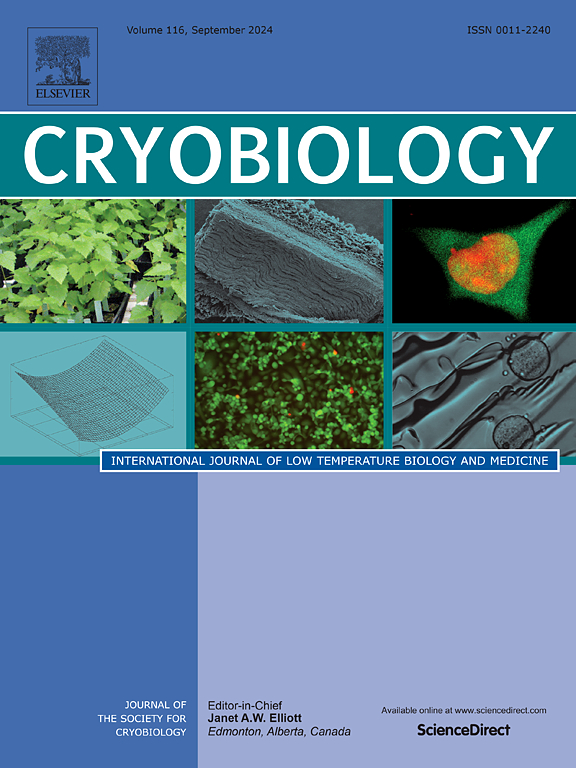
Cryobiology: International Journal of Low Temperature Biology and Medicine publishes research articles on all aspects of low temperature biology and medicine.
Research Areas include:
• Cryoprotective additives and their pharmacological actions
• Cryosurgery
• Freeze-drying
• Freezing
• Frost hardiness in plants
• Hibernation
• Hypothermia
• Medical applications of reduced temperature
• Perfusion of organs
• All pertinent methodologies
Cryobiology is the official journal of the Society for Cryobiology.




 京公网安备 11010802042870号
京ICP备2023020795号-1
京公网安备 11010802042870号
京ICP备2023020795号-1

 分享
分享
 求助内容:
求助内容: 应助结果提醒方式:
 扫码关注我们
