{"title":"浸渍时间对热浸镀锌 Zn-1Al-2Mg 涂层微观结构和性能的影响","authors":"Ping Zhang, Xu Ding, Honglin Wu, Ruzhong Hu, Xiaojun Zhao, Yuan Wei, Shengmin Wang","doi":"10.1007/s11665-024-09713-y","DOIUrl":null,"url":null,"abstract":"<div><p>The purpose of this study is to investigate the effect of dipping time (30, 60, 90, 120, 150 s) on the microstructure and corrosion resistance of Zn-1Al-2Mg coating under ammonium-free flux. The coatings were prepared at different dipping times, and then the microstructure and composition of the coatings were analyzed by scanning electron microscopy, x-ray diffraction and energy spectrometry; The corrosion resistance of the coatings was evaluated through electrochemical polarization test, neutral salt spray test, and full immersion test. The results show that the Zn-Al-Mg coating consists of Zn-rich phase, Zn/Al/MgZn<sub>2</sub> ternary eutectic, Zn/MgZn<sub>2</sub> binary eutectic phase and Fe-Al alloy phase layer; as the dipping time increases, the coating tends to thicken, and after the 90 s, the coating thickens significantly; while the eutectic structure decreases and the Fe-Al alloy phase thickens, Fe in the substrate continuously diffuses toward the growth direction of the coating and reacts with Al precipitated in the coating to form Fe<sub>2</sub>Al<sub>5</sub>Zn<sub><i>x</i></sub>; The corrosion products in the Zn-Al-Mg coating, specifically Mg<sub>2</sub>CO<sub>3</sub>(OH)<sub>2</sub>·3H<sub>2</sub>O and MgCO<sub>3</sub>, increase the pH of the environment and thus slow down the rate of corrosion. The corrosion resistance performance varies nonlinearly from good to poor and then improves again with increasing dipping time.</p></div>","PeriodicalId":644,"journal":{"name":"Journal of Materials Engineering and Performance","volume":"34 9","pages":"7496 - 7507"},"PeriodicalIF":2.6000,"publicationDate":"2024-06-13","publicationTypes":"Journal Article","fieldsOfStudy":null,"isOpenAccess":false,"openAccessPdf":"","citationCount":"0","resultStr":"{\"title\":\"Effect of Dipping Time on Microstructure and Properties of Zn-1Al-2Mg Coating by Hot-Dipping Galvanizing\",\"authors\":\"Ping Zhang, Xu Ding, Honglin Wu, Ruzhong Hu, Xiaojun Zhao, Yuan Wei, Shengmin Wang\",\"doi\":\"10.1007/s11665-024-09713-y\",\"DOIUrl\":null,\"url\":null,\"abstract\":\"<div><p>The purpose of this study is to investigate the effect of dipping time (30, 60, 90, 120, 150 s) on the microstructure and corrosion resistance of Zn-1Al-2Mg coating under ammonium-free flux. The coatings were prepared at different dipping times, and then the microstructure and composition of the coatings were analyzed by scanning electron microscopy, x-ray diffraction and energy spectrometry; The corrosion resistance of the coatings was evaluated through electrochemical polarization test, neutral salt spray test, and full immersion test. The results show that the Zn-Al-Mg coating consists of Zn-rich phase, Zn/Al/MgZn<sub>2</sub> ternary eutectic, Zn/MgZn<sub>2</sub> binary eutectic phase and Fe-Al alloy phase layer; as the dipping time increases, the coating tends to thicken, and after the 90 s, the coating thickens significantly; while the eutectic structure decreases and the Fe-Al alloy phase thickens, Fe in the substrate continuously diffuses toward the growth direction of the coating and reacts with Al precipitated in the coating to form Fe<sub>2</sub>Al<sub>5</sub>Zn<sub><i>x</i></sub>; The corrosion products in the Zn-Al-Mg coating, specifically Mg<sub>2</sub>CO<sub>3</sub>(OH)<sub>2</sub>·3H<sub>2</sub>O and MgCO<sub>3</sub>, increase the pH of the environment and thus slow down the rate of corrosion. The corrosion resistance performance varies nonlinearly from good to poor and then improves again with increasing dipping time.</p></div>\",\"PeriodicalId\":644,\"journal\":{\"name\":\"Journal of Materials Engineering and Performance\",\"volume\":\"34 9\",\"pages\":\"7496 - 7507\"},\"PeriodicalIF\":2.6000,\"publicationDate\":\"2024-06-13\",\"publicationTypes\":\"Journal Article\",\"fieldsOfStudy\":null,\"isOpenAccess\":false,\"openAccessPdf\":\"\",\"citationCount\":\"0\",\"resultStr\":null,\"platform\":\"Semanticscholar\",\"paperid\":null,\"PeriodicalName\":\"Journal of Materials Engineering and Performance\",\"FirstCategoryId\":\"88\",\"ListUrlMain\":\"https://link.springer.com/article/10.1007/s11665-024-09713-y\",\"RegionNum\":4,\"RegionCategory\":\"材料科学\",\"ArticlePicture\":[],\"TitleCN\":null,\"AbstractTextCN\":null,\"PMCID\":null,\"EPubDate\":\"\",\"PubModel\":\"\",\"JCR\":\"Q3\",\"JCRName\":\"MATERIALS SCIENCE, MULTIDISCIPLINARY\",\"Score\":null,\"Total\":0}","platform":"Semanticscholar","paperid":null,"PeriodicalName":"Journal of Materials Engineering and Performance","FirstCategoryId":"88","ListUrlMain":"https://link.springer.com/article/10.1007/s11665-024-09713-y","RegionNum":4,"RegionCategory":"材料科学","ArticlePicture":[],"TitleCN":null,"AbstractTextCN":null,"PMCID":null,"EPubDate":"","PubModel":"","JCR":"Q3","JCRName":"MATERIALS SCIENCE, MULTIDISCIPLINARY","Score":null,"Total":0}
Effect of Dipping Time on Microstructure and Properties of Zn-1Al-2Mg Coating by Hot-Dipping Galvanizing
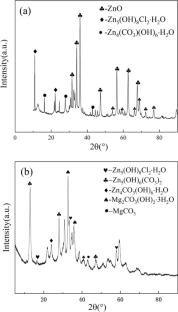
The purpose of this study is to investigate the effect of dipping time (30, 60, 90, 120, 150 s) on the microstructure and corrosion resistance of Zn-1Al-2Mg coating under ammonium-free flux. The coatings were prepared at different dipping times, and then the microstructure and composition of the coatings were analyzed by scanning electron microscopy, x-ray diffraction and energy spectrometry; The corrosion resistance of the coatings was evaluated through electrochemical polarization test, neutral salt spray test, and full immersion test. The results show that the Zn-Al-Mg coating consists of Zn-rich phase, Zn/Al/MgZn2 ternary eutectic, Zn/MgZn2 binary eutectic phase and Fe-Al alloy phase layer; as the dipping time increases, the coating tends to thicken, and after the 90 s, the coating thickens significantly; while the eutectic structure decreases and the Fe-Al alloy phase thickens, Fe in the substrate continuously diffuses toward the growth direction of the coating and reacts with Al precipitated in the coating to form Fe2Al5Znx; The corrosion products in the Zn-Al-Mg coating, specifically Mg2CO3(OH)2·3H2O and MgCO3, increase the pH of the environment and thus slow down the rate of corrosion. The corrosion resistance performance varies nonlinearly from good to poor and then improves again with increasing dipping time.
期刊介绍:
ASM International''s Journal of Materials Engineering and Performance focuses on solving day-to-day engineering challenges, particularly those involving components for larger systems. The journal presents a clear understanding of relationships between materials selection, processing, applications and performance.
The Journal of Materials Engineering covers all aspects of materials selection, design, processing, characterization and evaluation, including how to improve materials properties through processes and process control of casting, forming, heat treating, surface modification and coating, and fabrication.
Testing and characterization (including mechanical and physical tests, NDE, metallography, failure analysis, corrosion resistance, chemical analysis, surface characterization, and microanalysis of surfaces, features and fractures), and industrial performance measurement are also covered




 京公网安备 11010802042870号
京ICP备2023020795号-1
京公网安备 11010802042870号
京ICP备2023020795号-1

 分享
分享
 求助内容:
求助内容: 应助结果提醒方式:
 扫码关注我们
