Rushab Chopda, Panagiotis Tsapekos, Ana Robles-Aguilar, Marcella Fernandes de Souza, Çağrı Akyol, Stijn Speelman, Irini Angelidaki, Erik Meers
{"title":"从草到乳酸和能源:评估预处理技术以提高生物精炼产出","authors":"Rushab Chopda, Panagiotis Tsapekos, Ana Robles-Aguilar, Marcella Fernandes de Souza, Çağrı Akyol, Stijn Speelman, Irini Angelidaki, Erik Meers","doi":"10.1007/s13399-024-05776-y","DOIUrl":null,"url":null,"abstract":"<div><p>In alignment with the EU’s Circular Economy Framework, there has been a notable shift toward biorefineries as key facilities for converting biomass into commercially viable products. The abundant availability of grass represents a substantial yet underutilized resource for promoting a shift toward bioeconomy. This study aimed to improve the value chain of meadow grass by producing biogas, bio-based fertilizers, and lactic acid, and to determine the revenue potential from these products, addressing the critical challenge of optimizing biomass processing to maximize its value. Consequently, the grass samples were processed with three pretreatment techniques—milling, ensiling, and milling followed by ensiling—and then tested for their methane potential. Furthermore, the milled and ensiled grass was also subjected to an acid treatment followed by enzymatic hydrolysis, and the hydrolysate was assessed for lactic acid production using <i>Lactobacillus delbrueckii</i> and <i>Pediococcus acidilactici</i>. Our findings revealed that milled and ensiled fraction showcased an increase of 17% yielding 75 m<sup>3</sup> CH<sub>4</sub>/tFM compared to untreated grass. Additionally, the hydrolysate derived from the milled and ensiled fraction stream achieves notable lactic acid production, reaching 240 kg LA/t FM using <i>L. delbrueckii</i>. Anaerobic digestion of ensiled grass can yield considerable benefits, with cost savings of 87 €/tFM for electricity and heat, and 19 €/tDM if used as a phosphorus-rich fertilizer. Alternatively, using this grass fraction for lactic acid production could generate 434 €/tFM in revenue. Further studies are required to assess the broader feasibility and implications of scaling up this approach.</p><h3>Graphical Abstract</h3>\n<div><figure><div><div><picture><source><img></source></picture></div></div></figure></div></div>","PeriodicalId":488,"journal":{"name":"Biomass Conversion and Biorefinery","volume":"15 5","pages":"7179 - 7189"},"PeriodicalIF":4.1000,"publicationDate":"2024-06-07","publicationTypes":"Journal Article","fieldsOfStudy":null,"isOpenAccess":false,"openAccessPdf":"","citationCount":"0","resultStr":"{\"title\":\"From grass to lactic acid and energy: evaluating pretreatment techniques for enhanced biorefinery outputs\",\"authors\":\"Rushab Chopda, Panagiotis Tsapekos, Ana Robles-Aguilar, Marcella Fernandes de Souza, Çağrı Akyol, Stijn Speelman, Irini Angelidaki, Erik Meers\",\"doi\":\"10.1007/s13399-024-05776-y\",\"DOIUrl\":null,\"url\":null,\"abstract\":\"<div><p>In alignment with the EU’s Circular Economy Framework, there has been a notable shift toward biorefineries as key facilities for converting biomass into commercially viable products. The abundant availability of grass represents a substantial yet underutilized resource for promoting a shift toward bioeconomy. This study aimed to improve the value chain of meadow grass by producing biogas, bio-based fertilizers, and lactic acid, and to determine the revenue potential from these products, addressing the critical challenge of optimizing biomass processing to maximize its value. Consequently, the grass samples were processed with three pretreatment techniques—milling, ensiling, and milling followed by ensiling—and then tested for their methane potential. Furthermore, the milled and ensiled grass was also subjected to an acid treatment followed by enzymatic hydrolysis, and the hydrolysate was assessed for lactic acid production using <i>Lactobacillus delbrueckii</i> and <i>Pediococcus acidilactici</i>. Our findings revealed that milled and ensiled fraction showcased an increase of 17% yielding 75 m<sup>3</sup> CH<sub>4</sub>/tFM compared to untreated grass. Additionally, the hydrolysate derived from the milled and ensiled fraction stream achieves notable lactic acid production, reaching 240 kg LA/t FM using <i>L. delbrueckii</i>. Anaerobic digestion of ensiled grass can yield considerable benefits, with cost savings of 87 €/tFM for electricity and heat, and 19 €/tDM if used as a phosphorus-rich fertilizer. Alternatively, using this grass fraction for lactic acid production could generate 434 €/tFM in revenue. Further studies are required to assess the broader feasibility and implications of scaling up this approach.</p><h3>Graphical Abstract</h3>\\n<div><figure><div><div><picture><source><img></source></picture></div></div></figure></div></div>\",\"PeriodicalId\":488,\"journal\":{\"name\":\"Biomass Conversion and Biorefinery\",\"volume\":\"15 5\",\"pages\":\"7179 - 7189\"},\"PeriodicalIF\":4.1000,\"publicationDate\":\"2024-06-07\",\"publicationTypes\":\"Journal Article\",\"fieldsOfStudy\":null,\"isOpenAccess\":false,\"openAccessPdf\":\"\",\"citationCount\":\"0\",\"resultStr\":null,\"platform\":\"Semanticscholar\",\"paperid\":null,\"PeriodicalName\":\"Biomass Conversion and Biorefinery\",\"FirstCategoryId\":\"5\",\"ListUrlMain\":\"https://link.springer.com/article/10.1007/s13399-024-05776-y\",\"RegionNum\":4,\"RegionCategory\":\"工程技术\",\"ArticlePicture\":[],\"TitleCN\":null,\"AbstractTextCN\":null,\"PMCID\":null,\"EPubDate\":\"\",\"PubModel\":\"\",\"JCR\":\"Q3\",\"JCRName\":\"ENERGY & FUELS\",\"Score\":null,\"Total\":0}","platform":"Semanticscholar","paperid":null,"PeriodicalName":"Biomass Conversion and Biorefinery","FirstCategoryId":"5","ListUrlMain":"https://link.springer.com/article/10.1007/s13399-024-05776-y","RegionNum":4,"RegionCategory":"工程技术","ArticlePicture":[],"TitleCN":null,"AbstractTextCN":null,"PMCID":null,"EPubDate":"","PubModel":"","JCR":"Q3","JCRName":"ENERGY & FUELS","Score":null,"Total":0}
引用次数: 0
摘要
为了与欧盟的循环经济框架保持一致,生物精炼厂作为将生物质转化为商业上可行产品的关键设施已经发生了显著的转变。丰富的草资源是促进向生物经济转变的重要资源,但尚未得到充分利用。本研究旨在通过生产沼气、生物基肥料和乳酸来改善草甸草的价值链,并确定这些产品的收入潜力,解决优化生物质加工以最大化其价值的关键挑战。因此,对草样品进行了三种预处理技术-研磨,青贮,研磨后青贮-然后测试其甲烷潜力。此外,粉碎和青贮的草也进行了酸处理,然后进行酶水解,并使用德布鲁克氏乳杆菌和酸乳酸Pediococcus评估水解产物的乳酸产量。我们的研究结果表明,与未经处理的草相比,碾磨和青贮的部分产量增加了17%,产量为75 m3 CH4/tFM。此外,从研磨和青贮馏分流中得到的水解产物可以显著地产生乳酸,使用delbrueckii可达到240 kg LA/t FM。青贮草的厌氧消化可以产生可观的效益,每tDM可节省87欧元的电力和热量成本,如果用作富磷肥料,则可节省19欧元/tDM。或者,使用这种草馏分生产乳酸可以产生434欧元/tFM的收入。需要进一步的研究来评估扩大这种做法的更广泛的可行性和影响。图形抽象
From grass to lactic acid and energy: evaluating pretreatment techniques for enhanced biorefinery outputs
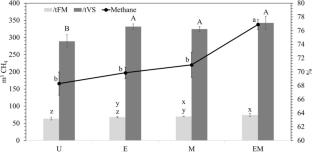
In alignment with the EU’s Circular Economy Framework, there has been a notable shift toward biorefineries as key facilities for converting biomass into commercially viable products. The abundant availability of grass represents a substantial yet underutilized resource for promoting a shift toward bioeconomy. This study aimed to improve the value chain of meadow grass by producing biogas, bio-based fertilizers, and lactic acid, and to determine the revenue potential from these products, addressing the critical challenge of optimizing biomass processing to maximize its value. Consequently, the grass samples were processed with three pretreatment techniques—milling, ensiling, and milling followed by ensiling—and then tested for their methane potential. Furthermore, the milled and ensiled grass was also subjected to an acid treatment followed by enzymatic hydrolysis, and the hydrolysate was assessed for lactic acid production using Lactobacillus delbrueckii and Pediococcus acidilactici. Our findings revealed that milled and ensiled fraction showcased an increase of 17% yielding 75 m3 CH4/tFM compared to untreated grass. Additionally, the hydrolysate derived from the milled and ensiled fraction stream achieves notable lactic acid production, reaching 240 kg LA/t FM using L. delbrueckii. Anaerobic digestion of ensiled grass can yield considerable benefits, with cost savings of 87 €/tFM for electricity and heat, and 19 €/tDM if used as a phosphorus-rich fertilizer. Alternatively, using this grass fraction for lactic acid production could generate 434 €/tFM in revenue. Further studies are required to assess the broader feasibility and implications of scaling up this approach.
期刊介绍:
Biomass Conversion and Biorefinery presents articles and information on research, development and applications in thermo-chemical conversion; physico-chemical conversion and bio-chemical conversion, including all necessary steps for the provision and preparation of the biomass as well as all possible downstream processing steps for the environmentally sound and economically viable provision of energy and chemical products.




 京公网安备 11010802042870号
京ICP备2023020795号-1
京公网安备 11010802042870号
京ICP备2023020795号-1

 分享
分享
 求助内容:
求助内容: 应助结果提醒方式:
 扫码关注我们
