{"title":"镀液成分、电流密度和退火条件对硅太阳能电池铜触点电沉积镍种子层特性的影响","authors":"Oussama Djema, Abderrahmane Moussi, Sofiane Chaouchi, Chafiaa Yaddaden, Malika Berouaken, Samir Meziani","doi":"10.1007/s11664-024-11191-w","DOIUrl":null,"url":null,"abstract":"<div><p>This work aims to investigate the effect of the bath composition, current density and annealing conditions on the properties of the electrodeposited nickel (Ni) seed layer for copper (Cu) contacts in silicon (Si) solar cells. For this purpose, electroplating experiments were performed using two bath compositions and applying various current densities. The electrodeposited Ni layers were investigated using scanning electron microscopy (SEM), energy-dispersive x-ray spectroscopy (EDS) and sheet resistance. The results showed that the bath composition and the current density affected the surface morphology, thickness, elemental composition and sheet resistance of the Ni layers. The Ni layers were then annealed at temperatures of 350°C and 400°C under N<sub>2</sub> atmosphere and vacuum to obtain the nickel silicide phases, which lower the contact resistivity between Ni and Si. The nickel silicide phases were investigated by diffraction (XRD). The results showed that the annealing conditions affected the formation of the nickel silicide phases.</p></div>","PeriodicalId":626,"journal":{"name":"Journal of Electronic Materials","volume":"53 8","pages":"4751 - 4761"},"PeriodicalIF":2.5000,"publicationDate":"2024-06-07","publicationTypes":"Journal Article","fieldsOfStudy":null,"isOpenAccess":false,"openAccessPdf":"","citationCount":"0","resultStr":"{\"title\":\"Effects of Bath Composition, Current Density and Annealing Conditions on the Properties of the Electrodeposited Ni Seed Layer for Cu Contacts in Si Solar Cells\",\"authors\":\"Oussama Djema, Abderrahmane Moussi, Sofiane Chaouchi, Chafiaa Yaddaden, Malika Berouaken, Samir Meziani\",\"doi\":\"10.1007/s11664-024-11191-w\",\"DOIUrl\":null,\"url\":null,\"abstract\":\"<div><p>This work aims to investigate the effect of the bath composition, current density and annealing conditions on the properties of the electrodeposited nickel (Ni) seed layer for copper (Cu) contacts in silicon (Si) solar cells. For this purpose, electroplating experiments were performed using two bath compositions and applying various current densities. The electrodeposited Ni layers were investigated using scanning electron microscopy (SEM), energy-dispersive x-ray spectroscopy (EDS) and sheet resistance. The results showed that the bath composition and the current density affected the surface morphology, thickness, elemental composition and sheet resistance of the Ni layers. The Ni layers were then annealed at temperatures of 350°C and 400°C under N<sub>2</sub> atmosphere and vacuum to obtain the nickel silicide phases, which lower the contact resistivity between Ni and Si. The nickel silicide phases were investigated by diffraction (XRD). The results showed that the annealing conditions affected the formation of the nickel silicide phases.</p></div>\",\"PeriodicalId\":626,\"journal\":{\"name\":\"Journal of Electronic Materials\",\"volume\":\"53 8\",\"pages\":\"4751 - 4761\"},\"PeriodicalIF\":2.5000,\"publicationDate\":\"2024-06-07\",\"publicationTypes\":\"Journal Article\",\"fieldsOfStudy\":null,\"isOpenAccess\":false,\"openAccessPdf\":\"\",\"citationCount\":\"0\",\"resultStr\":null,\"platform\":\"Semanticscholar\",\"paperid\":null,\"PeriodicalName\":\"Journal of Electronic Materials\",\"FirstCategoryId\":\"5\",\"ListUrlMain\":\"https://link.springer.com/article/10.1007/s11664-024-11191-w\",\"RegionNum\":4,\"RegionCategory\":\"工程技术\",\"ArticlePicture\":[],\"TitleCN\":null,\"AbstractTextCN\":null,\"PMCID\":null,\"EPubDate\":\"\",\"PubModel\":\"\",\"JCR\":\"Q3\",\"JCRName\":\"ENGINEERING, ELECTRICAL & ELECTRONIC\",\"Score\":null,\"Total\":0}","platform":"Semanticscholar","paperid":null,"PeriodicalName":"Journal of Electronic Materials","FirstCategoryId":"5","ListUrlMain":"https://link.springer.com/article/10.1007/s11664-024-11191-w","RegionNum":4,"RegionCategory":"工程技术","ArticlePicture":[],"TitleCN":null,"AbstractTextCN":null,"PMCID":null,"EPubDate":"","PubModel":"","JCR":"Q3","JCRName":"ENGINEERING, ELECTRICAL & ELECTRONIC","Score":null,"Total":0}
Effects of Bath Composition, Current Density and Annealing Conditions on the Properties of the Electrodeposited Ni Seed Layer for Cu Contacts in Si Solar Cells
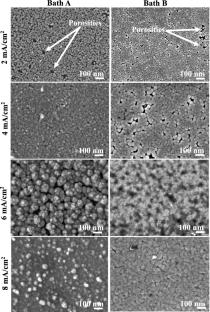
This work aims to investigate the effect of the bath composition, current density and annealing conditions on the properties of the electrodeposited nickel (Ni) seed layer for copper (Cu) contacts in silicon (Si) solar cells. For this purpose, electroplating experiments were performed using two bath compositions and applying various current densities. The electrodeposited Ni layers were investigated using scanning electron microscopy (SEM), energy-dispersive x-ray spectroscopy (EDS) and sheet resistance. The results showed that the bath composition and the current density affected the surface morphology, thickness, elemental composition and sheet resistance of the Ni layers. The Ni layers were then annealed at temperatures of 350°C and 400°C under N2 atmosphere and vacuum to obtain the nickel silicide phases, which lower the contact resistivity between Ni and Si. The nickel silicide phases were investigated by diffraction (XRD). The results showed that the annealing conditions affected the formation of the nickel silicide phases.
期刊介绍:
The Journal of Electronic Materials (JEM) reports monthly on the science and technology of electronic materials, while examining new applications for semiconductors, magnetic alloys, dielectrics, nanoscale materials, and photonic materials. The journal welcomes articles on methods for preparing and evaluating the chemical, physical, electronic, and optical properties of these materials. Specific areas of interest are materials for state-of-the-art transistors, nanotechnology, electronic packaging, detectors, emitters, metallization, superconductivity, and energy applications.
Review papers on current topics enable individuals in the field of electronics to keep abreast of activities in areas peripheral to their own. JEM also selects papers from conferences such as the Electronic Materials Conference, the U.S. Workshop on the Physics and Chemistry of II-VI Materials, and the International Conference on Thermoelectrics. It benefits both specialists and non-specialists in the electronic materials field.
A journal of The Minerals, Metals & Materials Society.




 京公网安备 11010802042870号
京ICP备2023020795号-1
京公网安备 11010802042870号
京ICP备2023020795号-1

 分享
分享
 求助内容:
求助内容: 应助结果提醒方式:
 扫码关注我们
