Ramandeep Kaur, Valiveti Tarun Kumar, Bhavya B. Krishna, Thallada Bhaskar
{"title":"柠檬草和小万寿菊残留生物质热解综合研究:生物油成分和生物炭理化性质","authors":"Ramandeep Kaur, Valiveti Tarun Kumar, Bhavya B. Krishna, Thallada Bhaskar","doi":"10.1007/s13399-024-05764-2","DOIUrl":null,"url":null,"abstract":"<div><p>The generation of spent aroma plant/process waste is increasing due to the growth of the essential oil industries due to the demand for essential oils. This study aims to convert such spent aroma plant waste, i.e., spent Lemongrass and Tagetes<i> minuta</i>, into bio-oil and biochar using slow pyrolysis. In this work, pyrolysis is conducted at different temperatures (350–500 ℃) at a heating rate of 10 ℃/min in a nitrogen atmosphere with a 50 mL/min flow rate. The maximum bio-oil yield obtained for Lemongrass was 37.3 wt% with a biochar yield of 31.6 wt% at 400 ℃; however, in the case of Tagetes<i> minuta</i>, the maximum bio-oil yield (39 wt%) was observed at 450 ℃ with 27.3 wt% of biochar yield. GC-MS analysis of bio-oil indicated its phenolic-rich nature along with other functionalities, i.e., carbonyls, furans, N-containing, and other types. Maximum phenolics observed with 60.27 area% for Lemongrass and 62.75 area% for Tagetes<i> minuta</i> at 450 ℃. Finally, to understand the breaking patterns of the biomass framework, flash pyrolysis through the analytical instrument, Py-GC/MS, was carried out at a high heating rate of 20 ℃/ms.</p><h3>Graphical abstract</h3>\n<div><figure><div><div><picture><source><img></source></picture></div></div></figure></div></div>","PeriodicalId":488,"journal":{"name":"Biomass Conversion and Biorefinery","volume":"15 22","pages":"28651 - 28666"},"PeriodicalIF":4.1000,"publicationDate":"2024-06-06","publicationTypes":"Journal Article","fieldsOfStudy":null,"isOpenAccess":false,"openAccessPdf":"","citationCount":"0","resultStr":"{\"title\":\"Comprehensive pyrolysis investigation of Lemongrass and Tagetes minuta residual biomass: bio-oil composition and biochar physicochemical properties\",\"authors\":\"Ramandeep Kaur, Valiveti Tarun Kumar, Bhavya B. Krishna, Thallada Bhaskar\",\"doi\":\"10.1007/s13399-024-05764-2\",\"DOIUrl\":null,\"url\":null,\"abstract\":\"<div><p>The generation of spent aroma plant/process waste is increasing due to the growth of the essential oil industries due to the demand for essential oils. This study aims to convert such spent aroma plant waste, i.e., spent Lemongrass and Tagetes<i> minuta</i>, into bio-oil and biochar using slow pyrolysis. In this work, pyrolysis is conducted at different temperatures (350–500 ℃) at a heating rate of 10 ℃/min in a nitrogen atmosphere with a 50 mL/min flow rate. The maximum bio-oil yield obtained for Lemongrass was 37.3 wt% with a biochar yield of 31.6 wt% at 400 ℃; however, in the case of Tagetes<i> minuta</i>, the maximum bio-oil yield (39 wt%) was observed at 450 ℃ with 27.3 wt% of biochar yield. GC-MS analysis of bio-oil indicated its phenolic-rich nature along with other functionalities, i.e., carbonyls, furans, N-containing, and other types. Maximum phenolics observed with 60.27 area% for Lemongrass and 62.75 area% for Tagetes<i> minuta</i> at 450 ℃. Finally, to understand the breaking patterns of the biomass framework, flash pyrolysis through the analytical instrument, Py-GC/MS, was carried out at a high heating rate of 20 ℃/ms.</p><h3>Graphical abstract</h3>\\n<div><figure><div><div><picture><source><img></source></picture></div></div></figure></div></div>\",\"PeriodicalId\":488,\"journal\":{\"name\":\"Biomass Conversion and Biorefinery\",\"volume\":\"15 22\",\"pages\":\"28651 - 28666\"},\"PeriodicalIF\":4.1000,\"publicationDate\":\"2024-06-06\",\"publicationTypes\":\"Journal Article\",\"fieldsOfStudy\":null,\"isOpenAccess\":false,\"openAccessPdf\":\"\",\"citationCount\":\"0\",\"resultStr\":null,\"platform\":\"Semanticscholar\",\"paperid\":null,\"PeriodicalName\":\"Biomass Conversion and Biorefinery\",\"FirstCategoryId\":\"5\",\"ListUrlMain\":\"https://link.springer.com/article/10.1007/s13399-024-05764-2\",\"RegionNum\":4,\"RegionCategory\":\"工程技术\",\"ArticlePicture\":[],\"TitleCN\":null,\"AbstractTextCN\":null,\"PMCID\":null,\"EPubDate\":\"\",\"PubModel\":\"\",\"JCR\":\"Q3\",\"JCRName\":\"ENERGY & FUELS\",\"Score\":null,\"Total\":0}","platform":"Semanticscholar","paperid":null,"PeriodicalName":"Biomass Conversion and Biorefinery","FirstCategoryId":"5","ListUrlMain":"https://link.springer.com/article/10.1007/s13399-024-05764-2","RegionNum":4,"RegionCategory":"工程技术","ArticlePicture":[],"TitleCN":null,"AbstractTextCN":null,"PMCID":null,"EPubDate":"","PubModel":"","JCR":"Q3","JCRName":"ENERGY & FUELS","Score":null,"Total":0}
Comprehensive pyrolysis investigation of Lemongrass and Tagetes minuta residual biomass: bio-oil composition and biochar physicochemical properties
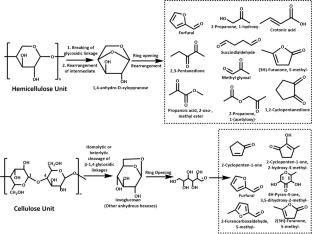
The generation of spent aroma plant/process waste is increasing due to the growth of the essential oil industries due to the demand for essential oils. This study aims to convert such spent aroma plant waste, i.e., spent Lemongrass and Tagetes minuta, into bio-oil and biochar using slow pyrolysis. In this work, pyrolysis is conducted at different temperatures (350–500 ℃) at a heating rate of 10 ℃/min in a nitrogen atmosphere with a 50 mL/min flow rate. The maximum bio-oil yield obtained for Lemongrass was 37.3 wt% with a biochar yield of 31.6 wt% at 400 ℃; however, in the case of Tagetes minuta, the maximum bio-oil yield (39 wt%) was observed at 450 ℃ with 27.3 wt% of biochar yield. GC-MS analysis of bio-oil indicated its phenolic-rich nature along with other functionalities, i.e., carbonyls, furans, N-containing, and other types. Maximum phenolics observed with 60.27 area% for Lemongrass and 62.75 area% for Tagetes minuta at 450 ℃. Finally, to understand the breaking patterns of the biomass framework, flash pyrolysis through the analytical instrument, Py-GC/MS, was carried out at a high heating rate of 20 ℃/ms.
期刊介绍:
Biomass Conversion and Biorefinery presents articles and information on research, development and applications in thermo-chemical conversion; physico-chemical conversion and bio-chemical conversion, including all necessary steps for the provision and preparation of the biomass as well as all possible downstream processing steps for the environmentally sound and economically viable provision of energy and chemical products.




 京公网安备 11010802042870号
京ICP备2023020795号-1
京公网安备 11010802042870号
京ICP备2023020795号-1

 分享
分享
 求助内容:
求助内容: 应助结果提醒方式:
 扫码关注我们
