{"title":"由槲皮素介导的光电化学信号极性转换用于检测神经元特异性烯醇化酶","authors":"Rui Xu, Chenyu Jiang and Qin Wei","doi":"10.1039/D4AN00764F","DOIUrl":null,"url":null,"abstract":"<p >A photoelectrochemical (PEC) biosensor with a wide linear detection range was developed for the sensitive detection of neuron-specific enolase (NSE), which was achieved by applying a photocurrent polarity transition strategy mediated by quercetin. The coupling reaction between Cr(<small>VI</small>) and quercetin drives the signal polarity from anodic to cathodic. When only quercetin is present in the test solution, photogenerated electrons are transferred to the electrode to generate anodic photocurrent. However, in the presence of the target, the signal probe released Cr(<small>VI</small>), which interacted with quercetin, and the electron transfer direction was changed to achieve signal polarity conversion. Meanwhile, protoporphyrin-sensitized Bi:SrTiO<small><sub>3</sub></small> nanocubes were used as matrix photoactive materials to provide basic photocurrent. The doping of Bi element would adjust the bandgap of SrTiO<small><sub>3</sub></small>, and the organic–inorganic composite material exhibits good photostability and chemical stability that can maintain stable photoelectric properties over a long period of time. Such a novel signal polarity transition strategy greatly broadened the sensor detection to the range of 0.00007–170 ng mL<small><sup>−1</sup></small> and obtained a relatively low detection limit (25 fg mL<small><sup>−1</sup></small>), which greatly improved the detection sensitivity and accuracy of the biosensor.</p>","PeriodicalId":63,"journal":{"name":"Analyst","volume":" 16","pages":" 4276-4282"},"PeriodicalIF":3.6000,"publicationDate":"2024-06-28","publicationTypes":"Journal Article","fieldsOfStudy":null,"isOpenAccess":false,"openAccessPdf":"","citationCount":"0","resultStr":"{\"title\":\"Photoelectrochemical signal polarity transition mediated by quercetin for the detection of neuron-specific enolase†\",\"authors\":\"Rui Xu, Chenyu Jiang and Qin Wei\",\"doi\":\"10.1039/D4AN00764F\",\"DOIUrl\":null,\"url\":null,\"abstract\":\"<p >A photoelectrochemical (PEC) biosensor with a wide linear detection range was developed for the sensitive detection of neuron-specific enolase (NSE), which was achieved by applying a photocurrent polarity transition strategy mediated by quercetin. The coupling reaction between Cr(<small>VI</small>) and quercetin drives the signal polarity from anodic to cathodic. When only quercetin is present in the test solution, photogenerated electrons are transferred to the electrode to generate anodic photocurrent. However, in the presence of the target, the signal probe released Cr(<small>VI</small>), which interacted with quercetin, and the electron transfer direction was changed to achieve signal polarity conversion. Meanwhile, protoporphyrin-sensitized Bi:SrTiO<small><sub>3</sub></small> nanocubes were used as matrix photoactive materials to provide basic photocurrent. The doping of Bi element would adjust the bandgap of SrTiO<small><sub>3</sub></small>, and the organic–inorganic composite material exhibits good photostability and chemical stability that can maintain stable photoelectric properties over a long period of time. Such a novel signal polarity transition strategy greatly broadened the sensor detection to the range of 0.00007–170 ng mL<small><sup>−1</sup></small> and obtained a relatively low detection limit (25 fg mL<small><sup>−1</sup></small>), which greatly improved the detection sensitivity and accuracy of the biosensor.</p>\",\"PeriodicalId\":63,\"journal\":{\"name\":\"Analyst\",\"volume\":\" 16\",\"pages\":\" 4276-4282\"},\"PeriodicalIF\":3.6000,\"publicationDate\":\"2024-06-28\",\"publicationTypes\":\"Journal Article\",\"fieldsOfStudy\":null,\"isOpenAccess\":false,\"openAccessPdf\":\"\",\"citationCount\":\"0\",\"resultStr\":null,\"platform\":\"Semanticscholar\",\"paperid\":null,\"PeriodicalName\":\"Analyst\",\"FirstCategoryId\":\"92\",\"ListUrlMain\":\"https://pubs.rsc.org/en/content/articlelanding/2024/an/d4an00764f\",\"RegionNum\":3,\"RegionCategory\":\"化学\",\"ArticlePicture\":[],\"TitleCN\":null,\"AbstractTextCN\":null,\"PMCID\":null,\"EPubDate\":\"\",\"PubModel\":\"\",\"JCR\":\"Q2\",\"JCRName\":\"CHEMISTRY, ANALYTICAL\",\"Score\":null,\"Total\":0}","platform":"Semanticscholar","paperid":null,"PeriodicalName":"Analyst","FirstCategoryId":"92","ListUrlMain":"https://pubs.rsc.org/en/content/articlelanding/2024/an/d4an00764f","RegionNum":3,"RegionCategory":"化学","ArticlePicture":[],"TitleCN":null,"AbstractTextCN":null,"PMCID":null,"EPubDate":"","PubModel":"","JCR":"Q2","JCRName":"CHEMISTRY, ANALYTICAL","Score":null,"Total":0}
Photoelectrochemical signal polarity transition mediated by quercetin for the detection of neuron-specific enolase†
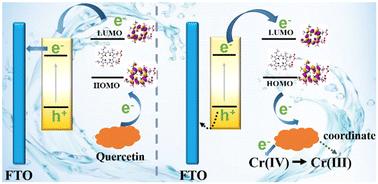
A photoelectrochemical (PEC) biosensor with a wide linear detection range was developed for the sensitive detection of neuron-specific enolase (NSE), which was achieved by applying a photocurrent polarity transition strategy mediated by quercetin. The coupling reaction between Cr(VI) and quercetin drives the signal polarity from anodic to cathodic. When only quercetin is present in the test solution, photogenerated electrons are transferred to the electrode to generate anodic photocurrent. However, in the presence of the target, the signal probe released Cr(VI), which interacted with quercetin, and the electron transfer direction was changed to achieve signal polarity conversion. Meanwhile, protoporphyrin-sensitized Bi:SrTiO3 nanocubes were used as matrix photoactive materials to provide basic photocurrent. The doping of Bi element would adjust the bandgap of SrTiO3, and the organic–inorganic composite material exhibits good photostability and chemical stability that can maintain stable photoelectric properties over a long period of time. Such a novel signal polarity transition strategy greatly broadened the sensor detection to the range of 0.00007–170 ng mL−1 and obtained a relatively low detection limit (25 fg mL−1), which greatly improved the detection sensitivity and accuracy of the biosensor.




 京公网安备 11010802042870号
京ICP备2023020795号-1
京公网安备 11010802042870号
京ICP备2023020795号-1

 分享
分享
 求助内容:
求助内容: 应助结果提醒方式:
 扫码关注我们
