Linzhou Yin , Xiaowen Jiang , Miao Wang , Yiren Yang , Zhonggui He , Jin Sun , Huiyuan Gao , Mengchi Sun
{"title":"源自植物成分的纳米药物/囊泡为治疗炎症性肠病提供了希望之光","authors":"Linzhou Yin , Xiaowen Jiang , Miao Wang , Yiren Yang , Zhonggui He , Jin Sun , Huiyuan Gao , Mengchi Sun","doi":"10.1016/j.cclet.2024.110224","DOIUrl":null,"url":null,"abstract":"<div><div>Natural phytoconstituents exhibit distinct advantages in the management and prevention of inflammatory bowel disease (IBD), attributed to their robust biological activity, multi-target effects, and elevated safety profile. Although promising, the clinical application of phytoconstituents have been impeded by poor water solubility, low oral bioavailability, and inadequate colonic targeting. Recent advancements in nanotechnology has offered prospective avenues for the application of phytoconstituents in the treatment of IBD. A common strategy involves encapsulating or conjugating phytoconstituents with nanocarriers to enhance their stability, prolong intestinal retention, and facilitate targeted delivery to colonic inflammatory tissues. Furthermore, drawing inspiration from the self-assembling nanostructures that emerge during the decoction process of Chinese herbs, a variety of natural active compounds-based nanoassemblies have been developed for the treatment of IBD. They exhibit high drug-loading capacities and surmount the challenges posed by poor water solubility and low bioavailability. Notably, phyto-derived nanovesicles, owing to their unique structure and biological functions, can serve as therapeutic agents or novel delivery vehicles for the treatment of IBD. Consequently, this review provides an extensive overview of emerging phytoconstituent-derived nano-medicines/vesicles for the treatment of IBD, intending to offer novel insights for the clinical management of IBD.</div></div>","PeriodicalId":10088,"journal":{"name":"Chinese Chemical Letters","volume":"36 6","pages":"Article 110224"},"PeriodicalIF":9.5000,"publicationDate":"2025-06-01","publicationTypes":"Journal Article","fieldsOfStudy":null,"isOpenAccess":false,"openAccessPdf":"","citationCount":"0","resultStr":"{\"title\":\"Phytoconstituent-derived nano-medicines/vesicles providing a promising dawn for inflammatory bowel disease\",\"authors\":\"Linzhou Yin , Xiaowen Jiang , Miao Wang , Yiren Yang , Zhonggui He , Jin Sun , Huiyuan Gao , Mengchi Sun\",\"doi\":\"10.1016/j.cclet.2024.110224\",\"DOIUrl\":null,\"url\":null,\"abstract\":\"<div><div>Natural phytoconstituents exhibit distinct advantages in the management and prevention of inflammatory bowel disease (IBD), attributed to their robust biological activity, multi-target effects, and elevated safety profile. Although promising, the clinical application of phytoconstituents have been impeded by poor water solubility, low oral bioavailability, and inadequate colonic targeting. Recent advancements in nanotechnology has offered prospective avenues for the application of phytoconstituents in the treatment of IBD. A common strategy involves encapsulating or conjugating phytoconstituents with nanocarriers to enhance their stability, prolong intestinal retention, and facilitate targeted delivery to colonic inflammatory tissues. Furthermore, drawing inspiration from the self-assembling nanostructures that emerge during the decoction process of Chinese herbs, a variety of natural active compounds-based nanoassemblies have been developed for the treatment of IBD. They exhibit high drug-loading capacities and surmount the challenges posed by poor water solubility and low bioavailability. Notably, phyto-derived nanovesicles, owing to their unique structure and biological functions, can serve as therapeutic agents or novel delivery vehicles for the treatment of IBD. Consequently, this review provides an extensive overview of emerging phytoconstituent-derived nano-medicines/vesicles for the treatment of IBD, intending to offer novel insights for the clinical management of IBD.</div></div>\",\"PeriodicalId\":10088,\"journal\":{\"name\":\"Chinese Chemical Letters\",\"volume\":\"36 6\",\"pages\":\"Article 110224\"},\"PeriodicalIF\":9.5000,\"publicationDate\":\"2025-06-01\",\"publicationTypes\":\"Journal Article\",\"fieldsOfStudy\":null,\"isOpenAccess\":false,\"openAccessPdf\":\"\",\"citationCount\":\"0\",\"resultStr\":null,\"platform\":\"Semanticscholar\",\"paperid\":null,\"PeriodicalName\":\"Chinese Chemical Letters\",\"FirstCategoryId\":\"92\",\"ListUrlMain\":\"https://www.sciencedirect.com/science/article/pii/S1001841724007435\",\"RegionNum\":1,\"RegionCategory\":\"化学\",\"ArticlePicture\":[],\"TitleCN\":null,\"AbstractTextCN\":null,\"PMCID\":null,\"EPubDate\":\"2024/7/8 0:00:00\",\"PubModel\":\"Epub\",\"JCR\":\"Q1\",\"JCRName\":\"CHEMISTRY, MULTIDISCIPLINARY\",\"Score\":null,\"Total\":0}","platform":"Semanticscholar","paperid":null,"PeriodicalName":"Chinese Chemical Letters","FirstCategoryId":"92","ListUrlMain":"https://www.sciencedirect.com/science/article/pii/S1001841724007435","RegionNum":1,"RegionCategory":"化学","ArticlePicture":[],"TitleCN":null,"AbstractTextCN":null,"PMCID":null,"EPubDate":"2024/7/8 0:00:00","PubModel":"Epub","JCR":"Q1","JCRName":"CHEMISTRY, MULTIDISCIPLINARY","Score":null,"Total":0}
Phytoconstituent-derived nano-medicines/vesicles providing a promising dawn for inflammatory bowel disease
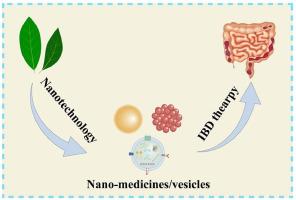
Natural phytoconstituents exhibit distinct advantages in the management and prevention of inflammatory bowel disease (IBD), attributed to their robust biological activity, multi-target effects, and elevated safety profile. Although promising, the clinical application of phytoconstituents have been impeded by poor water solubility, low oral bioavailability, and inadequate colonic targeting. Recent advancements in nanotechnology has offered prospective avenues for the application of phytoconstituents in the treatment of IBD. A common strategy involves encapsulating or conjugating phytoconstituents with nanocarriers to enhance their stability, prolong intestinal retention, and facilitate targeted delivery to colonic inflammatory tissues. Furthermore, drawing inspiration from the self-assembling nanostructures that emerge during the decoction process of Chinese herbs, a variety of natural active compounds-based nanoassemblies have been developed for the treatment of IBD. They exhibit high drug-loading capacities and surmount the challenges posed by poor water solubility and low bioavailability. Notably, phyto-derived nanovesicles, owing to their unique structure and biological functions, can serve as therapeutic agents or novel delivery vehicles for the treatment of IBD. Consequently, this review provides an extensive overview of emerging phytoconstituent-derived nano-medicines/vesicles for the treatment of IBD, intending to offer novel insights for the clinical management of IBD.
期刊介绍:
Chinese Chemical Letters (CCL) (ISSN 1001-8417) was founded in July 1990. The journal publishes preliminary accounts in the whole field of chemistry, including inorganic chemistry, organic chemistry, analytical chemistry, physical chemistry, polymer chemistry, applied chemistry, etc.Chinese Chemical Letters does not accept articles previously published or scheduled to be published. To verify originality, your article may be checked by the originality detection service CrossCheck.




 京公网安备 11010802042870号
京ICP备2023020795号-1
京公网安备 11010802042870号
京ICP备2023020795号-1

 分享
分享
 求助内容:
求助内容: 应助结果提醒方式:
 扫码关注我们
