Huifang Ma , Tao Xu , Saifei Yuan , Shujuan Li , Jiayao Wang , Yuping Zhang , Hao Ren , Shulai Lei
{"title":"二维异质结构表面钠吸附的层间相互作用和电子转移效应","authors":"Huifang Ma , Tao Xu , Saifei Yuan , Shujuan Li , Jiayao Wang , Yuping Zhang , Hao Ren , Shulai Lei","doi":"10.1016/j.cclet.2024.110219","DOIUrl":null,"url":null,"abstract":"<div><div>Surface adsorption plays a crucial role in various natural and industrial processes, particularly in the field of energy storage. The adsorption of sodium atoms on 2D layered materials can significantly impact their performance as carriers and electrodes in ion batteries. While it is commonly acknowledged that pristine graphene is not favorable for sodium ion adsorption, the suitability of other 2D materials with similar honeycomb symmetry remains unclear. In this study, we employ systematic first-principles calculations to explore interlayer interactions and electron transfer effects on sodium adsorption on 2D van der Waals (vdW) heterostructures (HTSs) surfaces. Our results demonstrate that sodium adsorption is energetically favorable on these substrates. Moreover, we find that the adsorption strength can be effectively tuned by manipulation of the electron accumulation or depletion of the layer directly interacting with the sodium atom. By stacking these layered materials with different electron abundancy to form vdW HTSs, the charge density of the substrate becomes tunable through interlayer charge transfer. In these vdW HTSs, the adsorption behavior of sodium is primarily controlled by the absorption layer and exhibits a linear correlation with its p<sub>z</sub>-band center. Additionally, we identify linear correlations between the sodium adsorption energies, the electron loss of the sodium atom, the interlayer charge transfer, and the heights of the adsorbed sodium atom. These discoveries underscore the impact of interlayer electron transfer and interactions on sodium ion adsorption on 2D vdW HTSs and providing new insights into material design for alkali atom adsorption.</div></div>","PeriodicalId":10088,"journal":{"name":"Chinese Chemical Letters","volume":"36 8","pages":"Article 110219"},"PeriodicalIF":8.9000,"publicationDate":"2025-08-01","publicationTypes":"Journal Article","fieldsOfStudy":null,"isOpenAccess":false,"openAccessPdf":"","citationCount":"0","resultStr":"{\"title\":\"Interlayer interactions and electron transfer effects on sodium adsorption on 2D heterostructures surfaces\",\"authors\":\"Huifang Ma , Tao Xu , Saifei Yuan , Shujuan Li , Jiayao Wang , Yuping Zhang , Hao Ren , Shulai Lei\",\"doi\":\"10.1016/j.cclet.2024.110219\",\"DOIUrl\":null,\"url\":null,\"abstract\":\"<div><div>Surface adsorption plays a crucial role in various natural and industrial processes, particularly in the field of energy storage. The adsorption of sodium atoms on 2D layered materials can significantly impact their performance as carriers and electrodes in ion batteries. While it is commonly acknowledged that pristine graphene is not favorable for sodium ion adsorption, the suitability of other 2D materials with similar honeycomb symmetry remains unclear. In this study, we employ systematic first-principles calculations to explore interlayer interactions and electron transfer effects on sodium adsorption on 2D van der Waals (vdW) heterostructures (HTSs) surfaces. Our results demonstrate that sodium adsorption is energetically favorable on these substrates. Moreover, we find that the adsorption strength can be effectively tuned by manipulation of the electron accumulation or depletion of the layer directly interacting with the sodium atom. By stacking these layered materials with different electron abundancy to form vdW HTSs, the charge density of the substrate becomes tunable through interlayer charge transfer. In these vdW HTSs, the adsorption behavior of sodium is primarily controlled by the absorption layer and exhibits a linear correlation with its p<sub>z</sub>-band center. Additionally, we identify linear correlations between the sodium adsorption energies, the electron loss of the sodium atom, the interlayer charge transfer, and the heights of the adsorbed sodium atom. These discoveries underscore the impact of interlayer electron transfer and interactions on sodium ion adsorption on 2D vdW HTSs and providing new insights into material design for alkali atom adsorption.</div></div>\",\"PeriodicalId\":10088,\"journal\":{\"name\":\"Chinese Chemical Letters\",\"volume\":\"36 8\",\"pages\":\"Article 110219\"},\"PeriodicalIF\":8.9000,\"publicationDate\":\"2025-08-01\",\"publicationTypes\":\"Journal Article\",\"fieldsOfStudy\":null,\"isOpenAccess\":false,\"openAccessPdf\":\"\",\"citationCount\":\"0\",\"resultStr\":null,\"platform\":\"Semanticscholar\",\"paperid\":null,\"PeriodicalName\":\"Chinese Chemical Letters\",\"FirstCategoryId\":\"92\",\"ListUrlMain\":\"https://www.sciencedirect.com/science/article/pii/S1001841724007381\",\"RegionNum\":1,\"RegionCategory\":\"化学\",\"ArticlePicture\":[],\"TitleCN\":null,\"AbstractTextCN\":null,\"PMCID\":null,\"EPubDate\":\"2024/7/5 0:00:00\",\"PubModel\":\"Epub\",\"JCR\":\"Q1\",\"JCRName\":\"CHEMISTRY, MULTIDISCIPLINARY\",\"Score\":null,\"Total\":0}","platform":"Semanticscholar","paperid":null,"PeriodicalName":"Chinese Chemical Letters","FirstCategoryId":"92","ListUrlMain":"https://www.sciencedirect.com/science/article/pii/S1001841724007381","RegionNum":1,"RegionCategory":"化学","ArticlePicture":[],"TitleCN":null,"AbstractTextCN":null,"PMCID":null,"EPubDate":"2024/7/5 0:00:00","PubModel":"Epub","JCR":"Q1","JCRName":"CHEMISTRY, MULTIDISCIPLINARY","Score":null,"Total":0}
Interlayer interactions and electron transfer effects on sodium adsorption on 2D heterostructures surfaces
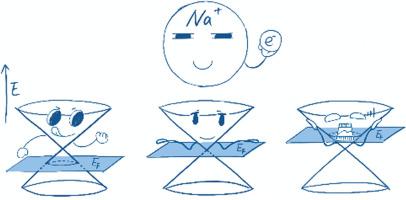
Surface adsorption plays a crucial role in various natural and industrial processes, particularly in the field of energy storage. The adsorption of sodium atoms on 2D layered materials can significantly impact their performance as carriers and electrodes in ion batteries. While it is commonly acknowledged that pristine graphene is not favorable for sodium ion adsorption, the suitability of other 2D materials with similar honeycomb symmetry remains unclear. In this study, we employ systematic first-principles calculations to explore interlayer interactions and electron transfer effects on sodium adsorption on 2D van der Waals (vdW) heterostructures (HTSs) surfaces. Our results demonstrate that sodium adsorption is energetically favorable on these substrates. Moreover, we find that the adsorption strength can be effectively tuned by manipulation of the electron accumulation or depletion of the layer directly interacting with the sodium atom. By stacking these layered materials with different electron abundancy to form vdW HTSs, the charge density of the substrate becomes tunable through interlayer charge transfer. In these vdW HTSs, the adsorption behavior of sodium is primarily controlled by the absorption layer and exhibits a linear correlation with its pz-band center. Additionally, we identify linear correlations between the sodium adsorption energies, the electron loss of the sodium atom, the interlayer charge transfer, and the heights of the adsorbed sodium atom. These discoveries underscore the impact of interlayer electron transfer and interactions on sodium ion adsorption on 2D vdW HTSs and providing new insights into material design for alkali atom adsorption.
期刊介绍:
Chinese Chemical Letters (CCL) (ISSN 1001-8417) was founded in July 1990. The journal publishes preliminary accounts in the whole field of chemistry, including inorganic chemistry, organic chemistry, analytical chemistry, physical chemistry, polymer chemistry, applied chemistry, etc.Chinese Chemical Letters does not accept articles previously published or scheduled to be published. To verify originality, your article may be checked by the originality detection service CrossCheck.




 京公网安备 11010802042870号
京ICP备2023020795号-1
京公网安备 11010802042870号
京ICP备2023020795号-1

 分享
分享
 求助内容:
求助内容: 应助结果提醒方式:
 扫码关注我们
