{"title":"结合通用机器学习势能、通用属性模型和优化算法的全空间反向材料设计方法","authors":"Guanjian Cheng , Xin-Gao Gong , Wan-Jian Yin","doi":"10.1016/j.scib.2024.07.015","DOIUrl":null,"url":null,"abstract":"<div><div>We present a full space inverse materials design (FSIMD) approach that fully automates the materials design for target physical properties without the need to provide the atomic composition, chemical stoichiometry, and crystal structure in advance. Here, we used density functional theory reference data to train a universal machine learning potential (UPot) and transfer learning to train a universal bulk modulus model (UBmod). Both UPot and UBmod were able to cover materials systems composed of any element among 42 elements. Interfaced with optimization algorithm and enhanced sampling, the FSIMD approach is applied to find the materials with the largest cohesive energy and the largest bulk modulus, respectively. NaCl-type ZrC was found to be the material with the largest cohesive energy. For bulk modulus, diamond was identified to have the largest value. The FSIMD approach is also applied to design materials with other multi-objective properties with accuracy limited principally by the amount, reliability, and diversity of the training data. The FSIMD approach provides a new way for inverse materials design with other functional properties for practical applications.</div></div>","PeriodicalId":421,"journal":{"name":"Science Bulletin","volume":"69 19","pages":"Pages 3066-3074"},"PeriodicalIF":20.7000,"publicationDate":"2024-10-15","publicationTypes":"Journal Article","fieldsOfStudy":null,"isOpenAccess":false,"openAccessPdf":"","citationCount":"0","resultStr":"{\"title\":\"An approach for full space inverse materials design by combining universal machine learning potential, universal property model, and optimization algorithm\",\"authors\":\"Guanjian Cheng , Xin-Gao Gong , Wan-Jian Yin\",\"doi\":\"10.1016/j.scib.2024.07.015\",\"DOIUrl\":null,\"url\":null,\"abstract\":\"<div><div>We present a full space inverse materials design (FSIMD) approach that fully automates the materials design for target physical properties without the need to provide the atomic composition, chemical stoichiometry, and crystal structure in advance. Here, we used density functional theory reference data to train a universal machine learning potential (UPot) and transfer learning to train a universal bulk modulus model (UBmod). Both UPot and UBmod were able to cover materials systems composed of any element among 42 elements. Interfaced with optimization algorithm and enhanced sampling, the FSIMD approach is applied to find the materials with the largest cohesive energy and the largest bulk modulus, respectively. NaCl-type ZrC was found to be the material with the largest cohesive energy. For bulk modulus, diamond was identified to have the largest value. The FSIMD approach is also applied to design materials with other multi-objective properties with accuracy limited principally by the amount, reliability, and diversity of the training data. The FSIMD approach provides a new way for inverse materials design with other functional properties for practical applications.</div></div>\",\"PeriodicalId\":421,\"journal\":{\"name\":\"Science Bulletin\",\"volume\":\"69 19\",\"pages\":\"Pages 3066-3074\"},\"PeriodicalIF\":20.7000,\"publicationDate\":\"2024-10-15\",\"publicationTypes\":\"Journal Article\",\"fieldsOfStudy\":null,\"isOpenAccess\":false,\"openAccessPdf\":\"\",\"citationCount\":\"0\",\"resultStr\":null,\"platform\":\"Semanticscholar\",\"paperid\":null,\"PeriodicalName\":\"Science Bulletin\",\"FirstCategoryId\":\"103\",\"ListUrlMain\":\"https://www.sciencedirect.com/science/article/pii/S2095927324004948\",\"RegionNum\":1,\"RegionCategory\":\"综合性期刊\",\"ArticlePicture\":[],\"TitleCN\":null,\"AbstractTextCN\":null,\"PMCID\":null,\"EPubDate\":\"2024/7/15 0:00:00\",\"PubModel\":\"Epub\",\"JCR\":\"Q1\",\"JCRName\":\"MULTIDISCIPLINARY SCIENCES\",\"Score\":null,\"Total\":0}","platform":"Semanticscholar","paperid":null,"PeriodicalName":"Science Bulletin","FirstCategoryId":"103","ListUrlMain":"https://www.sciencedirect.com/science/article/pii/S2095927324004948","RegionNum":1,"RegionCategory":"综合性期刊","ArticlePicture":[],"TitleCN":null,"AbstractTextCN":null,"PMCID":null,"EPubDate":"2024/7/15 0:00:00","PubModel":"Epub","JCR":"Q1","JCRName":"MULTIDISCIPLINARY SCIENCES","Score":null,"Total":0}
An approach for full space inverse materials design by combining universal machine learning potential, universal property model, and optimization algorithm
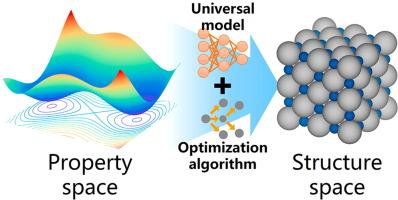
We present a full space inverse materials design (FSIMD) approach that fully automates the materials design for target physical properties without the need to provide the atomic composition, chemical stoichiometry, and crystal structure in advance. Here, we used density functional theory reference data to train a universal machine learning potential (UPot) and transfer learning to train a universal bulk modulus model (UBmod). Both UPot and UBmod were able to cover materials systems composed of any element among 42 elements. Interfaced with optimization algorithm and enhanced sampling, the FSIMD approach is applied to find the materials with the largest cohesive energy and the largest bulk modulus, respectively. NaCl-type ZrC was found to be the material with the largest cohesive energy. For bulk modulus, diamond was identified to have the largest value. The FSIMD approach is also applied to design materials with other multi-objective properties with accuracy limited principally by the amount, reliability, and diversity of the training data. The FSIMD approach provides a new way for inverse materials design with other functional properties for practical applications.
期刊介绍:
Science Bulletin (Sci. Bull., formerly known as Chinese Science Bulletin) is a multidisciplinary academic journal supervised by the Chinese Academy of Sciences (CAS) and co-sponsored by the CAS and the National Natural Science Foundation of China (NSFC). Sci. Bull. is a semi-monthly international journal publishing high-caliber peer-reviewed research on a broad range of natural sciences and high-tech fields on the basis of its originality, scientific significance and whether it is of general interest. In addition, we are committed to serving the scientific community with immediate, authoritative news and valuable insights into upcoming trends around the globe.




 京公网安备 11010802042870号
京ICP备2023020795号-1
京公网安备 11010802042870号
京ICP备2023020795号-1

 分享
分享
 求助内容:
求助内容: 应助结果提醒方式:
 扫码关注我们
