Evgeniy L. Gagarinskiy, Viktor K. Uteshev, Eugeny E. Fesenko Jr.
{"title":"在基于氧气、一氧化碳和一氧化二氮的混合气体中,在不同压力条件下对欧洲普通蛙Rana temporaria的卵母细胞进行长期低温储存。","authors":"Evgeniy L. Gagarinskiy, Viktor K. Uteshev, Eugeny E. Fesenko Jr.","doi":"10.1016/j.cryobiol.2024.104952","DOIUrl":null,"url":null,"abstract":"<div><p>In recent years, the challenge of preserving amphibian biodiversity has increasingly been addressed through technologies for the short-term storage of unfertilized spawn at low positive temperatures. Previously the possibility of using a 6.5 atm gaseous mixture of carbon monoxide and oxygen for prolonged hypothermic preservation of unfertilized oocytes for more than 4 days was shown. This study aimed to investigate the viability of oocytes R. temporaria preserved under conditions of hypothermia at 2.5, 3 and 6.5 excess atm pressure in the various gas mixture compositions (CO, N<sub>2</sub>O, O<sub>2</sub>) and pure oxygen. The use of pressure up to 3 excess atmospheres was significantly beneficial compared to 6.5 atm at the 7 days storage period. The results indicate that oxygen pressure is a critical factor in maintaining oocyte viability. Admixing CO or N<sub>2</sub>O to oxygen reduced variability in the results but did not significantly affect the measured indicators (fertilization, hatching) in the experimental groups. The composition CO + O<sub>2</sub> (0.5/3.5 ratio, 3 excess atm) reliably extended the shelf life of viable oocytes, indistinguishable from native controls by fertilization and hatching rates, to 4 days. After 7 days, oocytes exhibited fertilization and hatching rates that were 79 % and 48 % compared to native control. Reducing the pressure of the preserving gas mixture to 3 atm, as utilized in this study, simplifies the practical implementation of gas preservation technology for maintaining endangered amphibian species during breeding in laboratory conditions.</p></div>","PeriodicalId":10897,"journal":{"name":"Cryobiology","volume":"116 ","pages":"Article 104952"},"PeriodicalIF":2.1000,"publicationDate":"2024-09-01","publicationTypes":"Journal Article","fieldsOfStudy":null,"isOpenAccess":false,"openAccessPdf":"","citationCount":"0","resultStr":"{\"title\":\"Long-term hypothermic storage of oocytes of the European common frog Rana temporaria at various pressure regimes in gas mixtures based on oxygen, carbon monoxide, and nitrous oxide\",\"authors\":\"Evgeniy L. Gagarinskiy, Viktor K. Uteshev, Eugeny E. Fesenko Jr.\",\"doi\":\"10.1016/j.cryobiol.2024.104952\",\"DOIUrl\":null,\"url\":null,\"abstract\":\"<div><p>In recent years, the challenge of preserving amphibian biodiversity has increasingly been addressed through technologies for the short-term storage of unfertilized spawn at low positive temperatures. Previously the possibility of using a 6.5 atm gaseous mixture of carbon monoxide and oxygen for prolonged hypothermic preservation of unfertilized oocytes for more than 4 days was shown. This study aimed to investigate the viability of oocytes R. temporaria preserved under conditions of hypothermia at 2.5, 3 and 6.5 excess atm pressure in the various gas mixture compositions (CO, N<sub>2</sub>O, O<sub>2</sub>) and pure oxygen. The use of pressure up to 3 excess atmospheres was significantly beneficial compared to 6.5 atm at the 7 days storage period. The results indicate that oxygen pressure is a critical factor in maintaining oocyte viability. Admixing CO or N<sub>2</sub>O to oxygen reduced variability in the results but did not significantly affect the measured indicators (fertilization, hatching) in the experimental groups. The composition CO + O<sub>2</sub> (0.5/3.5 ratio, 3 excess atm) reliably extended the shelf life of viable oocytes, indistinguishable from native controls by fertilization and hatching rates, to 4 days. After 7 days, oocytes exhibited fertilization and hatching rates that were 79 % and 48 % compared to native control. Reducing the pressure of the preserving gas mixture to 3 atm, as utilized in this study, simplifies the practical implementation of gas preservation technology for maintaining endangered amphibian species during breeding in laboratory conditions.</p></div>\",\"PeriodicalId\":10897,\"journal\":{\"name\":\"Cryobiology\",\"volume\":\"116 \",\"pages\":\"Article 104952\"},\"PeriodicalIF\":2.1000,\"publicationDate\":\"2024-09-01\",\"publicationTypes\":\"Journal Article\",\"fieldsOfStudy\":null,\"isOpenAccess\":false,\"openAccessPdf\":\"\",\"citationCount\":\"0\",\"resultStr\":null,\"platform\":\"Semanticscholar\",\"paperid\":null,\"PeriodicalName\":\"Cryobiology\",\"FirstCategoryId\":\"99\",\"ListUrlMain\":\"https://www.sciencedirect.com/science/article/pii/S001122402400107X\",\"RegionNum\":3,\"RegionCategory\":\"生物学\",\"ArticlePicture\":[],\"TitleCN\":null,\"AbstractTextCN\":null,\"PMCID\":null,\"EPubDate\":\"2024/8/22 0:00:00\",\"PubModel\":\"Epub\",\"JCR\":\"Q2\",\"JCRName\":\"BIOLOGY\",\"Score\":null,\"Total\":0}","platform":"Semanticscholar","paperid":null,"PeriodicalName":"Cryobiology","FirstCategoryId":"99","ListUrlMain":"https://www.sciencedirect.com/science/article/pii/S001122402400107X","RegionNum":3,"RegionCategory":"生物学","ArticlePicture":[],"TitleCN":null,"AbstractTextCN":null,"PMCID":null,"EPubDate":"2024/8/22 0:00:00","PubModel":"Epub","JCR":"Q2","JCRName":"BIOLOGY","Score":null,"Total":0}
Long-term hypothermic storage of oocytes of the European common frog Rana temporaria at various pressure regimes in gas mixtures based on oxygen, carbon monoxide, and nitrous oxide
In recent years, the challenge of preserving amphibian biodiversity has increasingly been addressed through technologies for the short-term storage of unfertilized spawn at low positive temperatures. Previously the possibility of using a 6.5 atm gaseous mixture of carbon monoxide and oxygen for prolonged hypothermic preservation of unfertilized oocytes for more than 4 days was shown. This study aimed to investigate the viability of oocytes R. temporaria preserved under conditions of hypothermia at 2.5, 3 and 6.5 excess atm pressure in the various gas mixture compositions (CO, N2O, O2) and pure oxygen. The use of pressure up to 3 excess atmospheres was significantly beneficial compared to 6.5 atm at the 7 days storage period. The results indicate that oxygen pressure is a critical factor in maintaining oocyte viability. Admixing CO or N2O to oxygen reduced variability in the results but did not significantly affect the measured indicators (fertilization, hatching) in the experimental groups. The composition CO + O2 (0.5/3.5 ratio, 3 excess atm) reliably extended the shelf life of viable oocytes, indistinguishable from native controls by fertilization and hatching rates, to 4 days. After 7 days, oocytes exhibited fertilization and hatching rates that were 79 % and 48 % compared to native control. Reducing the pressure of the preserving gas mixture to 3 atm, as utilized in this study, simplifies the practical implementation of gas preservation technology for maintaining endangered amphibian species during breeding in laboratory conditions.
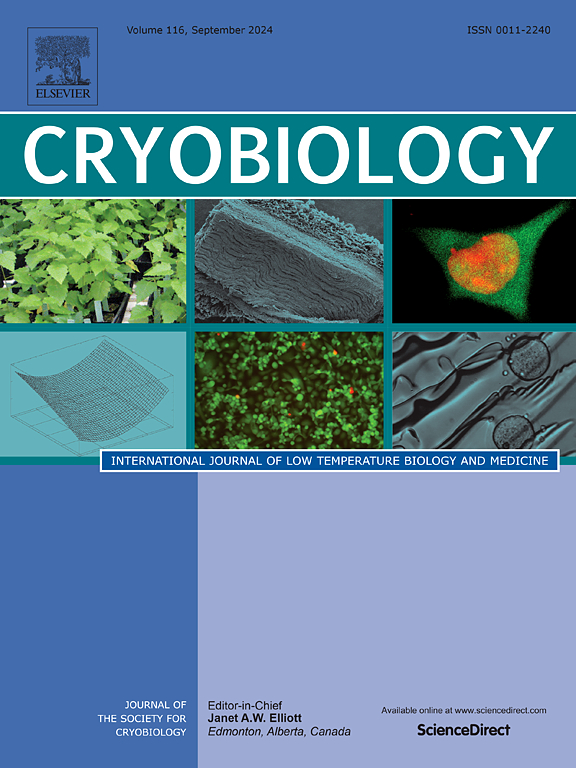
期刊介绍:
Cryobiology: International Journal of Low Temperature Biology and Medicine publishes research articles on all aspects of low temperature biology and medicine.
Research Areas include:
• Cryoprotective additives and their pharmacological actions
• Cryosurgery
• Freeze-drying
• Freezing
• Frost hardiness in plants
• Hibernation
• Hypothermia
• Medical applications of reduced temperature
• Perfusion of organs
• All pertinent methodologies
Cryobiology is the official journal of the Society for Cryobiology.




 京公网安备 11010802042870号
京ICP备2023020795号-1
京公网安备 11010802042870号
京ICP备2023020795号-1

 分享
分享
 求助内容:
求助内容: 应助结果提醒方式:
 扫码关注我们
