{"title":"纳米多孔半透明 La0.8Sr0.2CoO3 涂层的制备和氧进化反应:中性介质中的稳定性和机理","authors":"Divya Vyas, Shikha Dhakar, Aditi Singhal, Sudhanshu Sharma","doi":"10.1007/s11244-024-02002-x","DOIUrl":null,"url":null,"abstract":"<div><p>For the prospective use in oxygen evolution reaction, the semi-transparent thin film of La<sub>0.8</sub>Sr<sub>0.2</sub>CoO<sub>3</sub> (LSCO)<sub>,</sub> was deposited on fluorine-doped tin oxide coated glass substrate as an electrocatalyst, by using sol–gel method of synthesis followed by spin coating. Detailed characterization explains the crystallinity, homogeneity and nano porosity of the film. Films are conducting with low sheet resistance and high carrier concentration. Electrochemical measurements in 0.1 M phosphate buffer solution (pH 7.4) confirms the evolution of oxygen which starts at 1.51 V vs RHE with an overpotential value of 280 mV and Tafel slope value of 104 mv/dec in neutral medium (0.1 M phosphate buffer), which remain stable for a long time. LSCO is a well-known material for OER in basic medium, as demonstrated in many literature studies. However, this study demonstrates its electrocatalytic activity in neutral medium and how the surface of material changes after some time. Catalyst is subjected to the stability test for ~ 22 hours, and it is observed that stability is good. Post electrochemical characterization using XRD and XPS indicates that the bulk lattice remains intact, however breakdown of the surface lattice structure produces separate oxides. Briefly, reduced cobalt oxide and oxidised strontium species form on the surface after electrocatalysis. The reduction is well correlated with the depletion of lattice oxygen from the La<sub>0.8</sub>Sr<sub>0.2</sub>CoO<sub>3</sub> compound, depicting its role in the OER process. The assumption that cobalt ions play a decisive role in the electrochemical reaction is also established from XPS studies.</p></div>","PeriodicalId":801,"journal":{"name":"Topics in Catalysis","volume":"68 3-4","pages":"346 - 356"},"PeriodicalIF":3.7000,"publicationDate":"2024-08-09","publicationTypes":"Journal Article","fieldsOfStudy":null,"isOpenAccess":false,"openAccessPdf":"","citationCount":"0","resultStr":"{\"title\":\"Preparation and Oxygen Evolution Reaction on Nanoporous Semi-transparent La0.8Sr0.2CoO3 Coatings: Stability and Mechanism in Neutral Medium\",\"authors\":\"Divya Vyas, Shikha Dhakar, Aditi Singhal, Sudhanshu Sharma\",\"doi\":\"10.1007/s11244-024-02002-x\",\"DOIUrl\":null,\"url\":null,\"abstract\":\"<div><p>For the prospective use in oxygen evolution reaction, the semi-transparent thin film of La<sub>0.8</sub>Sr<sub>0.2</sub>CoO<sub>3</sub> (LSCO)<sub>,</sub> was deposited on fluorine-doped tin oxide coated glass substrate as an electrocatalyst, by using sol–gel method of synthesis followed by spin coating. Detailed characterization explains the crystallinity, homogeneity and nano porosity of the film. Films are conducting with low sheet resistance and high carrier concentration. Electrochemical measurements in 0.1 M phosphate buffer solution (pH 7.4) confirms the evolution of oxygen which starts at 1.51 V vs RHE with an overpotential value of 280 mV and Tafel slope value of 104 mv/dec in neutral medium (0.1 M phosphate buffer), which remain stable for a long time. LSCO is a well-known material for OER in basic medium, as demonstrated in many literature studies. However, this study demonstrates its electrocatalytic activity in neutral medium and how the surface of material changes after some time. Catalyst is subjected to the stability test for ~ 22 hours, and it is observed that stability is good. Post electrochemical characterization using XRD and XPS indicates that the bulk lattice remains intact, however breakdown of the surface lattice structure produces separate oxides. Briefly, reduced cobalt oxide and oxidised strontium species form on the surface after electrocatalysis. The reduction is well correlated with the depletion of lattice oxygen from the La<sub>0.8</sub>Sr<sub>0.2</sub>CoO<sub>3</sub> compound, depicting its role in the OER process. The assumption that cobalt ions play a decisive role in the electrochemical reaction is also established from XPS studies.</p></div>\",\"PeriodicalId\":801,\"journal\":{\"name\":\"Topics in Catalysis\",\"volume\":\"68 3-4\",\"pages\":\"346 - 356\"},\"PeriodicalIF\":3.7000,\"publicationDate\":\"2024-08-09\",\"publicationTypes\":\"Journal Article\",\"fieldsOfStudy\":null,\"isOpenAccess\":false,\"openAccessPdf\":\"\",\"citationCount\":\"0\",\"resultStr\":null,\"platform\":\"Semanticscholar\",\"paperid\":null,\"PeriodicalName\":\"Topics in Catalysis\",\"FirstCategoryId\":\"92\",\"ListUrlMain\":\"https://link.springer.com/article/10.1007/s11244-024-02002-x\",\"RegionNum\":3,\"RegionCategory\":\"化学\",\"ArticlePicture\":[],\"TitleCN\":null,\"AbstractTextCN\":null,\"PMCID\":null,\"EPubDate\":\"\",\"PubModel\":\"\",\"JCR\":\"Q2\",\"JCRName\":\"CHEMISTRY, APPLIED\",\"Score\":null,\"Total\":0}","platform":"Semanticscholar","paperid":null,"PeriodicalName":"Topics in Catalysis","FirstCategoryId":"92","ListUrlMain":"https://link.springer.com/article/10.1007/s11244-024-02002-x","RegionNum":3,"RegionCategory":"化学","ArticlePicture":[],"TitleCN":null,"AbstractTextCN":null,"PMCID":null,"EPubDate":"","PubModel":"","JCR":"Q2","JCRName":"CHEMISTRY, APPLIED","Score":null,"Total":0}
引用次数: 0
摘要
将La0.8Sr0.2CoO3 (LSCO)半透明薄膜作为电催化剂沉积在掺氟氧化锡镀膜玻璃基板上,采用溶胶-凝胶法合成后再进行自旋镀膜,展望了其在析氧反应中的应用前景。详细的表征解释了薄膜的结晶度、均匀性和纳米孔隙度。薄膜具有低片阻和高载流子浓度的导电性。在0.1 M磷酸盐缓冲溶液(pH 7.4)中的电化学测量证实,在中性介质(0.1 M磷酸盐缓冲液)中,氧在1.51 V vs RHE下开始演化,过电位为280 mV, Tafel斜率为104 mV /dec,并长期保持稳定。许多文献研究表明,LSCO是基础介质中众所周知的OER材料。然而,本研究证明了它在中性介质中的电催化活性,以及材料表面在一段时间后的变化。对催化剂进行了~ 22小时的稳定性试验,观察到稳定性良好。电化学后的XRD和XPS表征表明,体晶格保持完整,但表面晶格结构的破坏产生了分离的氧化物。简而言之,电催化后在表面形成还原的氧化钴和氧化的锶。这种还原与La0.8Sr0.2CoO3化合物中晶格氧的耗竭密切相关,描绘了其在OER过程中的作用。从XPS研究中还建立了钴离子在电化学反应中起决定性作用的假设。
Preparation and Oxygen Evolution Reaction on Nanoporous Semi-transparent La0.8Sr0.2CoO3 Coatings: Stability and Mechanism in Neutral Medium
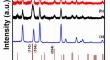
For the prospective use in oxygen evolution reaction, the semi-transparent thin film of La0.8Sr0.2CoO3 (LSCO), was deposited on fluorine-doped tin oxide coated glass substrate as an electrocatalyst, by using sol–gel method of synthesis followed by spin coating. Detailed characterization explains the crystallinity, homogeneity and nano porosity of the film. Films are conducting with low sheet resistance and high carrier concentration. Electrochemical measurements in 0.1 M phosphate buffer solution (pH 7.4) confirms the evolution of oxygen which starts at 1.51 V vs RHE with an overpotential value of 280 mV and Tafel slope value of 104 mv/dec in neutral medium (0.1 M phosphate buffer), which remain stable for a long time. LSCO is a well-known material for OER in basic medium, as demonstrated in many literature studies. However, this study demonstrates its electrocatalytic activity in neutral medium and how the surface of material changes after some time. Catalyst is subjected to the stability test for ~ 22 hours, and it is observed that stability is good. Post electrochemical characterization using XRD and XPS indicates that the bulk lattice remains intact, however breakdown of the surface lattice structure produces separate oxides. Briefly, reduced cobalt oxide and oxidised strontium species form on the surface after electrocatalysis. The reduction is well correlated with the depletion of lattice oxygen from the La0.8Sr0.2CoO3 compound, depicting its role in the OER process. The assumption that cobalt ions play a decisive role in the electrochemical reaction is also established from XPS studies.
期刊介绍:
Topics in Catalysis publishes topical collections in all fields of catalysis which are composed only of invited articles from leading authors. The journal documents today’s emerging and critical trends in all branches of catalysis. Each themed issue is organized by renowned Guest Editors in collaboration with the Editors-in-Chief. Proposals for new topics are welcome and should be submitted directly to the Editors-in-Chief.
The publication of individual uninvited original research articles can be sent to our sister journal Catalysis Letters. This journal aims for rapid publication of high-impact original research articles in all fields of both applied and theoretical catalysis, including heterogeneous, homogeneous and biocatalysis.




 京公网安备 11010802042870号
京ICP备2023020795号-1
京公网安备 11010802042870号
京ICP备2023020795号-1

 分享
分享
 求助内容:
求助内容: 应助结果提醒方式:
 扫码关注我们
