{"title":"一种可调度的区域指导型自适应模式切换调节器,用于可再生能源发电厂的氨气虚拟发电厂","authors":"Sirui Wu;Jiarong Li;Jin Lin;Feng Liu;Yiwei Qiu;Yonghua Song;Xiang Cheng;Zhipeng Yu","doi":"10.1109/TSTE.2024.3411046","DOIUrl":null,"url":null,"abstract":"Renewable Power to Ammonia (RePtA) Virtual Power Plants (VPPs) are garnering global interest. However, the variability of renewable energy and the stochastic nature of forecast errors pose significant challenges in maintaining hydrogen and power balance. If we only consider the load range of 30%–100% for the Ammonia Synthesis Reactor (ASR) in normal mode, it will lead to excessive electricity trading with the power grid, thereby significantly reducing economic efficiency. Hence, we introduce two temporary operating modes for the ASR to improve the RePtA VPP's flexibility: standby and overloading. These modes are beneficial in addressing hydrogen and power imbalances, especially when hydrogen stocks are depleted or oversupplied. Furthermore, we analyze the multi-stage dispatchable regions (DRs) for the RePtA VPP and develop a DR-guided adaptive mode-switching regulation. This DR-guided strategy aids in reducing electricity costs and avoids overreaction in mode-switching. Our case studies based on an actual project in northeast China indicate that this strategy notably reduced electricity purchases and sales by 59.8% and 67.7% compared to scenarios without mode-switching. Moreover, it effectively decreased the frequency of ASR transitions to standby mode by 62.8% compared to the bang-bang control method.","PeriodicalId":452,"journal":{"name":"IEEE Transactions on Sustainable Energy","volume":"16 1","pages":"32-44"},"PeriodicalIF":10.3000,"publicationDate":"2024-06-17","publicationTypes":"Journal Article","fieldsOfStudy":null,"isOpenAccess":false,"openAccessPdf":"","citationCount":"0","resultStr":"{\"title\":\"A Dispatchable Region-Guided Adaptive Mode-Switching Regulation for Renewable Power to Ammonia Virtual Power Plants\",\"authors\":\"Sirui Wu;Jiarong Li;Jin Lin;Feng Liu;Yiwei Qiu;Yonghua Song;Xiang Cheng;Zhipeng Yu\",\"doi\":\"10.1109/TSTE.2024.3411046\",\"DOIUrl\":null,\"url\":null,\"abstract\":\"Renewable Power to Ammonia (RePtA) Virtual Power Plants (VPPs) are garnering global interest. However, the variability of renewable energy and the stochastic nature of forecast errors pose significant challenges in maintaining hydrogen and power balance. If we only consider the load range of 30%–100% for the Ammonia Synthesis Reactor (ASR) in normal mode, it will lead to excessive electricity trading with the power grid, thereby significantly reducing economic efficiency. Hence, we introduce two temporary operating modes for the ASR to improve the RePtA VPP's flexibility: standby and overloading. These modes are beneficial in addressing hydrogen and power imbalances, especially when hydrogen stocks are depleted or oversupplied. Furthermore, we analyze the multi-stage dispatchable regions (DRs) for the RePtA VPP and develop a DR-guided adaptive mode-switching regulation. This DR-guided strategy aids in reducing electricity costs and avoids overreaction in mode-switching. Our case studies based on an actual project in northeast China indicate that this strategy notably reduced electricity purchases and sales by 59.8% and 67.7% compared to scenarios without mode-switching. Moreover, it effectively decreased the frequency of ASR transitions to standby mode by 62.8% compared to the bang-bang control method.\",\"PeriodicalId\":452,\"journal\":{\"name\":\"IEEE Transactions on Sustainable Energy\",\"volume\":\"16 1\",\"pages\":\"32-44\"},\"PeriodicalIF\":10.3000,\"publicationDate\":\"2024-06-17\",\"publicationTypes\":\"Journal Article\",\"fieldsOfStudy\":null,\"isOpenAccess\":false,\"openAccessPdf\":\"\",\"citationCount\":\"0\",\"resultStr\":null,\"platform\":\"Semanticscholar\",\"paperid\":null,\"PeriodicalName\":\"IEEE Transactions on Sustainable Energy\",\"FirstCategoryId\":\"5\",\"ListUrlMain\":\"https://ieeexplore.ieee.org/document/10559785/\",\"RegionNum\":1,\"RegionCategory\":\"工程技术\",\"ArticlePicture\":[],\"TitleCN\":null,\"AbstractTextCN\":null,\"PMCID\":null,\"EPubDate\":\"\",\"PubModel\":\"\",\"JCR\":\"Q1\",\"JCRName\":\"ENERGY & FUELS\",\"Score\":null,\"Total\":0}","platform":"Semanticscholar","paperid":null,"PeriodicalName":"IEEE Transactions on Sustainable Energy","FirstCategoryId":"5","ListUrlMain":"https://ieeexplore.ieee.org/document/10559785/","RegionNum":1,"RegionCategory":"工程技术","ArticlePicture":[],"TitleCN":null,"AbstractTextCN":null,"PMCID":null,"EPubDate":"","PubModel":"","JCR":"Q1","JCRName":"ENERGY & FUELS","Score":null,"Total":0}
A Dispatchable Region-Guided Adaptive Mode-Switching Regulation for Renewable Power to Ammonia Virtual Power Plants
Renewable Power to Ammonia (RePtA) Virtual Power Plants (VPPs) are garnering global interest. However, the variability of renewable energy and the stochastic nature of forecast errors pose significant challenges in maintaining hydrogen and power balance. If we only consider the load range of 30%–100% for the Ammonia Synthesis Reactor (ASR) in normal mode, it will lead to excessive electricity trading with the power grid, thereby significantly reducing economic efficiency. Hence, we introduce two temporary operating modes for the ASR to improve the RePtA VPP's flexibility: standby and overloading. These modes are beneficial in addressing hydrogen and power imbalances, especially when hydrogen stocks are depleted or oversupplied. Furthermore, we analyze the multi-stage dispatchable regions (DRs) for the RePtA VPP and develop a DR-guided adaptive mode-switching regulation. This DR-guided strategy aids in reducing electricity costs and avoids overreaction in mode-switching. Our case studies based on an actual project in northeast China indicate that this strategy notably reduced electricity purchases and sales by 59.8% and 67.7% compared to scenarios without mode-switching. Moreover, it effectively decreased the frequency of ASR transitions to standby mode by 62.8% compared to the bang-bang control method.
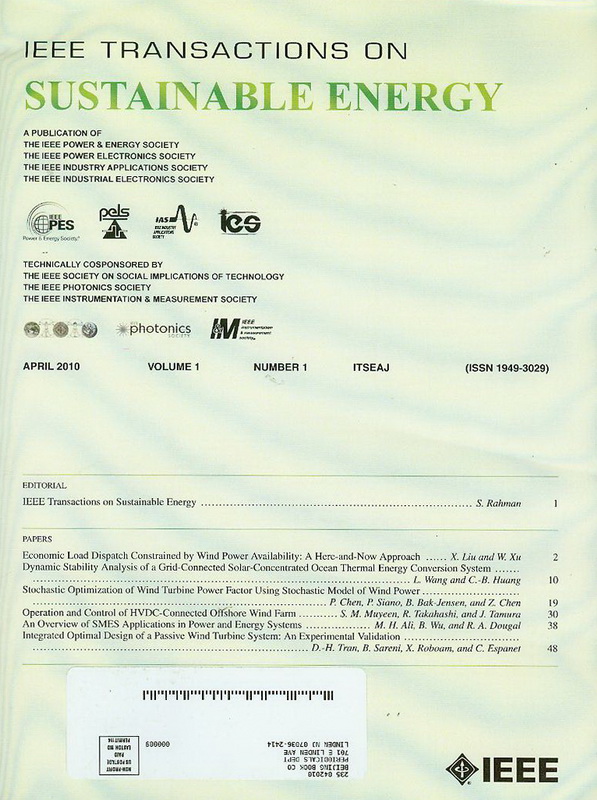
期刊介绍:
The IEEE Transactions on Sustainable Energy serves as a pivotal platform for sharing groundbreaking research findings on sustainable energy systems, with a focus on their seamless integration into power transmission and/or distribution grids. The journal showcases original research spanning the design, implementation, grid-integration, and control of sustainable energy technologies and systems. Additionally, the Transactions warmly welcomes manuscripts addressing the design, implementation, and evaluation of power systems influenced by sustainable energy systems and devices.




 京公网安备 11010802042870号
京ICP备2023020795号-1
京公网安备 11010802042870号
京ICP备2023020795号-1

 分享
分享
 求助内容:
求助内容: 应助结果提醒方式:
 扫码关注我们
