Sophia Deliyanidis, Friedrich Carl Stiefel, Céline Bourquin, Laurent Michaud
{"title":"聚焦医患互动的盲点:医疗环境中串通行为的批判性叙事回顾。","authors":"Sophia Deliyanidis, Friedrich Carl Stiefel, Céline Bourquin, Laurent Michaud","doi":"10.1177/13591053241284197","DOIUrl":null,"url":null,"abstract":"<p><p>Collusions, interpersonal phenomena with an impact on patients, significant others, clinicians, and care, are mainly described in the psychotherapeutic literature but also occur in the medical setting. Comprehended as an unconscious bond between two or more persons from a psychotherapeutic perspective, definitions and collusive situations described in the medical setting vary. The question arises whether medical collusions, compared to collusions occurring in the psychiatric setting emerge in different clinical situations or are not identified as transference-countertransference experiences, since there is less sensitivity for the unconscious dimensions of care. We systematically reviewed the medical literature on collusions. Even though a read threat, avoidance of unpleasant feelings (mainly anxiety), runs through the described collusions, the unconscious dimensions and associated defensive maneuvers are rarely evoked. Given the expressed desire to act on collusions in medicine, involving third-party psychiatric liaison clinicians, who supervise clinicians, and hereby help to disentangle collusions, could be beneficial.</p>","PeriodicalId":51355,"journal":{"name":"Journal of Health Psychology","volume":" ","pages":"1751-1767"},"PeriodicalIF":2.2000,"publicationDate":"2025-07-01","publicationTypes":"Journal Article","fieldsOfStudy":null,"isOpenAccess":false,"openAccessPdf":"https://www.ncbi.nlm.nih.gov/pmc/articles/PMC12227811/pdf/","citationCount":"0","resultStr":"{\"title\":\"Focus on the blind spots of clinician-patient interactions: A critical narrative review of collusion in medical setting.\",\"authors\":\"Sophia Deliyanidis, Friedrich Carl Stiefel, Céline Bourquin, Laurent Michaud\",\"doi\":\"10.1177/13591053241284197\",\"DOIUrl\":null,\"url\":null,\"abstract\":\"<p><p>Collusions, interpersonal phenomena with an impact on patients, significant others, clinicians, and care, are mainly described in the psychotherapeutic literature but also occur in the medical setting. Comprehended as an unconscious bond between two or more persons from a psychotherapeutic perspective, definitions and collusive situations described in the medical setting vary. The question arises whether medical collusions, compared to collusions occurring in the psychiatric setting emerge in different clinical situations or are not identified as transference-countertransference experiences, since there is less sensitivity for the unconscious dimensions of care. We systematically reviewed the medical literature on collusions. Even though a read threat, avoidance of unpleasant feelings (mainly anxiety), runs through the described collusions, the unconscious dimensions and associated defensive maneuvers are rarely evoked. Given the expressed desire to act on collusions in medicine, involving third-party psychiatric liaison clinicians, who supervise clinicians, and hereby help to disentangle collusions, could be beneficial.</p>\",\"PeriodicalId\":51355,\"journal\":{\"name\":\"Journal of Health Psychology\",\"volume\":\" \",\"pages\":\"1751-1767\"},\"PeriodicalIF\":2.2000,\"publicationDate\":\"2025-07-01\",\"publicationTypes\":\"Journal Article\",\"fieldsOfStudy\":null,\"isOpenAccess\":false,\"openAccessPdf\":\"https://www.ncbi.nlm.nih.gov/pmc/articles/PMC12227811/pdf/\",\"citationCount\":\"0\",\"resultStr\":null,\"platform\":\"Semanticscholar\",\"paperid\":null,\"PeriodicalName\":\"Journal of Health Psychology\",\"FirstCategoryId\":\"102\",\"ListUrlMain\":\"https://doi.org/10.1177/13591053241284197\",\"RegionNum\":3,\"RegionCategory\":\"心理学\",\"ArticlePicture\":[],\"TitleCN\":null,\"AbstractTextCN\":null,\"PMCID\":null,\"EPubDate\":\"2024/9/29 0:00:00\",\"PubModel\":\"Epub\",\"JCR\":\"Q2\",\"JCRName\":\"PSYCHOLOGY, CLINICAL\",\"Score\":null,\"Total\":0}","platform":"Semanticscholar","paperid":null,"PeriodicalName":"Journal of Health Psychology","FirstCategoryId":"102","ListUrlMain":"https://doi.org/10.1177/13591053241284197","RegionNum":3,"RegionCategory":"心理学","ArticlePicture":[],"TitleCN":null,"AbstractTextCN":null,"PMCID":null,"EPubDate":"2024/9/29 0:00:00","PubModel":"Epub","JCR":"Q2","JCRName":"PSYCHOLOGY, CLINICAL","Score":null,"Total":0}
Focus on the blind spots of clinician-patient interactions: A critical narrative review of collusion in medical setting.
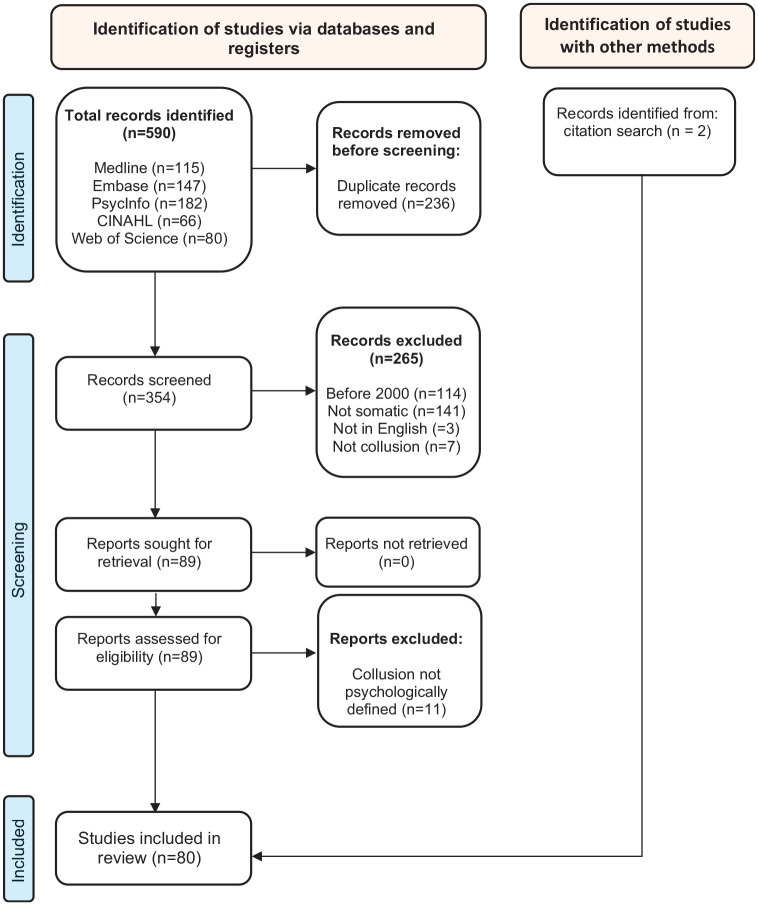
Collusions, interpersonal phenomena with an impact on patients, significant others, clinicians, and care, are mainly described in the psychotherapeutic literature but also occur in the medical setting. Comprehended as an unconscious bond between two or more persons from a psychotherapeutic perspective, definitions and collusive situations described in the medical setting vary. The question arises whether medical collusions, compared to collusions occurring in the psychiatric setting emerge in different clinical situations or are not identified as transference-countertransference experiences, since there is less sensitivity for the unconscious dimensions of care. We systematically reviewed the medical literature on collusions. Even though a read threat, avoidance of unpleasant feelings (mainly anxiety), runs through the described collusions, the unconscious dimensions and associated defensive maneuvers are rarely evoked. Given the expressed desire to act on collusions in medicine, involving third-party psychiatric liaison clinicians, who supervise clinicians, and hereby help to disentangle collusions, could be beneficial.
期刊介绍:
ournal of Health Psychology is an international peer-reviewed journal that aims to support and help shape research in health psychology from around the world. It provides a platform for traditional empirical analyses as well as more qualitative and/or critically oriented approaches. It also addresses the social contexts in which psychological and health processes are embedded. Studies published in this journal are required to obtain ethical approval from an Institutional Review Board. Such approval must include informed, signed consent by all research participants. Any manuscript not containing an explicit statement concerning ethical approval and informed consent will not be considered.







 京公网安备 11010802042870号
京ICP备2023020795号-1
京公网安备 11010802042870号
京ICP备2023020795号-1

 分享
分享
 求助内容:
求助内容: 应助结果提醒方式:
 扫码关注我们
