Nagi A Massoud, Abdulrahman H Alashkar, Mohammad A Aljawash, Elhaytham Mustafa
{"title":"以糖尿病为风险因素的上颈椎硬膜外脓肿:病例报告。","authors":"Nagi A Massoud, Abdulrahman H Alashkar, Mohammad A Aljawash, Elhaytham Mustafa","doi":"10.1186/s12883-024-03831-9","DOIUrl":null,"url":null,"abstract":"<p><strong>Background: </strong>An upper cervical spine epidural abscess (UCEA) is an epidural abscess that develops in the area between the occiput and the second cervical spine (axis). It is a rare diagnosis that carries the risk of instability of the atlantoaxial joint, and its management is not well-defined. It is known that the skin is the most common source of infection, and that diabetes mellitus (DM) is the most frequently reported risk factor. In this case, we present a patient diagnosed with UCEA, who achieved full neurological recovery postoperatively despite having neurological deficits for over five days prior to surgery.</p><p><strong>Case presentation: </strong>We report the case of a 56-year-old male patient with no history of any prior medical conditions, who presented with headache, neck pain, and weakness of the left side. The weakness started approximately three days prior to his presentation. His initial work up revealed hyperglycemia and elevated HbA1c of 86 mmol/mol (10%). Magnetic resonance imaging (MRI) of the cervical spine revealed spondylitis of the C2 spine with an abscess at the craniocervical junction. He underwent a two-staged surgical approach: decompression and stabilisation. The patient achieved full motor recovery approximately three months postoperatively.</p><p><strong>Conclusions: </strong>We recommend screening for DM when a spinal epidural abscess (SEA) is diagnosed without readily identifiable risk factors. The optimal management in most SEA cases is surgical, which is particularly true for UCEA because of the risk of atlantoaxial joint instability. Full neurological recovery is possible even when the patient has been having deficits for more than five days.</p>","PeriodicalId":9170,"journal":{"name":"BMC Neurology","volume":"24 1","pages":"361"},"PeriodicalIF":2.6000,"publicationDate":"2024-09-28","publicationTypes":"Journal Article","fieldsOfStudy":null,"isOpenAccess":false,"openAccessPdf":"https://www.ncbi.nlm.nih.gov/pmc/articles/PMC11437724/pdf/","citationCount":"0","resultStr":"{\"title\":\"Upper cervical epidural abscess with emphasis on diabetes as a risk factor: a case report.\",\"authors\":\"Nagi A Massoud, Abdulrahman H Alashkar, Mohammad A Aljawash, Elhaytham Mustafa\",\"doi\":\"10.1186/s12883-024-03831-9\",\"DOIUrl\":null,\"url\":null,\"abstract\":\"<p><strong>Background: </strong>An upper cervical spine epidural abscess (UCEA) is an epidural abscess that develops in the area between the occiput and the second cervical spine (axis). It is a rare diagnosis that carries the risk of instability of the atlantoaxial joint, and its management is not well-defined. It is known that the skin is the most common source of infection, and that diabetes mellitus (DM) is the most frequently reported risk factor. In this case, we present a patient diagnosed with UCEA, who achieved full neurological recovery postoperatively despite having neurological deficits for over five days prior to surgery.</p><p><strong>Case presentation: </strong>We report the case of a 56-year-old male patient with no history of any prior medical conditions, who presented with headache, neck pain, and weakness of the left side. The weakness started approximately three days prior to his presentation. His initial work up revealed hyperglycemia and elevated HbA1c of 86 mmol/mol (10%). Magnetic resonance imaging (MRI) of the cervical spine revealed spondylitis of the C2 spine with an abscess at the craniocervical junction. He underwent a two-staged surgical approach: decompression and stabilisation. The patient achieved full motor recovery approximately three months postoperatively.</p><p><strong>Conclusions: </strong>We recommend screening for DM when a spinal epidural abscess (SEA) is diagnosed without readily identifiable risk factors. The optimal management in most SEA cases is surgical, which is particularly true for UCEA because of the risk of atlantoaxial joint instability. Full neurological recovery is possible even when the patient has been having deficits for more than five days.</p>\",\"PeriodicalId\":9170,\"journal\":{\"name\":\"BMC Neurology\",\"volume\":\"24 1\",\"pages\":\"361\"},\"PeriodicalIF\":2.6000,\"publicationDate\":\"2024-09-28\",\"publicationTypes\":\"Journal Article\",\"fieldsOfStudy\":null,\"isOpenAccess\":false,\"openAccessPdf\":\"https://www.ncbi.nlm.nih.gov/pmc/articles/PMC11437724/pdf/\",\"citationCount\":\"0\",\"resultStr\":null,\"platform\":\"Semanticscholar\",\"paperid\":null,\"PeriodicalName\":\"BMC Neurology\",\"FirstCategoryId\":\"3\",\"ListUrlMain\":\"https://doi.org/10.1186/s12883-024-03831-9\",\"RegionNum\":3,\"RegionCategory\":\"医学\",\"ArticlePicture\":[],\"TitleCN\":null,\"AbstractTextCN\":null,\"PMCID\":null,\"EPubDate\":\"\",\"PubModel\":\"\",\"JCR\":\"Q3\",\"JCRName\":\"CLINICAL NEUROLOGY\",\"Score\":null,\"Total\":0}","platform":"Semanticscholar","paperid":null,"PeriodicalName":"BMC Neurology","FirstCategoryId":"3","ListUrlMain":"https://doi.org/10.1186/s12883-024-03831-9","RegionNum":3,"RegionCategory":"医学","ArticlePicture":[],"TitleCN":null,"AbstractTextCN":null,"PMCID":null,"EPubDate":"","PubModel":"","JCR":"Q3","JCRName":"CLINICAL NEUROLOGY","Score":null,"Total":0}
Upper cervical epidural abscess with emphasis on diabetes as a risk factor: a case report.
Background: An upper cervical spine epidural abscess (UCEA) is an epidural abscess that develops in the area between the occiput and the second cervical spine (axis). It is a rare diagnosis that carries the risk of instability of the atlantoaxial joint, and its management is not well-defined. It is known that the skin is the most common source of infection, and that diabetes mellitus (DM) is the most frequently reported risk factor. In this case, we present a patient diagnosed with UCEA, who achieved full neurological recovery postoperatively despite having neurological deficits for over five days prior to surgery.
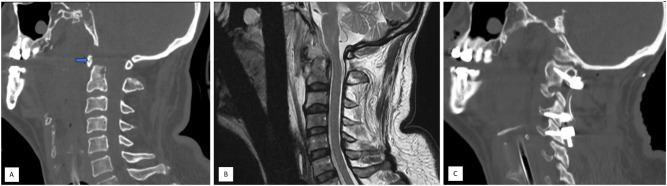
Case presentation: We report the case of a 56-year-old male patient with no history of any prior medical conditions, who presented with headache, neck pain, and weakness of the left side. The weakness started approximately three days prior to his presentation. His initial work up revealed hyperglycemia and elevated HbA1c of 86 mmol/mol (10%). Magnetic resonance imaging (MRI) of the cervical spine revealed spondylitis of the C2 spine with an abscess at the craniocervical junction. He underwent a two-staged surgical approach: decompression and stabilisation. The patient achieved full motor recovery approximately three months postoperatively.
Conclusions: We recommend screening for DM when a spinal epidural abscess (SEA) is diagnosed without readily identifiable risk factors. The optimal management in most SEA cases is surgical, which is particularly true for UCEA because of the risk of atlantoaxial joint instability. Full neurological recovery is possible even when the patient has been having deficits for more than five days.
期刊介绍:
BMC Neurology is an open access, peer-reviewed journal that considers articles on all aspects of the prevention, diagnosis and management of neurological disorders, as well as related molecular genetics, pathophysiology, and epidemiology.






 京公网安备 11010802042870号
京ICP备2023020795号-1
京公网安备 11010802042870号
京ICP备2023020795号-1

 分享
分享
 求助内容:
求助内容: 应助结果提醒方式:
 扫码关注我们
