{"title":"通过多草药配方生物合成 AgNPs:对来自 Bungarus sindanus 毒液的乙酰胆碱酯酶的机理中和及毒理学影响。","authors":"Noshaba Afshin, Nadia Mushtaq, Mushtaq Ahmed, Naila Sher, Sadeq K. Alhag, Fatma Mohamed Ameen Khalil, Laila A. Al-Shuraym, Hajra Hameed, Farhad Badshah, Riaz Hussain","doi":"10.1002/jemt.24701","DOIUrl":null,"url":null,"abstract":"<div>\n \n \n <section>\n \n <p>This study aims to examine the biogenic production, characterization, and anti-acetylcholinesterase (AAChE) properties of polyherbal formulation PHF-extract-synthesized silver nanoparticles (PHF-AgNPs). The Elapidae snake <i>Bungarus sindanus</i> has extremely dangerous venom for humans and contains a high amount of AChE (acetylcholinesterase). Inhibiting AChE leads to acetylcholine buildup, affecting neurotransmission. The study tested silver nanoparticles as AChE inhibitors using kinetics. Their production was confirmed through ultraviolet (UV) spectrometry at 425 nm (SPR peak of 1.94), and stabilizing functional groups were identified via Fourier transform infrared spectroscopy (FT-IR). The average length of 20 nm was confirmed by analyzing the scanning electron microscopy (SEM) data. Energy-dispersive X-ray spectroscopy (EDX) identified silver as the primary component of PHF-AgNPs (26%). Statistical analysis showed that the activity of AChE in krait venom decreased by up to 45% and 37% at a given dose of ACh (0.5 mM) by PHF and AgNPs, respectively. Utilizing the Lineweaver-Burk plot for kinetic analysis, a competitive type of inhibition is found.</p>\n </section>\n \n <section>\n \n <h3> Research Highlights</h3>\n \n <div>\n \n <ul>\n \n <li>Successfully synthesized PHF-extract-induced silver nanoparticles (PHF-AgNPs) demonstrated through UV spectrometry and characterized as crystalline with an average size of 45 nm by X-ray diffraction.</li>\n \n <li>PHF-AgNPs effectively inhibited acetylcholinesterase (AChE), an enzyme critical in neurotransmission, reducing its activity in krait venom by up to 45% at certain concentrations.</li>\n \n <li>Kinetic analysis revealed that the inhibition mechanism of AChE by PHF-AgNPs is competitive, offering potential for therapeutic applications in neurologically related conditions.</li>\n </ul>\n </div>\n </section>\n </div>","PeriodicalId":18684,"journal":{"name":"Microscopy Research and Technique","volume":"88 2","pages":"356-368"},"PeriodicalIF":2.1000,"publicationDate":"2025-01-16","publicationTypes":"Journal Article","fieldsOfStudy":null,"isOpenAccess":false,"openAccessPdf":"","citationCount":"0","resultStr":"{\"title\":\"Biogenic synthesis of AgNPs via polyherbal formulation: Mechanistic neutralization and toxicological impact on acetylcholinesterase from Bungarus sindanus venom\",\"authors\":\"Noshaba Afshin, Nadia Mushtaq, Mushtaq Ahmed, Naila Sher, Sadeq K. Alhag, Fatma Mohamed Ameen Khalil, Laila A. Al-Shuraym, Hajra Hameed, Farhad Badshah, Riaz Hussain\",\"doi\":\"10.1002/jemt.24701\",\"DOIUrl\":null,\"url\":null,\"abstract\":\"<div>\\n \\n \\n <section>\\n \\n <p>This study aims to examine the biogenic production, characterization, and anti-acetylcholinesterase (AAChE) properties of polyherbal formulation PHF-extract-synthesized silver nanoparticles (PHF-AgNPs). The Elapidae snake <i>Bungarus sindanus</i> has extremely dangerous venom for humans and contains a high amount of AChE (acetylcholinesterase). Inhibiting AChE leads to acetylcholine buildup, affecting neurotransmission. The study tested silver nanoparticles as AChE inhibitors using kinetics. Their production was confirmed through ultraviolet (UV) spectrometry at 425 nm (SPR peak of 1.94), and stabilizing functional groups were identified via Fourier transform infrared spectroscopy (FT-IR). The average length of 20 nm was confirmed by analyzing the scanning electron microscopy (SEM) data. Energy-dispersive X-ray spectroscopy (EDX) identified silver as the primary component of PHF-AgNPs (26%). Statistical analysis showed that the activity of AChE in krait venom decreased by up to 45% and 37% at a given dose of ACh (0.5 mM) by PHF and AgNPs, respectively. Utilizing the Lineweaver-Burk plot for kinetic analysis, a competitive type of inhibition is found.</p>\\n </section>\\n \\n <section>\\n \\n <h3> Research Highlights</h3>\\n \\n <div>\\n \\n <ul>\\n \\n <li>Successfully synthesized PHF-extract-induced silver nanoparticles (PHF-AgNPs) demonstrated through UV spectrometry and characterized as crystalline with an average size of 45 nm by X-ray diffraction.</li>\\n \\n <li>PHF-AgNPs effectively inhibited acetylcholinesterase (AChE), an enzyme critical in neurotransmission, reducing its activity in krait venom by up to 45% at certain concentrations.</li>\\n \\n <li>Kinetic analysis revealed that the inhibition mechanism of AChE by PHF-AgNPs is competitive, offering potential for therapeutic applications in neurologically related conditions.</li>\\n </ul>\\n </div>\\n </section>\\n </div>\",\"PeriodicalId\":18684,\"journal\":{\"name\":\"Microscopy Research and Technique\",\"volume\":\"88 2\",\"pages\":\"356-368\"},\"PeriodicalIF\":2.1000,\"publicationDate\":\"2025-01-16\",\"publicationTypes\":\"Journal Article\",\"fieldsOfStudy\":null,\"isOpenAccess\":false,\"openAccessPdf\":\"\",\"citationCount\":\"0\",\"resultStr\":null,\"platform\":\"Semanticscholar\",\"paperid\":null,\"PeriodicalName\":\"Microscopy Research and Technique\",\"FirstCategoryId\":\"5\",\"ListUrlMain\":\"https://onlinelibrary.wiley.com/doi/10.1002/jemt.24701\",\"RegionNum\":3,\"RegionCategory\":\"工程技术\",\"ArticlePicture\":[],\"TitleCN\":null,\"AbstractTextCN\":null,\"PMCID\":null,\"EPubDate\":\"2024/10/4 0:00:00\",\"PubModel\":\"Epub\",\"JCR\":\"Q2\",\"JCRName\":\"ANATOMY & MORPHOLOGY\",\"Score\":null,\"Total\":0}","platform":"Semanticscholar","paperid":null,"PeriodicalName":"Microscopy Research and Technique","FirstCategoryId":"5","ListUrlMain":"https://onlinelibrary.wiley.com/doi/10.1002/jemt.24701","RegionNum":3,"RegionCategory":"工程技术","ArticlePicture":[],"TitleCN":null,"AbstractTextCN":null,"PMCID":null,"EPubDate":"2024/10/4 0:00:00","PubModel":"Epub","JCR":"Q2","JCRName":"ANATOMY & MORPHOLOGY","Score":null,"Total":0}
Biogenic synthesis of AgNPs via polyherbal formulation: Mechanistic neutralization and toxicological impact on acetylcholinesterase from Bungarus sindanus venom
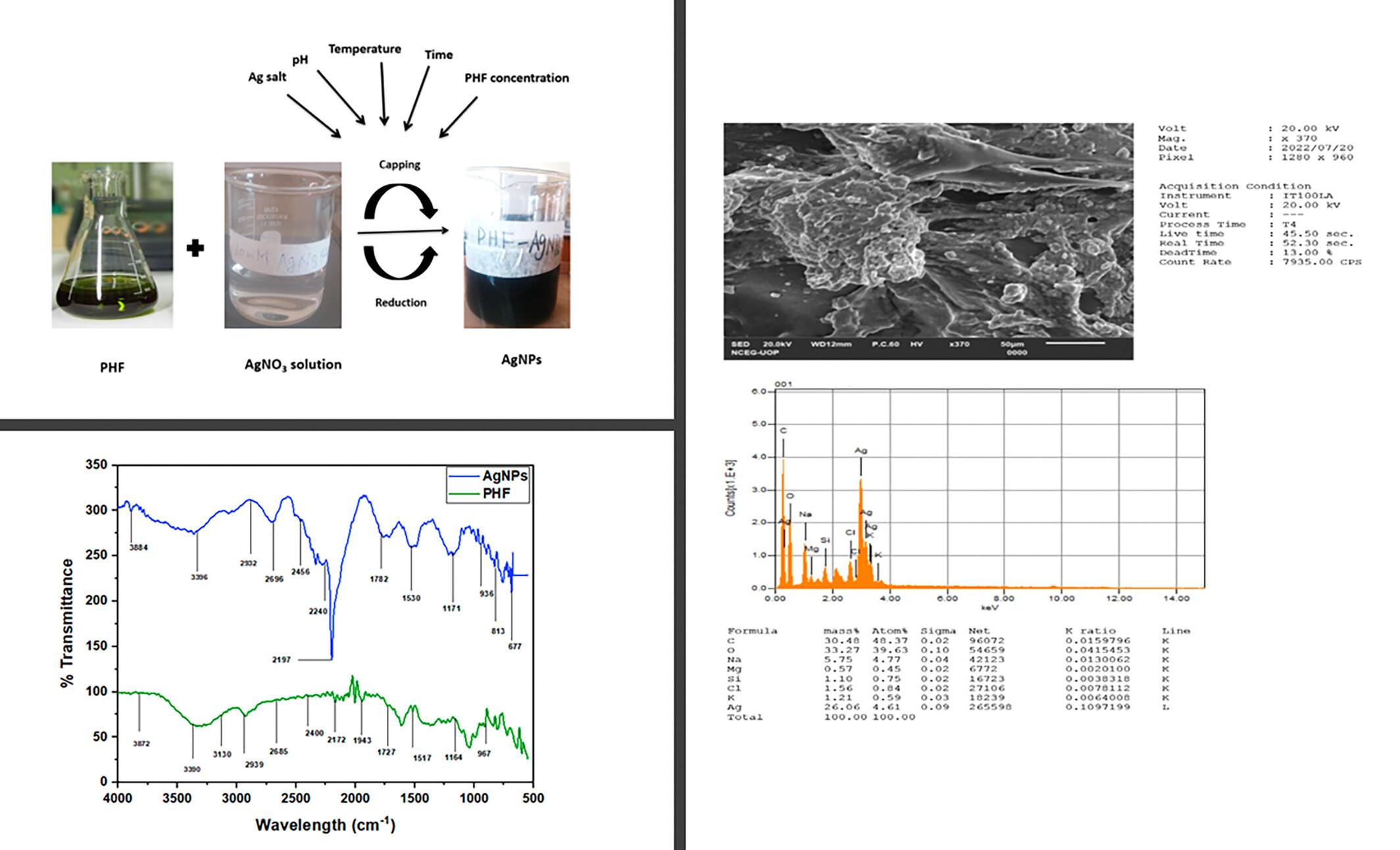
This study aims to examine the biogenic production, characterization, and anti-acetylcholinesterase (AAChE) properties of polyherbal formulation PHF-extract-synthesized silver nanoparticles (PHF-AgNPs). The Elapidae snake Bungarus sindanus has extremely dangerous venom for humans and contains a high amount of AChE (acetylcholinesterase). Inhibiting AChE leads to acetylcholine buildup, affecting neurotransmission. The study tested silver nanoparticles as AChE inhibitors using kinetics. Their production was confirmed through ultraviolet (UV) spectrometry at 425 nm (SPR peak of 1.94), and stabilizing functional groups were identified via Fourier transform infrared spectroscopy (FT-IR). The average length of 20 nm was confirmed by analyzing the scanning electron microscopy (SEM) data. Energy-dispersive X-ray spectroscopy (EDX) identified silver as the primary component of PHF-AgNPs (26%). Statistical analysis showed that the activity of AChE in krait venom decreased by up to 45% and 37% at a given dose of ACh (0.5 mM) by PHF and AgNPs, respectively. Utilizing the Lineweaver-Burk plot for kinetic analysis, a competitive type of inhibition is found.
Research Highlights
Successfully synthesized PHF-extract-induced silver nanoparticles (PHF-AgNPs) demonstrated through UV spectrometry and characterized as crystalline with an average size of 45 nm by X-ray diffraction.
PHF-AgNPs effectively inhibited acetylcholinesterase (AChE), an enzyme critical in neurotransmission, reducing its activity in krait venom by up to 45% at certain concentrations.
Kinetic analysis revealed that the inhibition mechanism of AChE by PHF-AgNPs is competitive, offering potential for therapeutic applications in neurologically related conditions.
期刊介绍:
Microscopy Research and Technique (MRT) publishes articles on all aspects of advanced microscopy original architecture and methodologies with applications in the biological, clinical, chemical, and materials sciences. Original basic and applied research as well as technical papers dealing with the various subsets of microscopy are encouraged. MRT is the right form for those developing new microscopy methods or using the microscope to answer key questions in basic and applied research.






 京公网安备 11010802042870号
京ICP备2023020795号-1
京公网安备 11010802042870号
京ICP备2023020795号-1

 分享
分享
 求助内容:
求助内容: 应助结果提醒方式:
 扫码关注我们
