{"title":"马来酸酐衍生物作为使用过氧化氢进行吡啶 N-氧化反应的催化剂†。","authors":"Ghellyn Gajeles, Kyung-Koo Lee and Sang Hee Lee","doi":"10.1039/D4RA05962J","DOIUrl":null,"url":null,"abstract":"<p >Maleic anhydride derivatives were evaluated as catalysts in <em>N</em>-oxidation of various pyridine substrates using hydrogen peroxide (H<small><sub>2</sub></small>O<small><sub>2</sub></small>). Depending on the electronic properties of the pyridine substrates, pyridines with electron-donating groups reacted well with 2,3-dimethylmaleic anhydride (<strong>DMMA</strong>). In contrast, 1-cyclohexene-1, 2-dicarboxylic anhydride (<strong>CHMA</strong>) was most effective for electron-deficient pyridines. The different performance of these two anhydrides is attributed to the diacid–anhydride equilibrium, which is crucial for regenerating the peracid oxidant through an anhydride intermediate in the catalytic cycle. This approach using a catalytic amount of anhydride with H<small><sub>2</sub></small>O<small><sub>2</sub></small> has the potential to replace stoichiometric amounts of percarboxylic acid as an oxidant for a broader range of organic substrates.</p>","PeriodicalId":102,"journal":{"name":"RSC Advances","volume":" 43","pages":" 31657-31662"},"PeriodicalIF":4.6000,"publicationDate":"2024-10-07","publicationTypes":"Journal Article","fieldsOfStudy":null,"isOpenAccess":false,"openAccessPdf":"https://pubs.rsc.org/en/content/articlepdf/2024/ra/d4ra05962j?page=search","citationCount":"0","resultStr":"{\"title\":\"Maleic anhydride derivatives as catalysts for N-oxidation of pyridine using hydrogen peroxide†\",\"authors\":\"Ghellyn Gajeles, Kyung-Koo Lee and Sang Hee Lee\",\"doi\":\"10.1039/D4RA05962J\",\"DOIUrl\":null,\"url\":null,\"abstract\":\"<p >Maleic anhydride derivatives were evaluated as catalysts in <em>N</em>-oxidation of various pyridine substrates using hydrogen peroxide (H<small><sub>2</sub></small>O<small><sub>2</sub></small>). Depending on the electronic properties of the pyridine substrates, pyridines with electron-donating groups reacted well with 2,3-dimethylmaleic anhydride (<strong>DMMA</strong>). In contrast, 1-cyclohexene-1, 2-dicarboxylic anhydride (<strong>CHMA</strong>) was most effective for electron-deficient pyridines. The different performance of these two anhydrides is attributed to the diacid–anhydride equilibrium, which is crucial for regenerating the peracid oxidant through an anhydride intermediate in the catalytic cycle. This approach using a catalytic amount of anhydride with H<small><sub>2</sub></small>O<small><sub>2</sub></small> has the potential to replace stoichiometric amounts of percarboxylic acid as an oxidant for a broader range of organic substrates.</p>\",\"PeriodicalId\":102,\"journal\":{\"name\":\"RSC Advances\",\"volume\":\" 43\",\"pages\":\" 31657-31662\"},\"PeriodicalIF\":4.6000,\"publicationDate\":\"2024-10-07\",\"publicationTypes\":\"Journal Article\",\"fieldsOfStudy\":null,\"isOpenAccess\":false,\"openAccessPdf\":\"https://pubs.rsc.org/en/content/articlepdf/2024/ra/d4ra05962j?page=search\",\"citationCount\":\"0\",\"resultStr\":null,\"platform\":\"Semanticscholar\",\"paperid\":null,\"PeriodicalName\":\"RSC Advances\",\"FirstCategoryId\":\"92\",\"ListUrlMain\":\"https://pubs.rsc.org/en/content/articlelanding/2024/ra/d4ra05962j\",\"RegionNum\":3,\"RegionCategory\":\"化学\",\"ArticlePicture\":[],\"TitleCN\":null,\"AbstractTextCN\":null,\"PMCID\":null,\"EPubDate\":\"\",\"PubModel\":\"\",\"JCR\":\"Q2\",\"JCRName\":\"CHEMISTRY, MULTIDISCIPLINARY\",\"Score\":null,\"Total\":0}","platform":"Semanticscholar","paperid":null,"PeriodicalName":"RSC Advances","FirstCategoryId":"92","ListUrlMain":"https://pubs.rsc.org/en/content/articlelanding/2024/ra/d4ra05962j","RegionNum":3,"RegionCategory":"化学","ArticlePicture":[],"TitleCN":null,"AbstractTextCN":null,"PMCID":null,"EPubDate":"","PubModel":"","JCR":"Q2","JCRName":"CHEMISTRY, MULTIDISCIPLINARY","Score":null,"Total":0}
Maleic anhydride derivatives as catalysts for N-oxidation of pyridine using hydrogen peroxide†
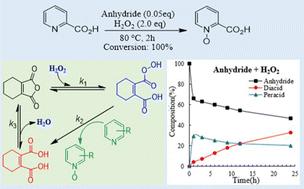
Maleic anhydride derivatives were evaluated as catalysts in N-oxidation of various pyridine substrates using hydrogen peroxide (H2O2). Depending on the electronic properties of the pyridine substrates, pyridines with electron-donating groups reacted well with 2,3-dimethylmaleic anhydride (DMMA). In contrast, 1-cyclohexene-1, 2-dicarboxylic anhydride (CHMA) was most effective for electron-deficient pyridines. The different performance of these two anhydrides is attributed to the diacid–anhydride equilibrium, which is crucial for regenerating the peracid oxidant through an anhydride intermediate in the catalytic cycle. This approach using a catalytic amount of anhydride with H2O2 has the potential to replace stoichiometric amounts of percarboxylic acid as an oxidant for a broader range of organic substrates.
期刊介绍:
An international, peer-reviewed journal covering all of the chemical sciences, including multidisciplinary and emerging areas. RSC Advances is a gold open access journal allowing researchers free access to research articles, and offering an affordable open access publishing option for authors around the world.




 京公网安备 11010802042870号
京ICP备2023020795号-1
京公网安备 11010802042870号
京ICP备2023020795号-1

 分享
分享
 求助内容:
求助内容: 应助结果提醒方式:
 扫码关注我们
