Andrea Calabria, Giulio Spinozzi, Daniela Cesana, Elena Buscaroli, Fabrizio Benedicenti, Giulia Pais, Francesco Gazzo, Serena Scala, Maria Rosa Lidonnici, Samantha Scaramuzza, Alessandra Albertini, Simona Esposito, Francesca Tucci, Daniele Canarutto, Maryam Omrani, Fabiola De Mattia, Francesca Dionisio, Stefania Giannelli, Sarah Marktel, Francesca Fumagalli, Valeria Calbi, Sabina Cenciarelli, Francesca Ferrua, Bernhard Gentner, Giulio Caravagna, Fabio Ciceri, Luigi Naldini, Giuliana Ferrari, Alessandro Aiuti, Eugenio Montini
{"title":"造血干细胞基因疗法中的长期血系承诺","authors":"Andrea Calabria, Giulio Spinozzi, Daniela Cesana, Elena Buscaroli, Fabrizio Benedicenti, Giulia Pais, Francesco Gazzo, Serena Scala, Maria Rosa Lidonnici, Samantha Scaramuzza, Alessandra Albertini, Simona Esposito, Francesca Tucci, Daniele Canarutto, Maryam Omrani, Fabiola De Mattia, Francesca Dionisio, Stefania Giannelli, Sarah Marktel, Francesca Fumagalli, Valeria Calbi, Sabina Cenciarelli, Francesca Ferrua, Bernhard Gentner, Giulio Caravagna, Fabio Ciceri, Luigi Naldini, Giuliana Ferrari, Alessandro Aiuti, Eugenio Montini","doi":"10.1038/s41586-024-08250-x","DOIUrl":null,"url":null,"abstract":"Haematopoietic stem cell (HSC) gene therapy (GT) may provide lifelong reconstitution of the haematopoietic system with gene-corrected cells1. However, the effects of underlying genetic diseases, replication stress and ageing on haematopoietic reconstitution and lineage specification remain unclear. In this study, we analysed haematopoietic reconstitution in 53 patients treated with lentiviral-HSC-GT for diverse conditions such as metachromatic leukodystrophy2,3 (MLD), Wiskott–Aldrich syndrome4,5 (WAS) and β-thalassaemia6 (β-Thal) over a follow-up period of up to 8 years, using vector integration sites as markers of clonal identity. We found that long-term haematopoietic reconstitution was supported by 770 to 35,000 active HSCs. Whereas 50% of transplanted clones demonstrated multi-lineage potential across all conditions, the remaining clones showed a disease-specific preferential lineage output and long-term commitment: myeloid for MLD, lymphoid for WAS and erythroid for β-Thal, particularly in adult patients. Our results indicate that HSC clonogenic activity, lineage output, long-term lineage commitment and rates of somatic mutations are influenced by the underlying disease, patient age at the time of therapy, the extent of genetic defect correction and the haematopoietic stress imposed by the inherited disease. This suggests that HSCs adapt to the pathological condition during haematopoietic reconstitution. Haematopoietic stem cell (HSC) clonogenic activity, lineage output, lineage commitment and somatic mutation rates are influenced by the underlying disease, patient age, extent of genetic defect correction and hematopoietic stress imposed by the inherited disease, suggesting HSC adaptation.","PeriodicalId":18787,"journal":{"name":"Nature","volume":"636 8041","pages":"162-171"},"PeriodicalIF":56.1000,"publicationDate":"2024-10-23","publicationTypes":"Journal Article","fieldsOfStudy":null,"isOpenAccess":false,"openAccessPdf":"https://www.nature.com/articles/s41586-024-08250-x.pdf","citationCount":"0","resultStr":"{\"title\":\"Long-term lineage commitment in haematopoietic stem cell gene therapy\",\"authors\":\"Andrea Calabria, Giulio Spinozzi, Daniela Cesana, Elena Buscaroli, Fabrizio Benedicenti, Giulia Pais, Francesco Gazzo, Serena Scala, Maria Rosa Lidonnici, Samantha Scaramuzza, Alessandra Albertini, Simona Esposito, Francesca Tucci, Daniele Canarutto, Maryam Omrani, Fabiola De Mattia, Francesca Dionisio, Stefania Giannelli, Sarah Marktel, Francesca Fumagalli, Valeria Calbi, Sabina Cenciarelli, Francesca Ferrua, Bernhard Gentner, Giulio Caravagna, Fabio Ciceri, Luigi Naldini, Giuliana Ferrari, Alessandro Aiuti, Eugenio Montini\",\"doi\":\"10.1038/s41586-024-08250-x\",\"DOIUrl\":null,\"url\":null,\"abstract\":\"Haematopoietic stem cell (HSC) gene therapy (GT) may provide lifelong reconstitution of the haematopoietic system with gene-corrected cells1. However, the effects of underlying genetic diseases, replication stress and ageing on haematopoietic reconstitution and lineage specification remain unclear. In this study, we analysed haematopoietic reconstitution in 53 patients treated with lentiviral-HSC-GT for diverse conditions such as metachromatic leukodystrophy2,3 (MLD), Wiskott–Aldrich syndrome4,5 (WAS) and β-thalassaemia6 (β-Thal) over a follow-up period of up to 8 years, using vector integration sites as markers of clonal identity. We found that long-term haematopoietic reconstitution was supported by 770 to 35,000 active HSCs. Whereas 50% of transplanted clones demonstrated multi-lineage potential across all conditions, the remaining clones showed a disease-specific preferential lineage output and long-term commitment: myeloid for MLD, lymphoid for WAS and erythroid for β-Thal, particularly in adult patients. Our results indicate that HSC clonogenic activity, lineage output, long-term lineage commitment and rates of somatic mutations are influenced by the underlying disease, patient age at the time of therapy, the extent of genetic defect correction and the haematopoietic stress imposed by the inherited disease. This suggests that HSCs adapt to the pathological condition during haematopoietic reconstitution. Haematopoietic stem cell (HSC) clonogenic activity, lineage output, lineage commitment and somatic mutation rates are influenced by the underlying disease, patient age, extent of genetic defect correction and hematopoietic stress imposed by the inherited disease, suggesting HSC adaptation.\",\"PeriodicalId\":18787,\"journal\":{\"name\":\"Nature\",\"volume\":\"636 8041\",\"pages\":\"162-171\"},\"PeriodicalIF\":56.1000,\"publicationDate\":\"2024-10-23\",\"publicationTypes\":\"Journal Article\",\"fieldsOfStudy\":null,\"isOpenAccess\":false,\"openAccessPdf\":\"https://www.nature.com/articles/s41586-024-08250-x.pdf\",\"citationCount\":\"0\",\"resultStr\":null,\"platform\":\"Semanticscholar\",\"paperid\":null,\"PeriodicalName\":\"Nature\",\"FirstCategoryId\":\"103\",\"ListUrlMain\":\"https://www.nature.com/articles/s41586-024-08250-x\",\"RegionNum\":1,\"RegionCategory\":\"综合性期刊\",\"ArticlePicture\":[],\"TitleCN\":null,\"AbstractTextCN\":null,\"PMCID\":null,\"EPubDate\":\"\",\"PubModel\":\"\",\"JCR\":\"Q1\",\"JCRName\":\"MULTIDISCIPLINARY SCIENCES\",\"Score\":null,\"Total\":0}","platform":"Semanticscholar","paperid":null,"PeriodicalName":"Nature","FirstCategoryId":"103","ListUrlMain":"https://www.nature.com/articles/s41586-024-08250-x","RegionNum":1,"RegionCategory":"综合性期刊","ArticlePicture":[],"TitleCN":null,"AbstractTextCN":null,"PMCID":null,"EPubDate":"","PubModel":"","JCR":"Q1","JCRName":"MULTIDISCIPLINARY SCIENCES","Score":null,"Total":0}
Long-term lineage commitment in haematopoietic stem cell gene therapy
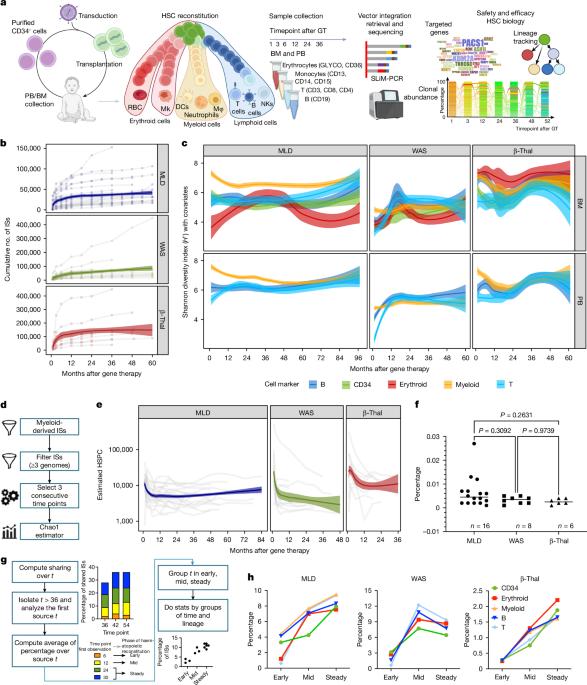
Haematopoietic stem cell (HSC) gene therapy (GT) may provide lifelong reconstitution of the haematopoietic system with gene-corrected cells1. However, the effects of underlying genetic diseases, replication stress and ageing on haematopoietic reconstitution and lineage specification remain unclear. In this study, we analysed haematopoietic reconstitution in 53 patients treated with lentiviral-HSC-GT for diverse conditions such as metachromatic leukodystrophy2,3 (MLD), Wiskott–Aldrich syndrome4,5 (WAS) and β-thalassaemia6 (β-Thal) over a follow-up period of up to 8 years, using vector integration sites as markers of clonal identity. We found that long-term haematopoietic reconstitution was supported by 770 to 35,000 active HSCs. Whereas 50% of transplanted clones demonstrated multi-lineage potential across all conditions, the remaining clones showed a disease-specific preferential lineage output and long-term commitment: myeloid for MLD, lymphoid for WAS and erythroid for β-Thal, particularly in adult patients. Our results indicate that HSC clonogenic activity, lineage output, long-term lineage commitment and rates of somatic mutations are influenced by the underlying disease, patient age at the time of therapy, the extent of genetic defect correction and the haematopoietic stress imposed by the inherited disease. This suggests that HSCs adapt to the pathological condition during haematopoietic reconstitution. Haematopoietic stem cell (HSC) clonogenic activity, lineage output, lineage commitment and somatic mutation rates are influenced by the underlying disease, patient age, extent of genetic defect correction and hematopoietic stress imposed by the inherited disease, suggesting HSC adaptation.
期刊介绍:
Nature is a prestigious international journal that publishes peer-reviewed research in various scientific and technological fields. The selection of articles is based on criteria such as originality, importance, interdisciplinary relevance, timeliness, accessibility, elegance, and surprising conclusions. In addition to showcasing significant scientific advances, Nature delivers rapid, authoritative, insightful news, and interpretation of current and upcoming trends impacting science, scientists, and the broader public. The journal serves a dual purpose: firstly, to promptly share noteworthy scientific advances and foster discussions among scientists, and secondly, to ensure the swift dissemination of scientific results globally, emphasizing their significance for knowledge, culture, and daily life.




 京公网安备 11010802042870号
京ICP备2023020795号-1
京公网安备 11010802042870号
京ICP备2023020795号-1

 分享
分享
 求助内容:
求助内容: 应助结果提醒方式:
 扫码关注我们
