Anestis Tsitsos, Alexandros Damianos, Maria Boutel, Panagiota Gousia, Nikolaos Soultos, Anna Papa, Ilias Tirodimos, Vangelis Economou
{"title":"从希腊两家医院的人类和厨房环境中分离出的产 ESBL 和碳青霉烯酶的大肠埃希菌、肺炎克雷伯菌和醋杆菌属之间的流行率、特征和流行病学关系。","authors":"Anestis Tsitsos, Alexandros Damianos, Maria Boutel, Panagiota Gousia, Nikolaos Soultos, Anna Papa, Ilias Tirodimos, Vangelis Economou","doi":"10.3390/antibiotics13100934","DOIUrl":null,"url":null,"abstract":"<p><strong>Background: </strong>Extended-spectrum-β-lactamase (ESBL) and carbapenemase-producing Enterobacterales and <i>Acinetobacter</i> spp. pose significant challenges as nosocomial pathogens, demonstrating resistance against various antimicrobials. Their presence in food suggests that hospital kitchens could serve as antibiotic resistance reservoirs leading to patients' infection.</p><p><strong>Objectives: </strong>The aim of this study was to assess the prevalence and characteristics of β-lactam-resistant strains of <i>Escherichia coli</i>, <i>Klebsiella pneumoniae</i>, and <i>Acinetobacter</i> spp. isolated from the kitchen environment and from the staff of two Greek hospitals.</p><p><strong>Methods: </strong>Strains were recovered after selective isolation with β-lactams and were identified with MALDI-TOF MS. Antimicrobial susceptibility and presence of common β-lactamase genes were evaluated. Protein profiles were examined to analyze potential relationships of the strain with those from hospital patients. <i>E. coli</i> strains were further categorized into phylogenetic groups.</p><p><strong>Results: </strong>The overall prevalence in the kitchen environment was 4.5%, 1.5%, and 15.0% for <i>E. coli</i>, <i>K. pneumoniae,</i> and <i>Acinetobacter</i> spp., respectively, whereas the prevalence of <i>Acinetobacter</i> spp. in human skin was 4.0%. Almost all strains were multidrug-resistant. All <i>E. coli</i> strains were ESBL producers and belonged to phylogroups A and B1. All <i>K. pneumoniae</i> and seven <i>Acinetobacter</i> strains were carbapenemase-producers. A protein profile analysis showed relatedness between chicken and kitchen environment strains, as well as between kitchen environment and patient strains originated either from the same or from different hospitals.</p><p><strong>Conclusions: </strong>The results suggest that hospital kitchens may act as important pathogen hotspots contributing to the circulation of resistant strains in the hospital environment.</p>","PeriodicalId":54246,"journal":{"name":"Antibiotics-Basel","volume":"13 10","pages":""},"PeriodicalIF":5.5000,"publicationDate":"2024-10-02","publicationTypes":"Journal Article","fieldsOfStudy":null,"isOpenAccess":false,"openAccessPdf":"https://www.ncbi.nlm.nih.gov/pmc/articles/PMC11504295/pdf/","citationCount":"0","resultStr":"{\"title\":\"Prevalence, Characterization, and Epidemiological Relationships between ESBL and Carbapenemase-Producing <i>Escherichia coli</i>, <i>Klebsiella pneumoniae,</i> and <i>Acinetobacter</i> spp. Isolated from Humans and the Kitchen Environment of Two Greek Hospitals.\",\"authors\":\"Anestis Tsitsos, Alexandros Damianos, Maria Boutel, Panagiota Gousia, Nikolaos Soultos, Anna Papa, Ilias Tirodimos, Vangelis Economou\",\"doi\":\"10.3390/antibiotics13100934\",\"DOIUrl\":null,\"url\":null,\"abstract\":\"<p><strong>Background: </strong>Extended-spectrum-β-lactamase (ESBL) and carbapenemase-producing Enterobacterales and <i>Acinetobacter</i> spp. pose significant challenges as nosocomial pathogens, demonstrating resistance against various antimicrobials. Their presence in food suggests that hospital kitchens could serve as antibiotic resistance reservoirs leading to patients' infection.</p><p><strong>Objectives: </strong>The aim of this study was to assess the prevalence and characteristics of β-lactam-resistant strains of <i>Escherichia coli</i>, <i>Klebsiella pneumoniae</i>, and <i>Acinetobacter</i> spp. isolated from the kitchen environment and from the staff of two Greek hospitals.</p><p><strong>Methods: </strong>Strains were recovered after selective isolation with β-lactams and were identified with MALDI-TOF MS. Antimicrobial susceptibility and presence of common β-lactamase genes were evaluated. Protein profiles were examined to analyze potential relationships of the strain with those from hospital patients. <i>E. coli</i> strains were further categorized into phylogenetic groups.</p><p><strong>Results: </strong>The overall prevalence in the kitchen environment was 4.5%, 1.5%, and 15.0% for <i>E. coli</i>, <i>K. pneumoniae,</i> and <i>Acinetobacter</i> spp., respectively, whereas the prevalence of <i>Acinetobacter</i> spp. in human skin was 4.0%. Almost all strains were multidrug-resistant. All <i>E. coli</i> strains were ESBL producers and belonged to phylogroups A and B1. All <i>K. pneumoniae</i> and seven <i>Acinetobacter</i> strains were carbapenemase-producers. A protein profile analysis showed relatedness between chicken and kitchen environment strains, as well as between kitchen environment and patient strains originated either from the same or from different hospitals.</p><p><strong>Conclusions: </strong>The results suggest that hospital kitchens may act as important pathogen hotspots contributing to the circulation of resistant strains in the hospital environment.</p>\",\"PeriodicalId\":54246,\"journal\":{\"name\":\"Antibiotics-Basel\",\"volume\":\"13 10\",\"pages\":\"\"},\"PeriodicalIF\":5.5000,\"publicationDate\":\"2024-10-02\",\"publicationTypes\":\"Journal Article\",\"fieldsOfStudy\":null,\"isOpenAccess\":false,\"openAccessPdf\":\"https://www.ncbi.nlm.nih.gov/pmc/articles/PMC11504295/pdf/\",\"citationCount\":\"0\",\"resultStr\":null,\"platform\":\"Semanticscholar\",\"paperid\":null,\"PeriodicalName\":\"Antibiotics-Basel\",\"FirstCategoryId\":\"3\",\"ListUrlMain\":\"https://doi.org/10.3390/antibiotics13100934\",\"RegionNum\":2,\"RegionCategory\":\"医学\",\"ArticlePicture\":[],\"TitleCN\":null,\"AbstractTextCN\":null,\"PMCID\":null,\"EPubDate\":\"\",\"PubModel\":\"\",\"JCR\":\"Q1\",\"JCRName\":\"INFECTIOUS DISEASES\",\"Score\":null,\"Total\":0}","platform":"Semanticscholar","paperid":null,"PeriodicalName":"Antibiotics-Basel","FirstCategoryId":"3","ListUrlMain":"https://doi.org/10.3390/antibiotics13100934","RegionNum":2,"RegionCategory":"医学","ArticlePicture":[],"TitleCN":null,"AbstractTextCN":null,"PMCID":null,"EPubDate":"","PubModel":"","JCR":"Q1","JCRName":"INFECTIOUS DISEASES","Score":null,"Total":0}
引用次数: 0
摘要
背景:广谱β-内酰胺酶(ESBL)和碳青霉烯酶产生的肠杆菌属和醋杆菌属作为院内病原体,对各种抗菌药物产生耐药性,构成了重大挑战。它们在食物中的存在表明,医院厨房可能成为导致患者感染的抗生素耐药性蓄水池:本研究旨在评估从希腊两家医院的厨房环境和员工中分离出的对β-内酰胺类药物耐药的大肠埃希菌、肺炎克雷伯菌和醋杆菌属菌株的流行率和特征:方法:使用 β-内酰胺类药物进行选择性分离后回收菌株,并使用 MALDI-TOF MS 进行鉴定。对抗菌药敏感性和常见的 β-内酰胺酶基因进行了评估。对蛋白质谱进行了检查,以分析菌株与来自医院病人的菌株之间的潜在关系。大肠杆菌菌株被进一步划分为系统发育组:结果:厨房环境中大肠埃希菌、肺炎双球菌和醋氨曲霉菌的总体感染率分别为 4.5%、1.5% 和 15.0%,而醋氨曲霉菌在人体皮肤中的感染率为 4.0%。几乎所有菌株都具有多重耐药性。所有大肠杆菌菌株都能产生 ESBL,属于 A 和 B1 系统群。所有肺炎克氏菌和七株醋酸杆菌都能产生碳青霉烯酶。蛋白质图谱分析表明,鸡肉菌株和厨房环境菌株之间存在亲缘关系,厨房环境菌株和病人菌株之间也存在亲缘关系,这些菌株有的来自同一医院,有的来自不同医院:结论:研究结果表明,医院厨房可能是导致耐药菌株在医院环境中传播的重要病原体热点。
Prevalence, Characterization, and Epidemiological Relationships between ESBL and Carbapenemase-Producing Escherichia coli, Klebsiella pneumoniae, and Acinetobacter spp. Isolated from Humans and the Kitchen Environment of Two Greek Hospitals.
Background: Extended-spectrum-β-lactamase (ESBL) and carbapenemase-producing Enterobacterales and Acinetobacter spp. pose significant challenges as nosocomial pathogens, demonstrating resistance against various antimicrobials. Their presence in food suggests that hospital kitchens could serve as antibiotic resistance reservoirs leading to patients' infection.
Objectives: The aim of this study was to assess the prevalence and characteristics of β-lactam-resistant strains of Escherichia coli, Klebsiella pneumoniae, and Acinetobacter spp. isolated from the kitchen environment and from the staff of two Greek hospitals.
Methods: Strains were recovered after selective isolation with β-lactams and were identified with MALDI-TOF MS. Antimicrobial susceptibility and presence of common β-lactamase genes were evaluated. Protein profiles were examined to analyze potential relationships of the strain with those from hospital patients. E. coli strains were further categorized into phylogenetic groups.
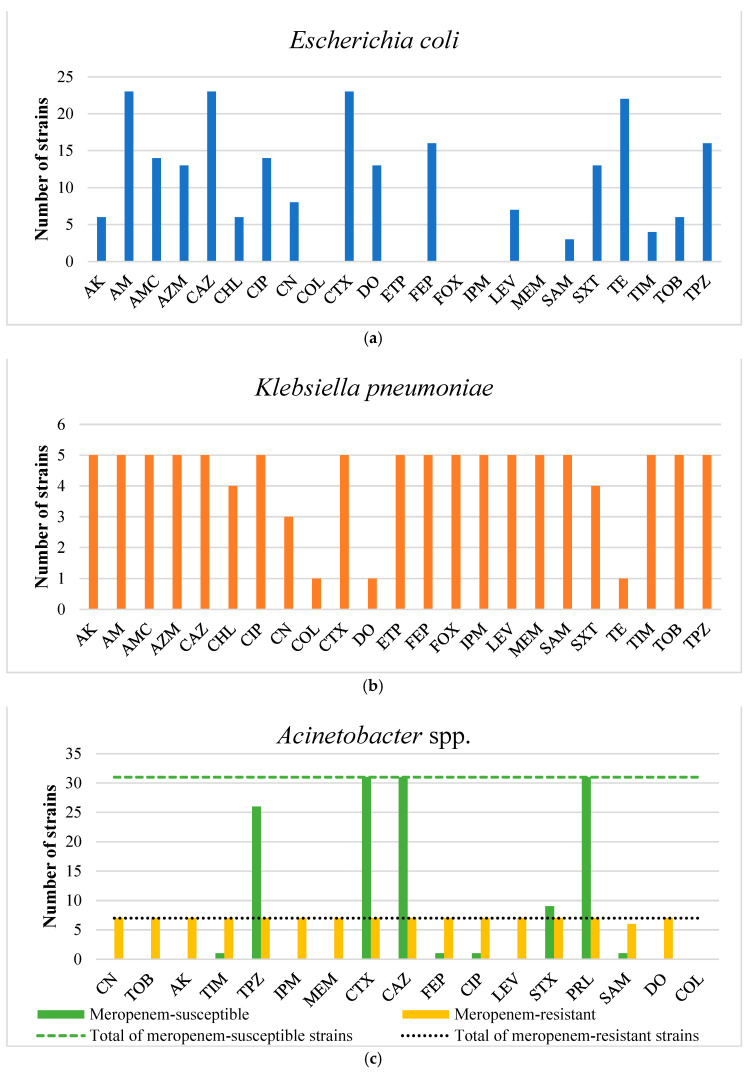
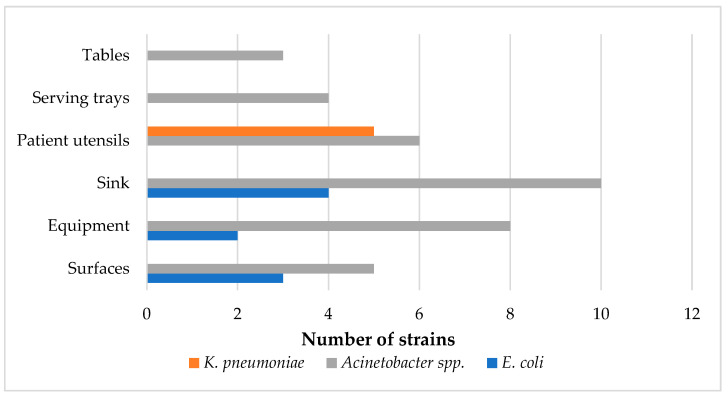
Results: The overall prevalence in the kitchen environment was 4.5%, 1.5%, and 15.0% for E. coli, K. pneumoniae, and Acinetobacter spp., respectively, whereas the prevalence of Acinetobacter spp. in human skin was 4.0%. Almost all strains were multidrug-resistant. All E. coli strains were ESBL producers and belonged to phylogroups A and B1. All K. pneumoniae and seven Acinetobacter strains were carbapenemase-producers. A protein profile analysis showed relatedness between chicken and kitchen environment strains, as well as between kitchen environment and patient strains originated either from the same or from different hospitals.
Conclusions: The results suggest that hospital kitchens may act as important pathogen hotspots contributing to the circulation of resistant strains in the hospital environment.
Antibiotics-BaselPharmacology, Toxicology and Pharmaceutics-General Pharmacology, Toxicology and Pharmaceutics
CiteScore
7.30
自引率
14.60%
发文量
1547
审稿时长
11 weeks
期刊介绍:
Antibiotics (ISSN 2079-6382) is an open access, peer reviewed journal on all aspects of antibiotics. Antibiotics is a multi-disciplinary journal encompassing the general fields of biochemistry, chemistry, genetics, microbiology and pharmacology. Our aim is to encourage scientists to publish their experimental and theoretical results in as much detail as possible. Therefore, there is no restriction on the length of papers.






 京公网安备 11010802042870号
京ICP备2023020795号-1
京公网安备 11010802042870号
京ICP备2023020795号-1

 分享
分享
 求助内容:
求助内容: 应助结果提醒方式:
 扫码关注我们
