C. Costa, D. Talbot, A. Bée, S. Abramson, V. Diz and G. A. González
{"title":"工业样品中的 Cu(II) 可追溯性:利用改性纳米粒子和磁性电极创新检测方法","authors":"C. Costa, D. Talbot, A. Bée, S. Abramson, V. Diz and G. A. González","doi":"10.1039/D4EN00459K","DOIUrl":null,"url":null,"abstract":"<p >This paper presents a novel approach for the sensitive detection of Cu(<small>II</small>) ions in acidic industrial samples, used in the manufacture of printed circuits. The study outlines the synthesis and functionalization of Fe<small><sub>3</sub></small>O<small><sub>4</sub></small> magnetic nanoparticles, emphasizing the optimization of parameters affecting Cu(<small>II</small>) concentration measurements. The NPs are surface-modified with APTES and succinic acid and characterized through different methods including TEM imaging and FTIR analysis. A method employing the magnetic NPs for bulk preconcentration of Cu(<small>II</small>) ions, followed by collection using a simple and home-made magnetic glassy carbon electrode (MGCE), is detailed. The electrochemical analysis showcases the efficiency of the proposed method for rapid and sequential measurements of Cu(<small>II</small>) ions adequate for industrial matrices. Results demonstrate the potential of this approach for sensitive Cu(<small>II</small>) sensing, offering a cost-effective and efficient alternative to conventional analytical techniques. Notably, the successful quantification of Cu(<small>II</small>) concentrations in a real sample obtained from an acid industrial electroplating bath of CuSO<small><sub>4</sub></small> highlights the practical applicability of the developed methodology.</p>","PeriodicalId":73,"journal":{"name":"Environmental Science: Nano","volume":" 1","pages":" 824-834"},"PeriodicalIF":5.1000,"publicationDate":"2024-10-29","publicationTypes":"Journal Article","fieldsOfStudy":null,"isOpenAccess":false,"openAccessPdf":"","citationCount":"0","resultStr":"{\"title\":\"Cu(ii) traceability in industrial samples: innovating detection with modified nanoparticles and magnetic electrodes†\",\"authors\":\"C. Costa, D. Talbot, A. Bée, S. Abramson, V. Diz and G. A. González\",\"doi\":\"10.1039/D4EN00459K\",\"DOIUrl\":null,\"url\":null,\"abstract\":\"<p >This paper presents a novel approach for the sensitive detection of Cu(<small>II</small>) ions in acidic industrial samples, used in the manufacture of printed circuits. The study outlines the synthesis and functionalization of Fe<small><sub>3</sub></small>O<small><sub>4</sub></small> magnetic nanoparticles, emphasizing the optimization of parameters affecting Cu(<small>II</small>) concentration measurements. The NPs are surface-modified with APTES and succinic acid and characterized through different methods including TEM imaging and FTIR analysis. A method employing the magnetic NPs for bulk preconcentration of Cu(<small>II</small>) ions, followed by collection using a simple and home-made magnetic glassy carbon electrode (MGCE), is detailed. The electrochemical analysis showcases the efficiency of the proposed method for rapid and sequential measurements of Cu(<small>II</small>) ions adequate for industrial matrices. Results demonstrate the potential of this approach for sensitive Cu(<small>II</small>) sensing, offering a cost-effective and efficient alternative to conventional analytical techniques. Notably, the successful quantification of Cu(<small>II</small>) concentrations in a real sample obtained from an acid industrial electroplating bath of CuSO<small><sub>4</sub></small> highlights the practical applicability of the developed methodology.</p>\",\"PeriodicalId\":73,\"journal\":{\"name\":\"Environmental Science: Nano\",\"volume\":\" 1\",\"pages\":\" 824-834\"},\"PeriodicalIF\":5.1000,\"publicationDate\":\"2024-10-29\",\"publicationTypes\":\"Journal Article\",\"fieldsOfStudy\":null,\"isOpenAccess\":false,\"openAccessPdf\":\"\",\"citationCount\":\"0\",\"resultStr\":null,\"platform\":\"Semanticscholar\",\"paperid\":null,\"PeriodicalName\":\"Environmental Science: Nano\",\"FirstCategoryId\":\"6\",\"ListUrlMain\":\"https://pubs.rsc.org/en/content/articlelanding/2025/en/d4en00459k\",\"RegionNum\":2,\"RegionCategory\":\"环境科学与生态学\",\"ArticlePicture\":[],\"TitleCN\":null,\"AbstractTextCN\":null,\"PMCID\":null,\"EPubDate\":\"\",\"PubModel\":\"\",\"JCR\":\"Q1\",\"JCRName\":\"CHEMISTRY, MULTIDISCIPLINARY\",\"Score\":null,\"Total\":0}","platform":"Semanticscholar","paperid":null,"PeriodicalName":"Environmental Science: Nano","FirstCategoryId":"6","ListUrlMain":"https://pubs.rsc.org/en/content/articlelanding/2025/en/d4en00459k","RegionNum":2,"RegionCategory":"环境科学与生态学","ArticlePicture":[],"TitleCN":null,"AbstractTextCN":null,"PMCID":null,"EPubDate":"","PubModel":"","JCR":"Q1","JCRName":"CHEMISTRY, MULTIDISCIPLINARY","Score":null,"Total":0}
Cu(ii) traceability in industrial samples: innovating detection with modified nanoparticles and magnetic electrodes†
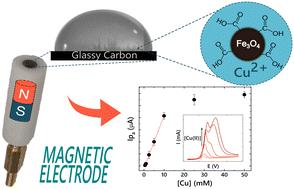
This paper presents a novel approach for the sensitive detection of Cu(II) ions in acidic industrial samples, used in the manufacture of printed circuits. The study outlines the synthesis and functionalization of Fe3O4 magnetic nanoparticles, emphasizing the optimization of parameters affecting Cu(II) concentration measurements. The NPs are surface-modified with APTES and succinic acid and characterized through different methods including TEM imaging and FTIR analysis. A method employing the magnetic NPs for bulk preconcentration of Cu(II) ions, followed by collection using a simple and home-made magnetic glassy carbon electrode (MGCE), is detailed. The electrochemical analysis showcases the efficiency of the proposed method for rapid and sequential measurements of Cu(II) ions adequate for industrial matrices. Results demonstrate the potential of this approach for sensitive Cu(II) sensing, offering a cost-effective and efficient alternative to conventional analytical techniques. Notably, the successful quantification of Cu(II) concentrations in a real sample obtained from an acid industrial electroplating bath of CuSO4 highlights the practical applicability of the developed methodology.
期刊介绍:
Environmental Science: Nano serves as a comprehensive and high-impact peer-reviewed source of information on the design and demonstration of engineered nanomaterials for environment-based applications. It also covers the interactions between engineered, natural, and incidental nanomaterials with biological and environmental systems. This scope includes, but is not limited to, the following topic areas:
Novel nanomaterial-based applications for water, air, soil, food, and energy sustainability
Nanomaterial interactions with biological systems and nanotoxicology
Environmental fate, reactivity, and transformations of nanoscale materials
Nanoscale processes in the environment
Sustainable nanotechnology including rational nanomaterial design, life cycle assessment, risk/benefit analysis




 京公网安备 11010802042870号
京ICP备2023020795号-1
京公网安备 11010802042870号
京ICP备2023020795号-1

 分享
分享
 求助内容:
求助内容: 应助结果提醒方式:
 扫码关注我们
