Julia Makarova, Rafael Toledano, Lidia Blázquez-Llorca, Erika Sánchez-Herráez, Antonio Gil-Nagel, Javier DeFelipe, Oscar Herreras
{"title":"从未切割的人体深部信号源得出的颅内电压曲线揭示了多信号源组成和信号源分配偏差。","authors":"Julia Makarova, Rafael Toledano, Lidia Blázquez-Llorca, Erika Sánchez-Herráez, Antonio Gil-Nagel, Javier DeFelipe, Oscar Herreras","doi":"10.1523/JNEUROSCI.0695-24.2024","DOIUrl":null,"url":null,"abstract":"<p><p>Intracranial potentials are used as functional biomarkers of neural networks. As potentials spread away from the source populations, they become mixed in the recordings. In humans, interindividual differences in the gyral architecture of the cortex pose an additional challenge, as functional areas vary in location and extent. We used source separation techniques to disentangle mixing potentials obtained by exploratory deep arrays implanted in epileptic patients of either sex to gain access to the number, location, relative contribution, and dynamics of coactive sources. The unique spatial profiles of separated generators made it possible to discern dozens of independent cortical areas for each patient, whose stability maintained even during seizure, enabling the follow up of activity for days and across states. Through matching these profiles to MRI, we associated each with limited portions of sulci and gyri and determined the local or remote origin of the corresponding sources. We also plotted source-specific 3D coverage across arrays. In average, individual recording sites are contributed to by 3-5 local and distant generators from areas up to several centimeters apart. During seizure, 13-85% of generators were involved, and a few appeared anew. Significant bias in location assignment using raw potentials is revealed, including numerous false positives when determining the site of origin of a seizure. This is not amended by bipolar montage, which introduce additional errors of its own. In this way, source disentangling reveals the multisource nature and far intracranial spread of potentials in humans, while efficiently addressing patient-specific anatomofunctional cortical divergence.</p>","PeriodicalId":50114,"journal":{"name":"Journal of Neuroscience","volume":" ","pages":""},"PeriodicalIF":4.0000,"publicationDate":"2025-01-01","publicationTypes":"Journal Article","fieldsOfStudy":null,"isOpenAccess":false,"openAccessPdf":"https://www.ncbi.nlm.nih.gov/pmc/articles/PMC11694403/pdf/","citationCount":"0","resultStr":"{\"title\":\"Intracranial Voltage Profiles from Untangled Human Deep Sources Reveal Multisource Composition and Source Allocation Bias.\",\"authors\":\"Julia Makarova, Rafael Toledano, Lidia Blázquez-Llorca, Erika Sánchez-Herráez, Antonio Gil-Nagel, Javier DeFelipe, Oscar Herreras\",\"doi\":\"10.1523/JNEUROSCI.0695-24.2024\",\"DOIUrl\":null,\"url\":null,\"abstract\":\"<p><p>Intracranial potentials are used as functional biomarkers of neural networks. As potentials spread away from the source populations, they become mixed in the recordings. In humans, interindividual differences in the gyral architecture of the cortex pose an additional challenge, as functional areas vary in location and extent. We used source separation techniques to disentangle mixing potentials obtained by exploratory deep arrays implanted in epileptic patients of either sex to gain access to the number, location, relative contribution, and dynamics of coactive sources. The unique spatial profiles of separated generators made it possible to discern dozens of independent cortical areas for each patient, whose stability maintained even during seizure, enabling the follow up of activity for days and across states. Through matching these profiles to MRI, we associated each with limited portions of sulci and gyri and determined the local or remote origin of the corresponding sources. We also plotted source-specific 3D coverage across arrays. In average, individual recording sites are contributed to by 3-5 local and distant generators from areas up to several centimeters apart. During seizure, 13-85% of generators were involved, and a few appeared anew. Significant bias in location assignment using raw potentials is revealed, including numerous false positives when determining the site of origin of a seizure. This is not amended by bipolar montage, which introduce additional errors of its own. In this way, source disentangling reveals the multisource nature and far intracranial spread of potentials in humans, while efficiently addressing patient-specific anatomofunctional cortical divergence.</p>\",\"PeriodicalId\":50114,\"journal\":{\"name\":\"Journal of Neuroscience\",\"volume\":\" \",\"pages\":\"\"},\"PeriodicalIF\":4.0000,\"publicationDate\":\"2025-01-01\",\"publicationTypes\":\"Journal Article\",\"fieldsOfStudy\":null,\"isOpenAccess\":false,\"openAccessPdf\":\"https://www.ncbi.nlm.nih.gov/pmc/articles/PMC11694403/pdf/\",\"citationCount\":\"0\",\"resultStr\":null,\"platform\":\"Semanticscholar\",\"paperid\":null,\"PeriodicalName\":\"Journal of Neuroscience\",\"FirstCategoryId\":\"3\",\"ListUrlMain\":\"https://doi.org/10.1523/JNEUROSCI.0695-24.2024\",\"RegionNum\":2,\"RegionCategory\":\"医学\",\"ArticlePicture\":[],\"TitleCN\":null,\"AbstractTextCN\":null,\"PMCID\":null,\"EPubDate\":\"\",\"PubModel\":\"\",\"JCR\":\"Q1\",\"JCRName\":\"NEUROSCIENCES\",\"Score\":null,\"Total\":0}","platform":"Semanticscholar","paperid":null,"PeriodicalName":"Journal of Neuroscience","FirstCategoryId":"3","ListUrlMain":"https://doi.org/10.1523/JNEUROSCI.0695-24.2024","RegionNum":2,"RegionCategory":"医学","ArticlePicture":[],"TitleCN":null,"AbstractTextCN":null,"PMCID":null,"EPubDate":"","PubModel":"","JCR":"Q1","JCRName":"NEUROSCIENCES","Score":null,"Total":0}
Intracranial Voltage Profiles from Untangled Human Deep Sources Reveal Multisource Composition and Source Allocation Bias.
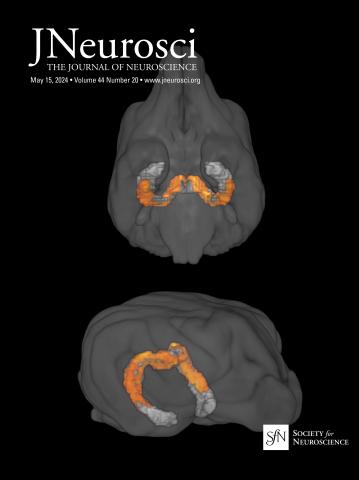
Intracranial potentials are used as functional biomarkers of neural networks. As potentials spread away from the source populations, they become mixed in the recordings. In humans, interindividual differences in the gyral architecture of the cortex pose an additional challenge, as functional areas vary in location and extent. We used source separation techniques to disentangle mixing potentials obtained by exploratory deep arrays implanted in epileptic patients of either sex to gain access to the number, location, relative contribution, and dynamics of coactive sources. The unique spatial profiles of separated generators made it possible to discern dozens of independent cortical areas for each patient, whose stability maintained even during seizure, enabling the follow up of activity for days and across states. Through matching these profiles to MRI, we associated each with limited portions of sulci and gyri and determined the local or remote origin of the corresponding sources. We also plotted source-specific 3D coverage across arrays. In average, individual recording sites are contributed to by 3-5 local and distant generators from areas up to several centimeters apart. During seizure, 13-85% of generators were involved, and a few appeared anew. Significant bias in location assignment using raw potentials is revealed, including numerous false positives when determining the site of origin of a seizure. This is not amended by bipolar montage, which introduce additional errors of its own. In this way, source disentangling reveals the multisource nature and far intracranial spread of potentials in humans, while efficiently addressing patient-specific anatomofunctional cortical divergence.
期刊介绍:
JNeurosci (ISSN 0270-6474) is an official journal of the Society for Neuroscience. It is published weekly by the Society, fifty weeks a year, one volume a year. JNeurosci publishes papers on a broad range of topics of general interest to those working on the nervous system. Authors now have an Open Choice option for their published articles




 京公网安备 11010802042870号
京ICP备2023020795号-1
京公网安备 11010802042870号
京ICP备2023020795号-1

 分享
分享
 求助内容:
求助内容: 应助结果提醒方式:
 扫码关注我们
