{"title":"FastProtein--一种用于硅学蛋白质组分析的自动化软件。","authors":"Renato Simões Moreira, Vilmar Benetti Filho, Guilherme Augusto Maia, Tatiany Aparecida Teixeira Soratto, Eric Kazuo Kawagoe, Bruna Caroline Russi, Luiz Cláudio Miletti, Glauber Wagner","doi":"10.7717/peerj.18309","DOIUrl":null,"url":null,"abstract":"<p><p>Although various tools provide proteomic information, each tool has limitations related to execution platforms, libraries, versions, and data output format. Integrating data generated from different software is a laborious process that can prolong analysis time. Here, we present FastProtein, a protein analysis pipeline that is user-friendly, easily installable, and outputs important information about subcellular location, transmembrane domains, signal peptide, molecular weight, isoelectric point, hydropathy, aromaticity, gene ontology, endoplasmic reticulum retention domains, and N-glycosylation domains. It also helps determine the presence of glycosylphosphatidylinositol and obtain functional information from InterProScan, PANTHER, Pfam, and alignment-based annotation searches. FastProtein provides the scientific community with an easy-to-use computational tool for proteomic data analysis. It is applicable to both small datasets and proteome-wide studies. It can be used through the command line interface mode or a web interface installed on a local server. FastProtein significantly enhances proteomics analysis workflows by producing multiple results in a single-step process, thereby streamlining and accelerating the overall analysis. The software is open-source and freely available. Installation and execution instructions, as well as the source code and test files generated for tool validation, are available at https://github.com/bioinformatics-ufsc/FastProtein.</p>","PeriodicalId":19799,"journal":{"name":"PeerJ","volume":"12 ","pages":"e18309"},"PeriodicalIF":2.4000,"publicationDate":"2024-10-31","publicationTypes":"Journal Article","fieldsOfStudy":null,"isOpenAccess":false,"openAccessPdf":"https://www.ncbi.nlm.nih.gov/pmc/articles/PMC11531748/pdf/","citationCount":"0","resultStr":"{\"title\":\"FastProtein-an automated software for <i>in silico</i> proteomic analysis.\",\"authors\":\"Renato Simões Moreira, Vilmar Benetti Filho, Guilherme Augusto Maia, Tatiany Aparecida Teixeira Soratto, Eric Kazuo Kawagoe, Bruna Caroline Russi, Luiz Cláudio Miletti, Glauber Wagner\",\"doi\":\"10.7717/peerj.18309\",\"DOIUrl\":null,\"url\":null,\"abstract\":\"<p><p>Although various tools provide proteomic information, each tool has limitations related to execution platforms, libraries, versions, and data output format. Integrating data generated from different software is a laborious process that can prolong analysis time. Here, we present FastProtein, a protein analysis pipeline that is user-friendly, easily installable, and outputs important information about subcellular location, transmembrane domains, signal peptide, molecular weight, isoelectric point, hydropathy, aromaticity, gene ontology, endoplasmic reticulum retention domains, and N-glycosylation domains. It also helps determine the presence of glycosylphosphatidylinositol and obtain functional information from InterProScan, PANTHER, Pfam, and alignment-based annotation searches. FastProtein provides the scientific community with an easy-to-use computational tool for proteomic data analysis. It is applicable to both small datasets and proteome-wide studies. It can be used through the command line interface mode or a web interface installed on a local server. FastProtein significantly enhances proteomics analysis workflows by producing multiple results in a single-step process, thereby streamlining and accelerating the overall analysis. The software is open-source and freely available. Installation and execution instructions, as well as the source code and test files generated for tool validation, are available at https://github.com/bioinformatics-ufsc/FastProtein.</p>\",\"PeriodicalId\":19799,\"journal\":{\"name\":\"PeerJ\",\"volume\":\"12 \",\"pages\":\"e18309\"},\"PeriodicalIF\":2.4000,\"publicationDate\":\"2024-10-31\",\"publicationTypes\":\"Journal Article\",\"fieldsOfStudy\":null,\"isOpenAccess\":false,\"openAccessPdf\":\"https://www.ncbi.nlm.nih.gov/pmc/articles/PMC11531748/pdf/\",\"citationCount\":\"0\",\"resultStr\":null,\"platform\":\"Semanticscholar\",\"paperid\":null,\"PeriodicalName\":\"PeerJ\",\"FirstCategoryId\":\"99\",\"ListUrlMain\":\"https://doi.org/10.7717/peerj.18309\",\"RegionNum\":3,\"RegionCategory\":\"生物学\",\"ArticlePicture\":[],\"TitleCN\":null,\"AbstractTextCN\":null,\"PMCID\":null,\"EPubDate\":\"2024/1/1 0:00:00\",\"PubModel\":\"eCollection\",\"JCR\":\"Q2\",\"JCRName\":\"MULTIDISCIPLINARY SCIENCES\",\"Score\":null,\"Total\":0}","platform":"Semanticscholar","paperid":null,"PeriodicalName":"PeerJ","FirstCategoryId":"99","ListUrlMain":"https://doi.org/10.7717/peerj.18309","RegionNum":3,"RegionCategory":"生物学","ArticlePicture":[],"TitleCN":null,"AbstractTextCN":null,"PMCID":null,"EPubDate":"2024/1/1 0:00:00","PubModel":"eCollection","JCR":"Q2","JCRName":"MULTIDISCIPLINARY SCIENCES","Score":null,"Total":0}
FastProtein-an automated software for in silico proteomic analysis.
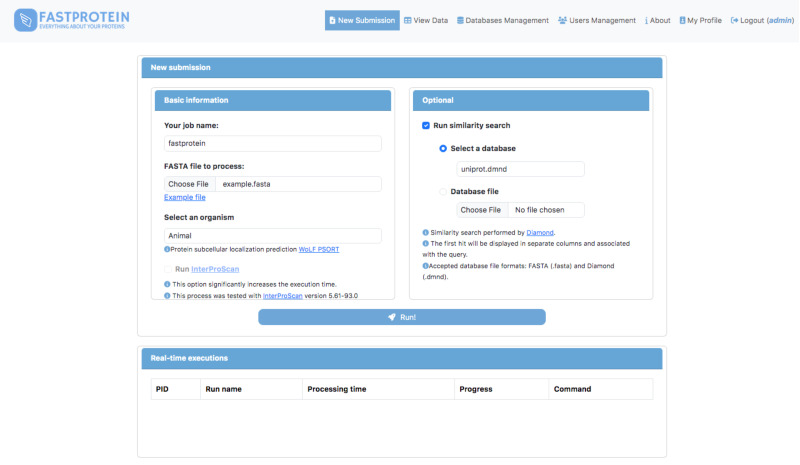
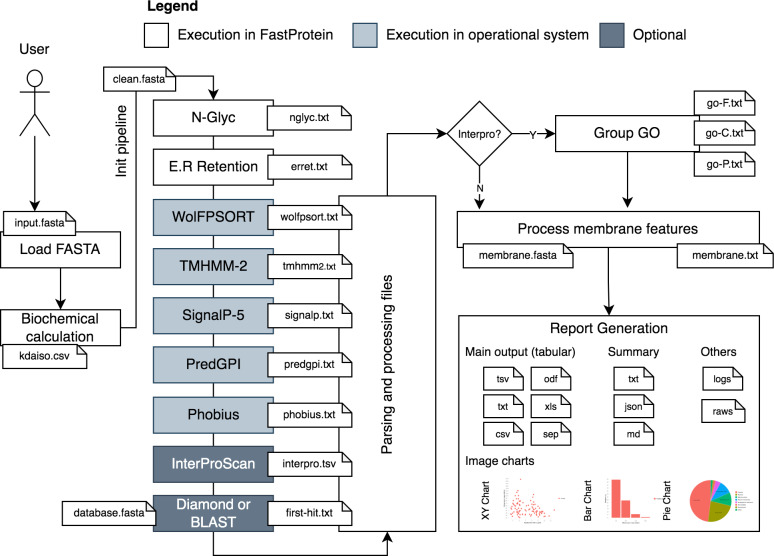
Although various tools provide proteomic information, each tool has limitations related to execution platforms, libraries, versions, and data output format. Integrating data generated from different software is a laborious process that can prolong analysis time. Here, we present FastProtein, a protein analysis pipeline that is user-friendly, easily installable, and outputs important information about subcellular location, transmembrane domains, signal peptide, molecular weight, isoelectric point, hydropathy, aromaticity, gene ontology, endoplasmic reticulum retention domains, and N-glycosylation domains. It also helps determine the presence of glycosylphosphatidylinositol and obtain functional information from InterProScan, PANTHER, Pfam, and alignment-based annotation searches. FastProtein provides the scientific community with an easy-to-use computational tool for proteomic data analysis. It is applicable to both small datasets and proteome-wide studies. It can be used through the command line interface mode or a web interface installed on a local server. FastProtein significantly enhances proteomics analysis workflows by producing multiple results in a single-step process, thereby streamlining and accelerating the overall analysis. The software is open-source and freely available. Installation and execution instructions, as well as the source code and test files generated for tool validation, are available at https://github.com/bioinformatics-ufsc/FastProtein.
期刊介绍:
PeerJ is an open access peer-reviewed scientific journal covering research in the biological and medical sciences. At PeerJ, authors take out a lifetime publication plan (for as little as $99) which allows them to publish articles in the journal for free, forever. PeerJ has 5 Nobel Prize Winners on the Board; they have won several industry and media awards; and they are widely recognized as being one of the most interesting recent developments in academic publishing.






 京公网安备 11010802042870号
京ICP备2023020795号-1
京公网安备 11010802042870号
京ICP备2023020795号-1

 分享
分享
 求助内容:
求助内容: 应助结果提醒方式:
 扫码关注我们
