Anushka Mondal, Bishnu Das, Souvik Karmakar, Soumili Pani, Shrabani Khan, Parna Gupta, Jayasri Das Sarma
{"title":"三唑螯合铱(III)配合物在宫颈癌细胞抗移行和抗增殖作用中的泛细胞信号通路调节作用","authors":"Anushka Mondal, Bishnu Das, Souvik Karmakar, Soumili Pani, Shrabani Khan, Parna Gupta, Jayasri Das Sarma","doi":"10.1021/acs.jmedchem.4c01997","DOIUrl":null,"url":null,"abstract":"In the current study, the antimigratory and antiproliferative effect of three substituted triazole-chelated iridium(III) complexes Ir-TRN, Ir-TRH, and Ir-TRF were studied with special emphasis on modulation of P53 activity, a cell cycle regulator. ERK2/MAPK, another crucial cell signaling pathway protein, was also shown to play a crucial role in cell migration and proliferation. The complexes increase the ROS generation within the cell, further supporting apoptotic induction by exerting cellular oxidative stress. These metal complexes also affect ER stress by altering ERp29, an ER-resident chaperone, further inducing the process of apoptosis. The iridium(III) complexes restrict cervical cancer cell migration and proliferation by exerting pronounced effects as P53 activators and downregulation of ERK2/MAPK activity in cervical cancer cells. The underpinning mechanism of P53 and ERK2/MAPK activity in cervical cancer cells in the presence of iridium(III) complexes was studied in detail in this study, which paves the way for developing promising avenues for cancer therapeutics.","PeriodicalId":46,"journal":{"name":"Journal of Medicinal Chemistry","volume":"147 1","pages":""},"PeriodicalIF":6.8000,"publicationDate":"2024-11-11","publicationTypes":"Journal Article","fieldsOfStudy":null,"isOpenAccess":false,"openAccessPdf":"","citationCount":"0","resultStr":"{\"title\":\"Modulatory Role of Pantropic Cell Signaling Pathways in the Antimigratory and Antiproliferative Action of Triazole Chelated Iridium(III) Complexes in Cervical Cancer Cells\",\"authors\":\"Anushka Mondal, Bishnu Das, Souvik Karmakar, Soumili Pani, Shrabani Khan, Parna Gupta, Jayasri Das Sarma\",\"doi\":\"10.1021/acs.jmedchem.4c01997\",\"DOIUrl\":null,\"url\":null,\"abstract\":\"In the current study, the antimigratory and antiproliferative effect of three substituted triazole-chelated iridium(III) complexes Ir-TRN, Ir-TRH, and Ir-TRF were studied with special emphasis on modulation of P53 activity, a cell cycle regulator. ERK2/MAPK, another crucial cell signaling pathway protein, was also shown to play a crucial role in cell migration and proliferation. The complexes increase the ROS generation within the cell, further supporting apoptotic induction by exerting cellular oxidative stress. These metal complexes also affect ER stress by altering ERp29, an ER-resident chaperone, further inducing the process of apoptosis. The iridium(III) complexes restrict cervical cancer cell migration and proliferation by exerting pronounced effects as P53 activators and downregulation of ERK2/MAPK activity in cervical cancer cells. The underpinning mechanism of P53 and ERK2/MAPK activity in cervical cancer cells in the presence of iridium(III) complexes was studied in detail in this study, which paves the way for developing promising avenues for cancer therapeutics.\",\"PeriodicalId\":46,\"journal\":{\"name\":\"Journal of Medicinal Chemistry\",\"volume\":\"147 1\",\"pages\":\"\"},\"PeriodicalIF\":6.8000,\"publicationDate\":\"2024-11-11\",\"publicationTypes\":\"Journal Article\",\"fieldsOfStudy\":null,\"isOpenAccess\":false,\"openAccessPdf\":\"\",\"citationCount\":\"0\",\"resultStr\":null,\"platform\":\"Semanticscholar\",\"paperid\":null,\"PeriodicalName\":\"Journal of Medicinal Chemistry\",\"FirstCategoryId\":\"3\",\"ListUrlMain\":\"https://doi.org/10.1021/acs.jmedchem.4c01997\",\"RegionNum\":1,\"RegionCategory\":\"医学\",\"ArticlePicture\":[],\"TitleCN\":null,\"AbstractTextCN\":null,\"PMCID\":null,\"EPubDate\":\"\",\"PubModel\":\"\",\"JCR\":\"Q1\",\"JCRName\":\"CHEMISTRY, MEDICINAL\",\"Score\":null,\"Total\":0}","platform":"Semanticscholar","paperid":null,"PeriodicalName":"Journal of Medicinal Chemistry","FirstCategoryId":"3","ListUrlMain":"https://doi.org/10.1021/acs.jmedchem.4c01997","RegionNum":1,"RegionCategory":"医学","ArticlePicture":[],"TitleCN":null,"AbstractTextCN":null,"PMCID":null,"EPubDate":"","PubModel":"","JCR":"Q1","JCRName":"CHEMISTRY, MEDICINAL","Score":null,"Total":0}
Modulatory Role of Pantropic Cell Signaling Pathways in the Antimigratory and Antiproliferative Action of Triazole Chelated Iridium(III) Complexes in Cervical Cancer Cells
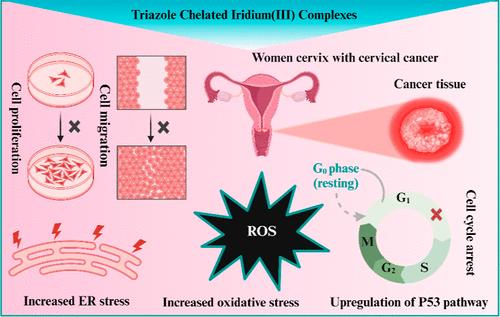
In the current study, the antimigratory and antiproliferative effect of three substituted triazole-chelated iridium(III) complexes Ir-TRN, Ir-TRH, and Ir-TRF were studied with special emphasis on modulation of P53 activity, a cell cycle regulator. ERK2/MAPK, another crucial cell signaling pathway protein, was also shown to play a crucial role in cell migration and proliferation. The complexes increase the ROS generation within the cell, further supporting apoptotic induction by exerting cellular oxidative stress. These metal complexes also affect ER stress by altering ERp29, an ER-resident chaperone, further inducing the process of apoptosis. The iridium(III) complexes restrict cervical cancer cell migration and proliferation by exerting pronounced effects as P53 activators and downregulation of ERK2/MAPK activity in cervical cancer cells. The underpinning mechanism of P53 and ERK2/MAPK activity in cervical cancer cells in the presence of iridium(III) complexes was studied in detail in this study, which paves the way for developing promising avenues for cancer therapeutics.
期刊介绍:
The Journal of Medicinal Chemistry is a prestigious biweekly peer-reviewed publication that focuses on the multifaceted field of medicinal chemistry. Since its inception in 1959 as the Journal of Medicinal and Pharmaceutical Chemistry, it has evolved to become a cornerstone in the dissemination of research findings related to the design, synthesis, and development of therapeutic agents.
The Journal of Medicinal Chemistry is recognized for its significant impact in the scientific community, as evidenced by its 2022 impact factor of 7.3. This metric reflects the journal's influence and the importance of its content in shaping the future of drug discovery and development. The journal serves as a vital resource for chemists, pharmacologists, and other researchers interested in the molecular mechanisms of drug action and the optimization of therapeutic compounds.




 京公网安备 11010802042870号
京ICP备2023020795号-1
京公网安备 11010802042870号
京ICP备2023020795号-1

 分享
分享
 求助内容:
求助内容: 应助结果提醒方式:
 扫码关注我们
