Pooja Sharma , Palak Bakshi , Rekha Chouhan , Sumit G. Gandhi , Rupinder Kaur , Ashutosh Sharma , Renu Bhardwaj , Abdulaziz Abdullah Alsahli , Parvaiz Ahmad
{"title":"联合施用蚯蚓和植物生长促进根瘤菌可提高芸苔属植物在铬金属毒性条件下的金属吸收、光合效率并调节次生代谢物水平","authors":"Pooja Sharma , Palak Bakshi , Rekha Chouhan , Sumit G. Gandhi , Rupinder Kaur , Ashutosh Sharma , Renu Bhardwaj , Abdulaziz Abdullah Alsahli , Parvaiz Ahmad","doi":"10.1016/j.jhazmat.2024.136489","DOIUrl":null,"url":null,"abstract":"<div><div>Chromium (Cr) toxicity impairs essential morphological and metabolic activities in plants. The present investigation was carried out to evaluate the beneficial role of plant growth promoting rhizobacterial strains namely <em>Pseudomonas aeruginosa</em> (M1), <em>Burkholderia gladioli</em> (M2) and earthworms (<em>Eisenia fetida</em>) in alleviating Cr toxicity in 10 days old <em>Brassica juncea</em> L. The findings delineated that addition of earthworms and PGPR restored growth, boosted Cr uptake and showed upregulation of metal transporter genes (<em>SULTR 1–4).</em> Supplementation of rhizospheric amendments reinstated Cr induced impairment in photosynthetic attributes. Gaseous exchange attributes, the efficiency of PS II, the content of total phenols, anthocyanin and flavonoids was enhanced with application of earthworms along with PGPR. Confocal imaging of primary photosynthetic pigment (chlorophyll), accessory photosynthetic pigment (carotenoids) and total phenols showed maximum fluorescence with combined inoculation of earthworms and both microbial strains (M1M2). The gene expression analysis revealed that <em>Phyotene synthase (PSY),</em> Photosystem II core protein <em>psb A</em>, <em>psb B</em> were down regulated in Cr stressed seedlings which upon supplementation with earthworms and PGPR were upregulated. Further, <em>Phenylalanine ammonialyase (PAL), chalcone synthase (CHS)</em> were upregulated with addition of earthworms and PGPR. Increased nitric oxide content, enhanced activity and upregulation of nitrate reductase (<em>NR</em>) gene was observed with addition of PGPR and earthworms</div></div>","PeriodicalId":361,"journal":{"name":"Journal of Hazardous Materials","volume":"482 ","pages":"Article 136489"},"PeriodicalIF":10.6000,"publicationDate":"2025-01-15","publicationTypes":"Journal Article","fieldsOfStudy":null,"isOpenAccess":false,"openAccessPdf":"","citationCount":"0","resultStr":"{\"title\":\"Combined application of earthworms and plant growth promoting rhizobacteria improve metal uptake, photosynthetic efficiency and modulate secondary metabolites levels under chromium metal toxicity in Brassica juncea L\",\"authors\":\"Pooja Sharma , Palak Bakshi , Rekha Chouhan , Sumit G. Gandhi , Rupinder Kaur , Ashutosh Sharma , Renu Bhardwaj , Abdulaziz Abdullah Alsahli , Parvaiz Ahmad\",\"doi\":\"10.1016/j.jhazmat.2024.136489\",\"DOIUrl\":null,\"url\":null,\"abstract\":\"<div><div>Chromium (Cr) toxicity impairs essential morphological and metabolic activities in plants. The present investigation was carried out to evaluate the beneficial role of plant growth promoting rhizobacterial strains namely <em>Pseudomonas aeruginosa</em> (M1), <em>Burkholderia gladioli</em> (M2) and earthworms (<em>Eisenia fetida</em>) in alleviating Cr toxicity in 10 days old <em>Brassica juncea</em> L. The findings delineated that addition of earthworms and PGPR restored growth, boosted Cr uptake and showed upregulation of metal transporter genes (<em>SULTR 1–4).</em> Supplementation of rhizospheric amendments reinstated Cr induced impairment in photosynthetic attributes. Gaseous exchange attributes, the efficiency of PS II, the content of total phenols, anthocyanin and flavonoids was enhanced with application of earthworms along with PGPR. Confocal imaging of primary photosynthetic pigment (chlorophyll), accessory photosynthetic pigment (carotenoids) and total phenols showed maximum fluorescence with combined inoculation of earthworms and both microbial strains (M1M2). The gene expression analysis revealed that <em>Phyotene synthase (PSY),</em> Photosystem II core protein <em>psb A</em>, <em>psb B</em> were down regulated in Cr stressed seedlings which upon supplementation with earthworms and PGPR were upregulated. Further, <em>Phenylalanine ammonialyase (PAL), chalcone synthase (CHS)</em> were upregulated with addition of earthworms and PGPR. Increased nitric oxide content, enhanced activity and upregulation of nitrate reductase (<em>NR</em>) gene was observed with addition of PGPR and earthworms</div></div>\",\"PeriodicalId\":361,\"journal\":{\"name\":\"Journal of Hazardous Materials\",\"volume\":\"482 \",\"pages\":\"Article 136489\"},\"PeriodicalIF\":10.6000,\"publicationDate\":\"2025-01-15\",\"publicationTypes\":\"Journal Article\",\"fieldsOfStudy\":null,\"isOpenAccess\":false,\"openAccessPdf\":\"\",\"citationCount\":\"0\",\"resultStr\":null,\"platform\":\"Semanticscholar\",\"paperid\":null,\"PeriodicalName\":\"Journal of Hazardous Materials\",\"FirstCategoryId\":\"93\",\"ListUrlMain\":\"https://www.sciencedirect.com/science/article/pii/S0304389424030681\",\"RegionNum\":1,\"RegionCategory\":\"环境科学与生态学\",\"ArticlePicture\":[],\"TitleCN\":null,\"AbstractTextCN\":null,\"PMCID\":null,\"EPubDate\":\"2024/11/12 0:00:00\",\"PubModel\":\"Epub\",\"JCR\":\"Q1\",\"JCRName\":\"ENGINEERING, ENVIRONMENTAL\",\"Score\":null,\"Total\":0}","platform":"Semanticscholar","paperid":null,"PeriodicalName":"Journal of Hazardous Materials","FirstCategoryId":"93","ListUrlMain":"https://www.sciencedirect.com/science/article/pii/S0304389424030681","RegionNum":1,"RegionCategory":"环境科学与生态学","ArticlePicture":[],"TitleCN":null,"AbstractTextCN":null,"PMCID":null,"EPubDate":"2024/11/12 0:00:00","PubModel":"Epub","JCR":"Q1","JCRName":"ENGINEERING, ENVIRONMENTAL","Score":null,"Total":0}
引用次数: 0
摘要
铬(Cr)毒性会损害植物的基本形态和代谢活动。本研究旨在评估促进植物生长的根瘤菌株,即铜绿假单胞菌(M1)、伯克霍尔德氏菌(M2)和蚯蚓(Eisenia fetida)在减轻 10 天大的甘蓝(Brassica juncea L)的铬毒性中的有益作用。补充根瘤菌群改良剂后,铬对光合特性的影响得以恢复。在施用蚯蚓和 PGPR 的同时,气体交换属性、PS II 的效率、总酚、花青素和类黄酮的含量都得到了提高。对初级光合色素(叶绿素)、辅助光合色素(类胡萝卜素)和总酚的共焦成像显示,蚯蚓和两种微生物菌株(M1M2)联合接种后荧光最大。基因表达分析表明,Cr 胁迫下的幼苗中,叶绿素合成酶(PSY)、光系统 II 核心蛋白 psb A 和 psb B 受到下调,而在补充蚯蚓和 PGPR 后,它们受到上调。此外,加入蚯蚓和 PGPR 后,苯丙氨酸氨酰化酶(PAL)和查尔酮合成酶(CHS)也得到了上调。加入 PGPR 和蚯蚓后,一氧化氮含量增加,硝酸还原酶(NR)基因的活性增强并上调。
Combined application of earthworms and plant growth promoting rhizobacteria improve metal uptake, photosynthetic efficiency and modulate secondary metabolites levels under chromium metal toxicity in Brassica juncea L
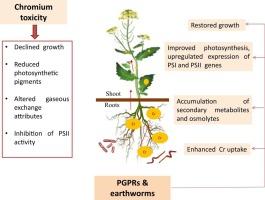
Chromium (Cr) toxicity impairs essential morphological and metabolic activities in plants. The present investigation was carried out to evaluate the beneficial role of plant growth promoting rhizobacterial strains namely Pseudomonas aeruginosa (M1), Burkholderia gladioli (M2) and earthworms (Eisenia fetida) in alleviating Cr toxicity in 10 days old Brassica juncea L. The findings delineated that addition of earthworms and PGPR restored growth, boosted Cr uptake and showed upregulation of metal transporter genes (SULTR 1–4). Supplementation of rhizospheric amendments reinstated Cr induced impairment in photosynthetic attributes. Gaseous exchange attributes, the efficiency of PS II, the content of total phenols, anthocyanin and flavonoids was enhanced with application of earthworms along with PGPR. Confocal imaging of primary photosynthetic pigment (chlorophyll), accessory photosynthetic pigment (carotenoids) and total phenols showed maximum fluorescence with combined inoculation of earthworms and both microbial strains (M1M2). The gene expression analysis revealed that Phyotene synthase (PSY), Photosystem II core protein psb A, psb B were down regulated in Cr stressed seedlings which upon supplementation with earthworms and PGPR were upregulated. Further, Phenylalanine ammonialyase (PAL), chalcone synthase (CHS) were upregulated with addition of earthworms and PGPR. Increased nitric oxide content, enhanced activity and upregulation of nitrate reductase (NR) gene was observed with addition of PGPR and earthworms
期刊介绍:
The Journal of Hazardous Materials serves as a global platform for promoting cutting-edge research in the field of Environmental Science and Engineering. Our publication features a wide range of articles, including full-length research papers, review articles, and perspectives, with the aim of enhancing our understanding of the dangers and risks associated with various materials concerning public health and the environment. It is important to note that the term "environmental contaminants" refers specifically to substances that pose hazardous effects through contamination, while excluding those that do not have such impacts on the environment or human health. Moreover, we emphasize the distinction between wastes and hazardous materials in order to provide further clarity on the scope of the journal. We have a keen interest in exploring specific compounds and microbial agents that have adverse effects on the environment.




 京公网安备 11010802042870号
京ICP备2023020795号-1
京公网安备 11010802042870号
京ICP备2023020795号-1

 分享
分享
 求助内容:
求助内容: 应助结果提醒方式:
 扫码关注我们
