Alessia Ripamonti MD, Fabrizio Cavalca MD, Laura Montelisciani PhD, Laura Antolini PhD, Carlo Gambacorti-Passerini MD, PhD, Elena Maria Elli MD
{"title":"原发性血小板增多症诊断时的中性粒细胞与淋巴细胞比率(NLR):血栓事件的新预测指标。","authors":"Alessia Ripamonti MD, Fabrizio Cavalca MD, Laura Montelisciani PhD, Laura Antolini PhD, Carlo Gambacorti-Passerini MD, PhD, Elena Maria Elli MD","doi":"10.1002/cncr.35638","DOIUrl":null,"url":null,"abstract":"<div>\n \n \n <section>\n \n <h3> Background</h3>\n \n <p>Myeloproliferative neoplasms represent a heterogeneous group of acquired hematopoietic stem cell diseases in which chronic inflammation is essential for both clonal evolution and thrombotic complications. The neutrophil-to-lymphocyte ratio (NLR), reflecting the imbalance between systemic inflammation and immunity, is emerging as a prognostic biomarker in several diseases, including hematological ones.</p>\n </section>\n \n <section>\n \n <h3> Methods</h3>\n \n <p>A total of 473 patients with essential thrombocythemia (ET), the relationship between NLR value at diagnosis and the risk of thrombotic events in the follow-up, in addition to conventional clinical and biological variables, were retrospectively analyzed.</p>\n </section>\n \n <section>\n \n <h3> Results</h3>\n \n <p>A total of 78 thrombotic events were reported for an incidence rate of 1.8 × 100 patients/year. In multivariate analysis, NLR value ≥4 at diagnosis was associated with higher cumulative thrombotic risk (hazard ratio [HR], 2.05; 95% CI, 1.29–2.28; <i>p</i> = .0001) as well International Prognostic Score for Thrombosis in Essential Thrombosis score intermediate-high (HR, 2.69; 95% CI, 1.27–5.72; <i>p</i> = .01) and diabetes (HR, 2.49; 95% CI, 1.23–3.05; <i>p</i> = .010). Concerning arterial thrombotic events, in multivariate analysis, NLR value at diagnosis ≥4 was predictive for thrombosis (HR, 2.13; 95% CI, 1.31–4.04; <i>p</i> = .001 as well diabetes (HR, 2.44; 95% CI, 1.05–5.68; <i>p</i> = .04) and hypertension (HR, 2.46; 95% CI, 1.05–5.68; <i>p</i> = .01). About venous thrombotic events, NLR value ≥5 was a marker predictive for venous thrombosis (HR, 2.99; 95% CI, 2.45–6.48; <i>p</i> = .01) as well age >60 years old (HR, 2.26; 95% CI, 1.0–5.10; <i>p</i> = .05).</p>\n </section>\n \n <section>\n \n <h3> Conclusion</h3>\n \n <p>NLR value is a simple, cost-effective, and easy-to-obtain inflammatory marker that can predict a diagnosis the risk of thrombosis in ET. Our results suggest that NLR value could be integrated into conventional cardiovascular risk scores, to better classify high-risk patients who are candidates for cytoreductive therapy. Further larger and prospective studies are warranted.</p>\n </section>\n </div>","PeriodicalId":138,"journal":{"name":"Cancer","volume":"131 1","pages":""},"PeriodicalIF":5.1000,"publicationDate":"2025-01-03","publicationTypes":"Journal Article","fieldsOfStudy":null,"isOpenAccess":false,"openAccessPdf":"https://onlinelibrary.wiley.com/doi/epdf/10.1002/cncr.35638","citationCount":"0","resultStr":"{\"title\":\"Neutrophil-to-lymphocyte ratio (NLR) at diagnosis in essential thrombocythemia: A new promising predictor of thrombotic events\",\"authors\":\"Alessia Ripamonti MD, Fabrizio Cavalca MD, Laura Montelisciani PhD, Laura Antolini PhD, Carlo Gambacorti-Passerini MD, PhD, Elena Maria Elli MD\",\"doi\":\"10.1002/cncr.35638\",\"DOIUrl\":null,\"url\":null,\"abstract\":\"<div>\\n \\n \\n <section>\\n \\n <h3> Background</h3>\\n \\n <p>Myeloproliferative neoplasms represent a heterogeneous group of acquired hematopoietic stem cell diseases in which chronic inflammation is essential for both clonal evolution and thrombotic complications. The neutrophil-to-lymphocyte ratio (NLR), reflecting the imbalance between systemic inflammation and immunity, is emerging as a prognostic biomarker in several diseases, including hematological ones.</p>\\n </section>\\n \\n <section>\\n \\n <h3> Methods</h3>\\n \\n <p>A total of 473 patients with essential thrombocythemia (ET), the relationship between NLR value at diagnosis and the risk of thrombotic events in the follow-up, in addition to conventional clinical and biological variables, were retrospectively analyzed.</p>\\n </section>\\n \\n <section>\\n \\n <h3> Results</h3>\\n \\n <p>A total of 78 thrombotic events were reported for an incidence rate of 1.8 × 100 patients/year. In multivariate analysis, NLR value ≥4 at diagnosis was associated with higher cumulative thrombotic risk (hazard ratio [HR], 2.05; 95% CI, 1.29–2.28; <i>p</i> = .0001) as well International Prognostic Score for Thrombosis in Essential Thrombosis score intermediate-high (HR, 2.69; 95% CI, 1.27–5.72; <i>p</i> = .01) and diabetes (HR, 2.49; 95% CI, 1.23–3.05; <i>p</i> = .010). Concerning arterial thrombotic events, in multivariate analysis, NLR value at diagnosis ≥4 was predictive for thrombosis (HR, 2.13; 95% CI, 1.31–4.04; <i>p</i> = .001 as well diabetes (HR, 2.44; 95% CI, 1.05–5.68; <i>p</i> = .04) and hypertension (HR, 2.46; 95% CI, 1.05–5.68; <i>p</i> = .01). About venous thrombotic events, NLR value ≥5 was a marker predictive for venous thrombosis (HR, 2.99; 95% CI, 2.45–6.48; <i>p</i> = .01) as well age >60 years old (HR, 2.26; 95% CI, 1.0–5.10; <i>p</i> = .05).</p>\\n </section>\\n \\n <section>\\n \\n <h3> Conclusion</h3>\\n \\n <p>NLR value is a simple, cost-effective, and easy-to-obtain inflammatory marker that can predict a diagnosis the risk of thrombosis in ET. Our results suggest that NLR value could be integrated into conventional cardiovascular risk scores, to better classify high-risk patients who are candidates for cytoreductive therapy. Further larger and prospective studies are warranted.</p>\\n </section>\\n </div>\",\"PeriodicalId\":138,\"journal\":{\"name\":\"Cancer\",\"volume\":\"131 1\",\"pages\":\"\"},\"PeriodicalIF\":5.1000,\"publicationDate\":\"2025-01-03\",\"publicationTypes\":\"Journal Article\",\"fieldsOfStudy\":null,\"isOpenAccess\":false,\"openAccessPdf\":\"https://onlinelibrary.wiley.com/doi/epdf/10.1002/cncr.35638\",\"citationCount\":\"0\",\"resultStr\":null,\"platform\":\"Semanticscholar\",\"paperid\":null,\"PeriodicalName\":\"Cancer\",\"FirstCategoryId\":\"3\",\"ListUrlMain\":\"https://onlinelibrary.wiley.com/doi/10.1002/cncr.35638\",\"RegionNum\":2,\"RegionCategory\":\"医学\",\"ArticlePicture\":[],\"TitleCN\":null,\"AbstractTextCN\":null,\"PMCID\":null,\"EPubDate\":\"2024/11/12 0:00:00\",\"PubModel\":\"Epub\",\"JCR\":\"Q1\",\"JCRName\":\"ONCOLOGY\",\"Score\":null,\"Total\":0}","platform":"Semanticscholar","paperid":null,"PeriodicalName":"Cancer","FirstCategoryId":"3","ListUrlMain":"https://onlinelibrary.wiley.com/doi/10.1002/cncr.35638","RegionNum":2,"RegionCategory":"医学","ArticlePicture":[],"TitleCN":null,"AbstractTextCN":null,"PMCID":null,"EPubDate":"2024/11/12 0:00:00","PubModel":"Epub","JCR":"Q1","JCRName":"ONCOLOGY","Score":null,"Total":0}
Neutrophil-to-lymphocyte ratio (NLR) at diagnosis in essential thrombocythemia: A new promising predictor of thrombotic events
Background
Myeloproliferative neoplasms represent a heterogeneous group of acquired hematopoietic stem cell diseases in which chronic inflammation is essential for both clonal evolution and thrombotic complications. The neutrophil-to-lymphocyte ratio (NLR), reflecting the imbalance between systemic inflammation and immunity, is emerging as a prognostic biomarker in several diseases, including hematological ones.
Methods
A total of 473 patients with essential thrombocythemia (ET), the relationship between NLR value at diagnosis and the risk of thrombotic events in the follow-up, in addition to conventional clinical and biological variables, were retrospectively analyzed.
Results
A total of 78 thrombotic events were reported for an incidence rate of 1.8 × 100 patients/year. In multivariate analysis, NLR value ≥4 at diagnosis was associated with higher cumulative thrombotic risk (hazard ratio [HR], 2.05; 95% CI, 1.29–2.28; p = .0001) as well International Prognostic Score for Thrombosis in Essential Thrombosis score intermediate-high (HR, 2.69; 95% CI, 1.27–5.72; p = .01) and diabetes (HR, 2.49; 95% CI, 1.23–3.05; p = .010). Concerning arterial thrombotic events, in multivariate analysis, NLR value at diagnosis ≥4 was predictive for thrombosis (HR, 2.13; 95% CI, 1.31–4.04; p = .001 as well diabetes (HR, 2.44; 95% CI, 1.05–5.68; p = .04) and hypertension (HR, 2.46; 95% CI, 1.05–5.68; p = .01). About venous thrombotic events, NLR value ≥5 was a marker predictive for venous thrombosis (HR, 2.99; 95% CI, 2.45–6.48; p = .01) as well age >60 years old (HR, 2.26; 95% CI, 1.0–5.10; p = .05).
Conclusion
NLR value is a simple, cost-effective, and easy-to-obtain inflammatory marker that can predict a diagnosis the risk of thrombosis in ET. Our results suggest that NLR value could be integrated into conventional cardiovascular risk scores, to better classify high-risk patients who are candidates for cytoreductive therapy. Further larger and prospective studies are warranted.
期刊介绍:
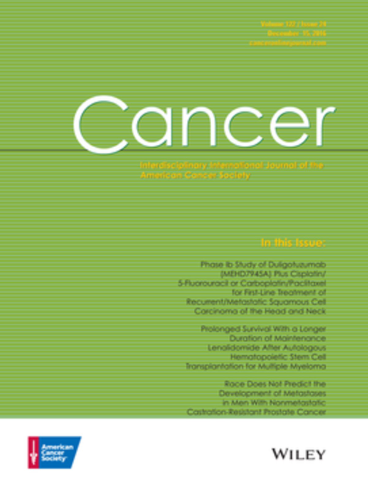
The CANCER site is a full-text, electronic implementation of CANCER, an Interdisciplinary International Journal of the American Cancer Society, and CANCER CYTOPATHOLOGY, a Journal of the American Cancer Society.
CANCER publishes interdisciplinary oncologic information according to, but not limited to, the following disease sites and disciplines: blood/bone marrow; breast disease; endocrine disorders; epidemiology; gastrointestinal tract; genitourinary disease; gynecologic oncology; head and neck disease; hepatobiliary tract; integrated medicine; lung disease; medical oncology; neuro-oncology; pathology radiation oncology; translational research





 京公网安备 11010802042870号
京ICP备2023020795号-1
京公网安备 11010802042870号
京ICP备2023020795号-1

 分享
分享
 求助内容:
求助内容: 应助结果提醒方式:
 扫码关注我们
