Lucas S. Rodríguez Pirani , A. Lorena Picone , Alfredo J. Costa , Gabriel E. Silvestri , Ana Laura Berman , Frank Sznaider , Rosana M. Romano , Luis G. Vila , Alejandro G. Ulrich , Antonio Curtosi , Cristian Vodopivez
{"title":"在南极洲南设得兰群岛大气中检测到的空气微塑料污染。","authors":"Lucas S. Rodríguez Pirani , A. Lorena Picone , Alfredo J. Costa , Gabriel E. Silvestri , Ana Laura Berman , Frank Sznaider , Rosana M. Romano , Luis G. Vila , Alejandro G. Ulrich , Antonio Curtosi , Cristian Vodopivez","doi":"10.1016/j.chemosphere.2024.143762","DOIUrl":null,"url":null,"abstract":"<div><div>Plastic pollution has emerged as a growing environmental concern, affecting even the most remote regions of the planet as the Antarctic continent, endangering its ecosystem and contributing to climate change. In this context, a continuous atmospheric microplastics monitoring study was conducted at Carlini Argentine Antarctic Station located in the southwest of 25 de Mayo (King George) Island (South Shetlands). Passive samplers were installed at three locations throughout the station, chosen based on the intensity of human activity and proved to be effective in collecting atmospheric particles over a one-year study period. Micro-FTIR and micro-Raman spectroscopies were used to characterize the suspected microplastic particles. These techniques revealed a wide variety of plastic polymers compositions and industrial dyes associated with textile and plastic materials. Microfibers were found to be the predominant particle form, constituting approximately 80% of the particles detected at each sampling point. Semi-synthetic cotton, polyester, and polyamide were widely detected, along with other plastic compositions. Micro-Raman spectroscopy confirmed the presence of indigo blue, reactive blue 238, and copper phthalocyanine on both synthetic and semi-synthetic fibers, representing the first report of these types of anthropogenic pigments in the Antarctic atmosphere. The results suggest a significant role of short-range transport from local human activities; however, the potential influence of large-scale atmospheric patterns should also be evaluated. Our findings highlight the need to expand the monitoring network to additional scientific stations and remote regions with minimal human activity. Increasing the number of observational sites and conducting complementary studies on airborne dispersion will strengthen assessments of potential long-range pollution sources.</div></div>","PeriodicalId":276,"journal":{"name":"Chemosphere","volume":"368 ","pages":"Article 143762"},"PeriodicalIF":8.1000,"publicationDate":"2024-11-01","publicationTypes":"Journal Article","fieldsOfStudy":null,"isOpenAccess":false,"openAccessPdf":"","citationCount":"0","resultStr":"{\"title\":\"Airborne microplastic pollution detected in the atmosphere of the South Shetland Islands in Antarctica\",\"authors\":\"Lucas S. Rodríguez Pirani , A. Lorena Picone , Alfredo J. Costa , Gabriel E. Silvestri , Ana Laura Berman , Frank Sznaider , Rosana M. Romano , Luis G. Vila , Alejandro G. Ulrich , Antonio Curtosi , Cristian Vodopivez\",\"doi\":\"10.1016/j.chemosphere.2024.143762\",\"DOIUrl\":null,\"url\":null,\"abstract\":\"<div><div>Plastic pollution has emerged as a growing environmental concern, affecting even the most remote regions of the planet as the Antarctic continent, endangering its ecosystem and contributing to climate change. In this context, a continuous atmospheric microplastics monitoring study was conducted at Carlini Argentine Antarctic Station located in the southwest of 25 de Mayo (King George) Island (South Shetlands). Passive samplers were installed at three locations throughout the station, chosen based on the intensity of human activity and proved to be effective in collecting atmospheric particles over a one-year study period. Micro-FTIR and micro-Raman spectroscopies were used to characterize the suspected microplastic particles. These techniques revealed a wide variety of plastic polymers compositions and industrial dyes associated with textile and plastic materials. Microfibers were found to be the predominant particle form, constituting approximately 80% of the particles detected at each sampling point. Semi-synthetic cotton, polyester, and polyamide were widely detected, along with other plastic compositions. Micro-Raman spectroscopy confirmed the presence of indigo blue, reactive blue 238, and copper phthalocyanine on both synthetic and semi-synthetic fibers, representing the first report of these types of anthropogenic pigments in the Antarctic atmosphere. The results suggest a significant role of short-range transport from local human activities; however, the potential influence of large-scale atmospheric patterns should also be evaluated. Our findings highlight the need to expand the monitoring network to additional scientific stations and remote regions with minimal human activity. Increasing the number of observational sites and conducting complementary studies on airborne dispersion will strengthen assessments of potential long-range pollution sources.</div></div>\",\"PeriodicalId\":276,\"journal\":{\"name\":\"Chemosphere\",\"volume\":\"368 \",\"pages\":\"Article 143762\"},\"PeriodicalIF\":8.1000,\"publicationDate\":\"2024-11-01\",\"publicationTypes\":\"Journal Article\",\"fieldsOfStudy\":null,\"isOpenAccess\":false,\"openAccessPdf\":\"\",\"citationCount\":\"0\",\"resultStr\":null,\"platform\":\"Semanticscholar\",\"paperid\":null,\"PeriodicalName\":\"Chemosphere\",\"FirstCategoryId\":\"93\",\"ListUrlMain\":\"https://www.sciencedirect.com/science/article/pii/S0045653524026638\",\"RegionNum\":2,\"RegionCategory\":\"环境科学与生态学\",\"ArticlePicture\":[],\"TitleCN\":null,\"AbstractTextCN\":null,\"PMCID\":null,\"EPubDate\":\"2024/11/19 0:00:00\",\"PubModel\":\"Epub\",\"JCR\":\"Q1\",\"JCRName\":\"ENVIRONMENTAL SCIENCES\",\"Score\":null,\"Total\":0}","platform":"Semanticscholar","paperid":null,"PeriodicalName":"Chemosphere","FirstCategoryId":"93","ListUrlMain":"https://www.sciencedirect.com/science/article/pii/S0045653524026638","RegionNum":2,"RegionCategory":"环境科学与生态学","ArticlePicture":[],"TitleCN":null,"AbstractTextCN":null,"PMCID":null,"EPubDate":"2024/11/19 0:00:00","PubModel":"Epub","JCR":"Q1","JCRName":"ENVIRONMENTAL SCIENCES","Score":null,"Total":0}
引用次数: 0
摘要
塑料污染已成为一个日益严重的环境问题,甚至影响到地球上最偏远的地区,如南极大陆,危及其生态系统并导致气候变化。在此背景下,位于南设得兰群岛 25 de Mayo(乔治王岛)西南部的卡利尼阿根廷南极站开展了一项连续大气微塑料监测研究。被动采样器安装在整个考察站的三个地点,这些地点是根据人类活动的强度选择的,在为期一年的研究期间,事实证明这些采样器能够有效地收集大气颗粒物。微傅立叶变换红外光谱和微拉曼光谱被用来描述可疑微塑料颗粒的特征。这些技术揭示了与纺织品和塑料材料相关的各种塑料聚合物成分和工业染料。研究发现,微纤维是最主要的颗粒形式,约占每个采样点检测到的颗粒的 80%。半合成棉、聚酯和聚酰胺以及其他塑料成分也被广泛检测到。显微拉曼光谱证实了合成纤维和半合成纤维中存在靛蓝、活性蓝 238 和铜酞菁,这是首次报告南极大气中存在这些类型的人为颜料。研究结果表明,当地人类活动的短程飘移发挥了重要作用;不过,还应评估大尺度大气模式的潜在影响。我们的研究结果突出表明,有必要将监测网络扩展到更多的科学观测站和人类活动极少的偏远地区。增加观测站点的数量并对空气传播进行补充研究,将加强对潜在远距离污染源的评估。
Airborne microplastic pollution detected in the atmosphere of the South Shetland Islands in Antarctica
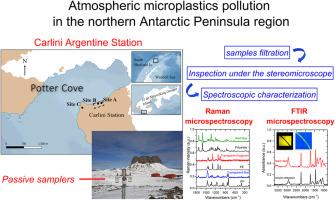
Plastic pollution has emerged as a growing environmental concern, affecting even the most remote regions of the planet as the Antarctic continent, endangering its ecosystem and contributing to climate change. In this context, a continuous atmospheric microplastics monitoring study was conducted at Carlini Argentine Antarctic Station located in the southwest of 25 de Mayo (King George) Island (South Shetlands). Passive samplers were installed at three locations throughout the station, chosen based on the intensity of human activity and proved to be effective in collecting atmospheric particles over a one-year study period. Micro-FTIR and micro-Raman spectroscopies were used to characterize the suspected microplastic particles. These techniques revealed a wide variety of plastic polymers compositions and industrial dyes associated with textile and plastic materials. Microfibers were found to be the predominant particle form, constituting approximately 80% of the particles detected at each sampling point. Semi-synthetic cotton, polyester, and polyamide were widely detected, along with other plastic compositions. Micro-Raman spectroscopy confirmed the presence of indigo blue, reactive blue 238, and copper phthalocyanine on both synthetic and semi-synthetic fibers, representing the first report of these types of anthropogenic pigments in the Antarctic atmosphere. The results suggest a significant role of short-range transport from local human activities; however, the potential influence of large-scale atmospheric patterns should also be evaluated. Our findings highlight the need to expand the monitoring network to additional scientific stations and remote regions with minimal human activity. Increasing the number of observational sites and conducting complementary studies on airborne dispersion will strengthen assessments of potential long-range pollution sources.
期刊介绍:
Chemosphere, being an international multidisciplinary journal, is dedicated to publishing original communications and review articles on chemicals in the environment. The scope covers a wide range of topics, including the identification, quantification, behavior, fate, toxicology, treatment, and remediation of chemicals in the bio-, hydro-, litho-, and atmosphere, ensuring the broad dissemination of research in this field.




 京公网安备 11010802042870号
京ICP备2023020795号-1
京公网安备 11010802042870号
京ICP备2023020795号-1

 分享
分享
 求助内容:
求助内容: 应助结果提醒方式:
 扫码关注我们
