Marwan A. Ibrahim , Ayman M. Algohary , Youssef O. Al-Ghamdi , Ahmed M. Ibrahim
{"title":"利用紫外光谱和降维算法同时测定兽药配方中地塞米松磷酸钠和醋酸泼尼松龙的绿色分析方法。","authors":"Marwan A. Ibrahim , Ayman M. Algohary , Youssef O. Al-Ghamdi , Ahmed M. Ibrahim","doi":"10.1016/j.saa.2024.125446","DOIUrl":null,"url":null,"abstract":"<div><div>Precise determination of veterinary pharmaceutical concentrations represents a critical foundation for delivering safe and efficacious animal healthcare interventions. Two synthetic glucocorticoids − dexamethasone sodium phosphate (DXM) and prednisolone acetate (PRD) − are extensively employed in veterinary medicine due to their potent anti-inflammatory capabilities. Our research presents a novel, cost-effective, and environmentally sustainable analytical methodology that enables simultaneous quantification of DXM and PRD within binary veterinary formulations. The method synergistically combines UV spectroscopy with dimension reduction algorithms (DRAs), representing a significant advancement in pharmaceutical analysis. A comprehensive evaluation of seventeen DRAs was conducted using four distinct performance metrics: mean squared error (MSE), mean absolute error (MAE), median absolute error (MedAE), and coefficient of determination (R<sup>2</sup>). Among the assessed algorithms, mini-batch sparse principal component analysis demonstrated superior predictive accuracy for this specific analytical challenge. The developed method was validated using the accuracy profile approach, yielding results that confirm its satisfactory accuracy. An ecological impact assessment was conducted using five greenness evaluation tools: the Green Solvent Selection Tool (GSST), National Environmental Methods Index (NEMI), Green Certificate modified Eco-Scale, carbon footprint analysis, and the Modified GAPI (MoGAPI). In addition, whiteness was evaluated with Red-Green-Blue 12 (RGB 12) algorithms. The proposed method showed elevated GSST scores and a greener profile according to NEMI. The calculated carbon footprint was 0.0006 kg CO<sub>2</sub> equivalent per sample, with a Green Certificate modified Eco-Scale score of 84, a MoGAPI score of 81, and a whiteness assessment of 90.1 by the RGB12 algorithm. Statistical comparison between the proposed spectrophotometric method and a previously reported HPLC method for pharmaceutical dosage form analysis revealed no statistically significant differences at the 95 % confidence level. This study underscores the innovative combination of UV spectroscopy with dimension reduction algorithms, presenting substantial improvements over traditional UV techniques for drug analysis. This method enhances both the efficiency and accuracy of active ingredient determination in pharmaceutical dosage forms while also supporting environmental sustainability.</div></div>","PeriodicalId":433,"journal":{"name":"Spectrochimica Acta Part A: Molecular and Biomolecular Spectroscopy","volume":"328 ","pages":"Article 125446"},"PeriodicalIF":4.8000,"publicationDate":"2025-03-05","publicationTypes":"Journal Article","fieldsOfStudy":null,"isOpenAccess":false,"openAccessPdf":"","citationCount":"0","resultStr":"{\"title\":\"A Green analytical method for simultaneous determination of dexamethasone sodium phosphate and prednisolone acetate in veterinary formulations using UV spectroscopy and dimension reduction algorithms\",\"authors\":\"Marwan A. Ibrahim , Ayman M. Algohary , Youssef O. Al-Ghamdi , Ahmed M. Ibrahim\",\"doi\":\"10.1016/j.saa.2024.125446\",\"DOIUrl\":null,\"url\":null,\"abstract\":\"<div><div>Precise determination of veterinary pharmaceutical concentrations represents a critical foundation for delivering safe and efficacious animal healthcare interventions. Two synthetic glucocorticoids − dexamethasone sodium phosphate (DXM) and prednisolone acetate (PRD) − are extensively employed in veterinary medicine due to their potent anti-inflammatory capabilities. Our research presents a novel, cost-effective, and environmentally sustainable analytical methodology that enables simultaneous quantification of DXM and PRD within binary veterinary formulations. The method synergistically combines UV spectroscopy with dimension reduction algorithms (DRAs), representing a significant advancement in pharmaceutical analysis. A comprehensive evaluation of seventeen DRAs was conducted using four distinct performance metrics: mean squared error (MSE), mean absolute error (MAE), median absolute error (MedAE), and coefficient of determination (R<sup>2</sup>). Among the assessed algorithms, mini-batch sparse principal component analysis demonstrated superior predictive accuracy for this specific analytical challenge. The developed method was validated using the accuracy profile approach, yielding results that confirm its satisfactory accuracy. An ecological impact assessment was conducted using five greenness evaluation tools: the Green Solvent Selection Tool (GSST), National Environmental Methods Index (NEMI), Green Certificate modified Eco-Scale, carbon footprint analysis, and the Modified GAPI (MoGAPI). In addition, whiteness was evaluated with Red-Green-Blue 12 (RGB 12) algorithms. The proposed method showed elevated GSST scores and a greener profile according to NEMI. The calculated carbon footprint was 0.0006 kg CO<sub>2</sub> equivalent per sample, with a Green Certificate modified Eco-Scale score of 84, a MoGAPI score of 81, and a whiteness assessment of 90.1 by the RGB12 algorithm. Statistical comparison between the proposed spectrophotometric method and a previously reported HPLC method for pharmaceutical dosage form analysis revealed no statistically significant differences at the 95 % confidence level. This study underscores the innovative combination of UV spectroscopy with dimension reduction algorithms, presenting substantial improvements over traditional UV techniques for drug analysis. This method enhances both the efficiency and accuracy of active ingredient determination in pharmaceutical dosage forms while also supporting environmental sustainability.</div></div>\",\"PeriodicalId\":433,\"journal\":{\"name\":\"Spectrochimica Acta Part A: Molecular and Biomolecular Spectroscopy\",\"volume\":\"328 \",\"pages\":\"Article 125446\"},\"PeriodicalIF\":4.8000,\"publicationDate\":\"2025-03-05\",\"publicationTypes\":\"Journal Article\",\"fieldsOfStudy\":null,\"isOpenAccess\":false,\"openAccessPdf\":\"\",\"citationCount\":\"0\",\"resultStr\":null,\"platform\":\"Semanticscholar\",\"paperid\":null,\"PeriodicalName\":\"Spectrochimica Acta Part A: Molecular and Biomolecular Spectroscopy\",\"FirstCategoryId\":\"92\",\"ListUrlMain\":\"https://www.sciencedirect.com/science/article/pii/S1386142524016123\",\"RegionNum\":2,\"RegionCategory\":\"化学\",\"ArticlePicture\":[],\"TitleCN\":null,\"AbstractTextCN\":null,\"PMCID\":null,\"EPubDate\":\"2024/11/16 0:00:00\",\"PubModel\":\"Epub\",\"JCR\":\"Q1\",\"JCRName\":\"SPECTROSCOPY\",\"Score\":null,\"Total\":0}","platform":"Semanticscholar","paperid":null,"PeriodicalName":"Spectrochimica Acta Part A: Molecular and Biomolecular Spectroscopy","FirstCategoryId":"92","ListUrlMain":"https://www.sciencedirect.com/science/article/pii/S1386142524016123","RegionNum":2,"RegionCategory":"化学","ArticlePicture":[],"TitleCN":null,"AbstractTextCN":null,"PMCID":null,"EPubDate":"2024/11/16 0:00:00","PubModel":"Epub","JCR":"Q1","JCRName":"SPECTROSCOPY","Score":null,"Total":0}
A Green analytical method for simultaneous determination of dexamethasone sodium phosphate and prednisolone acetate in veterinary formulations using UV spectroscopy and dimension reduction algorithms
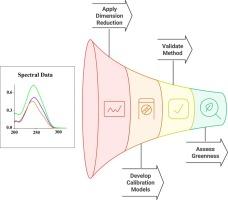
Precise determination of veterinary pharmaceutical concentrations represents a critical foundation for delivering safe and efficacious animal healthcare interventions. Two synthetic glucocorticoids − dexamethasone sodium phosphate (DXM) and prednisolone acetate (PRD) − are extensively employed in veterinary medicine due to their potent anti-inflammatory capabilities. Our research presents a novel, cost-effective, and environmentally sustainable analytical methodology that enables simultaneous quantification of DXM and PRD within binary veterinary formulations. The method synergistically combines UV spectroscopy with dimension reduction algorithms (DRAs), representing a significant advancement in pharmaceutical analysis. A comprehensive evaluation of seventeen DRAs was conducted using four distinct performance metrics: mean squared error (MSE), mean absolute error (MAE), median absolute error (MedAE), and coefficient of determination (R2). Among the assessed algorithms, mini-batch sparse principal component analysis demonstrated superior predictive accuracy for this specific analytical challenge. The developed method was validated using the accuracy profile approach, yielding results that confirm its satisfactory accuracy. An ecological impact assessment was conducted using five greenness evaluation tools: the Green Solvent Selection Tool (GSST), National Environmental Methods Index (NEMI), Green Certificate modified Eco-Scale, carbon footprint analysis, and the Modified GAPI (MoGAPI). In addition, whiteness was evaluated with Red-Green-Blue 12 (RGB 12) algorithms. The proposed method showed elevated GSST scores and a greener profile according to NEMI. The calculated carbon footprint was 0.0006 kg CO2 equivalent per sample, with a Green Certificate modified Eco-Scale score of 84, a MoGAPI score of 81, and a whiteness assessment of 90.1 by the RGB12 algorithm. Statistical comparison between the proposed spectrophotometric method and a previously reported HPLC method for pharmaceutical dosage form analysis revealed no statistically significant differences at the 95 % confidence level. This study underscores the innovative combination of UV spectroscopy with dimension reduction algorithms, presenting substantial improvements over traditional UV techniques for drug analysis. This method enhances both the efficiency and accuracy of active ingredient determination in pharmaceutical dosage forms while also supporting environmental sustainability.
期刊介绍:
Spectrochimica Acta, Part A: Molecular and Biomolecular Spectroscopy (SAA) is an interdisciplinary journal which spans from basic to applied aspects of optical spectroscopy in chemistry, medicine, biology, and materials science.
The journal publishes original scientific papers that feature high-quality spectroscopic data and analysis. From the broad range of optical spectroscopies, the emphasis is on electronic, vibrational or rotational spectra of molecules, rather than on spectroscopy based on magnetic moments.
Criteria for publication in SAA are novelty, uniqueness, and outstanding quality. Routine applications of spectroscopic techniques and computational methods are not appropriate.
Topics of particular interest of Spectrochimica Acta Part A include, but are not limited to:
Spectroscopy and dynamics of bioanalytical, biomedical, environmental, and atmospheric sciences,
Novel experimental techniques or instrumentation for molecular spectroscopy,
Novel theoretical and computational methods,
Novel applications in photochemistry and photobiology,
Novel interpretational approaches as well as advances in data analysis based on electronic or vibrational spectroscopy.




 京公网安备 11010802042870号
京ICP备2023020795号-1
京公网安备 11010802042870号
京ICP备2023020795号-1

 分享
分享
 求助内容:
求助内容: 应助结果提醒方式:
 扫码关注我们
