Kevin H. Wyatt, Jillian Cieslik, Catherine M. Dieleman, Evan S. Kane, Allison R. Rober, Barrett Sullivan, Merritt R. Turetsky
{"title":"植物群落结构的遗留效应表现在微生物生物膜的发育过程中,并对生态系统二氧化碳排放产生影响","authors":"Kevin H. Wyatt, Jillian Cieslik, Catherine M. Dieleman, Evan S. Kane, Allison R. Rober, Barrett Sullivan, Merritt R. Turetsky","doi":"10.1111/gcb.17603","DOIUrl":null,"url":null,"abstract":"<p>To better understand linkages between hydrology and ecosystem carbon flux in northern aquatic ecosystems, we evaluated the relationship between plant communities, biofilm development, and carbon dioxide (CO<sub>2</sub>) exchange following long-term changes in hydrology in an Alaskan fen. We quantified seasonal variation in biofilm composition and CO<sub>2</sub> exchange in response to lowered and raised water table position (relative to a control) during years with varying levels of background dissolved organic carbon (DOC). We then used nutrient-diffusing substrates (NDS) to evaluate cause–effect relationships between changes in plant subsidies (i.e., leachates) and biofilm composition among water table treatments. We found that background DOC concentration determined whether plant subsidies promoted net autotrophy or heterotrophy on NDS. In conditions where background DOC was ≤ 40 mg L<sup>−1</sup>, plant subsidies promoted an autotrophic biofilm. Conversely, when background DOC concentration was ≥ 50 mg L<sup>−1</sup>, plant subsidies promoted heterotrophy. Greater light attenuation associated with elevated levels of DOC may have overwhelmed the stimulatory effect of nutrients on autotrophic microbes by constraining photosynthesis while simultaneously allowing heterotrophs to outcompete autotrophs for available nutrients. At the ecosystem level, conditions that favored an autotrophic biofilm resulted in net CO<sub>2</sub> uptake among all water table treatments, whereas the site was a net source of CO<sub>2</sub> to the atmosphere in conditions that supported greater heterotrophy. Taken together, these findings show that hydrologic history interacts with changes in dominant plant functional groups to alter biofilm composition, which has consequences for ecosystem CO<sub>2</sub> exchange.</p>","PeriodicalId":175,"journal":{"name":"Global Change Biology","volume":"30 12","pages":""},"PeriodicalIF":12.0000,"publicationDate":"2024-11-29","publicationTypes":"Journal Article","fieldsOfStudy":null,"isOpenAccess":false,"openAccessPdf":"https://onlinelibrary.wiley.com/doi/epdf/10.1111/gcb.17603","citationCount":"0","resultStr":"{\"title\":\"Legacy Effects of Plant Community Structure Are Manifested in Microbial Biofilm Development With Consequences for Ecosystem CO2 Emissions\",\"authors\":\"Kevin H. Wyatt, Jillian Cieslik, Catherine M. Dieleman, Evan S. Kane, Allison R. Rober, Barrett Sullivan, Merritt R. Turetsky\",\"doi\":\"10.1111/gcb.17603\",\"DOIUrl\":null,\"url\":null,\"abstract\":\"<p>To better understand linkages between hydrology and ecosystem carbon flux in northern aquatic ecosystems, we evaluated the relationship between plant communities, biofilm development, and carbon dioxide (CO<sub>2</sub>) exchange following long-term changes in hydrology in an Alaskan fen. We quantified seasonal variation in biofilm composition and CO<sub>2</sub> exchange in response to lowered and raised water table position (relative to a control) during years with varying levels of background dissolved organic carbon (DOC). We then used nutrient-diffusing substrates (NDS) to evaluate cause–effect relationships between changes in plant subsidies (i.e., leachates) and biofilm composition among water table treatments. We found that background DOC concentration determined whether plant subsidies promoted net autotrophy or heterotrophy on NDS. In conditions where background DOC was ≤ 40 mg L<sup>−1</sup>, plant subsidies promoted an autotrophic biofilm. Conversely, when background DOC concentration was ≥ 50 mg L<sup>−1</sup>, plant subsidies promoted heterotrophy. Greater light attenuation associated with elevated levels of DOC may have overwhelmed the stimulatory effect of nutrients on autotrophic microbes by constraining photosynthesis while simultaneously allowing heterotrophs to outcompete autotrophs for available nutrients. At the ecosystem level, conditions that favored an autotrophic biofilm resulted in net CO<sub>2</sub> uptake among all water table treatments, whereas the site was a net source of CO<sub>2</sub> to the atmosphere in conditions that supported greater heterotrophy. Taken together, these findings show that hydrologic history interacts with changes in dominant plant functional groups to alter biofilm composition, which has consequences for ecosystem CO<sub>2</sub> exchange.</p>\",\"PeriodicalId\":175,\"journal\":{\"name\":\"Global Change Biology\",\"volume\":\"30 12\",\"pages\":\"\"},\"PeriodicalIF\":12.0000,\"publicationDate\":\"2024-11-29\",\"publicationTypes\":\"Journal Article\",\"fieldsOfStudy\":null,\"isOpenAccess\":false,\"openAccessPdf\":\"https://onlinelibrary.wiley.com/doi/epdf/10.1111/gcb.17603\",\"citationCount\":\"0\",\"resultStr\":null,\"platform\":\"Semanticscholar\",\"paperid\":null,\"PeriodicalName\":\"Global Change Biology\",\"FirstCategoryId\":\"93\",\"ListUrlMain\":\"https://onlinelibrary.wiley.com/doi/10.1111/gcb.17603\",\"RegionNum\":1,\"RegionCategory\":\"环境科学与生态学\",\"ArticlePicture\":[],\"TitleCN\":null,\"AbstractTextCN\":null,\"PMCID\":null,\"EPubDate\":\"\",\"PubModel\":\"\",\"JCR\":\"Q1\",\"JCRName\":\"BIODIVERSITY CONSERVATION\",\"Score\":null,\"Total\":0}","platform":"Semanticscholar","paperid":null,"PeriodicalName":"Global Change Biology","FirstCategoryId":"93","ListUrlMain":"https://onlinelibrary.wiley.com/doi/10.1111/gcb.17603","RegionNum":1,"RegionCategory":"环境科学与生态学","ArticlePicture":[],"TitleCN":null,"AbstractTextCN":null,"PMCID":null,"EPubDate":"","PubModel":"","JCR":"Q1","JCRName":"BIODIVERSITY CONSERVATION","Score":null,"Total":0}
Legacy Effects of Plant Community Structure Are Manifested in Microbial Biofilm Development With Consequences for Ecosystem CO2 Emissions
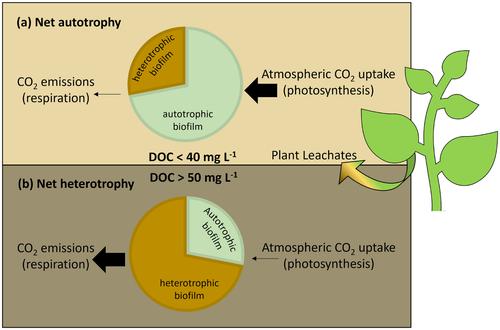
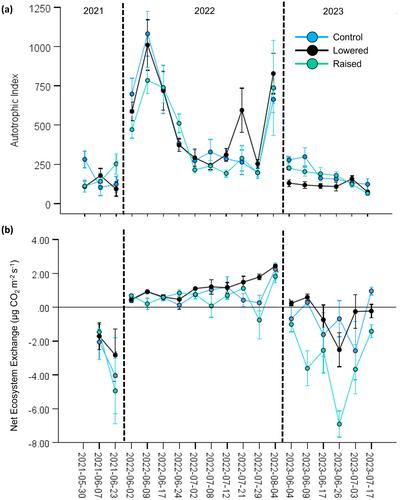
To better understand linkages between hydrology and ecosystem carbon flux in northern aquatic ecosystems, we evaluated the relationship between plant communities, biofilm development, and carbon dioxide (CO2) exchange following long-term changes in hydrology in an Alaskan fen. We quantified seasonal variation in biofilm composition and CO2 exchange in response to lowered and raised water table position (relative to a control) during years with varying levels of background dissolved organic carbon (DOC). We then used nutrient-diffusing substrates (NDS) to evaluate cause–effect relationships between changes in plant subsidies (i.e., leachates) and biofilm composition among water table treatments. We found that background DOC concentration determined whether plant subsidies promoted net autotrophy or heterotrophy on NDS. In conditions where background DOC was ≤ 40 mg L−1, plant subsidies promoted an autotrophic biofilm. Conversely, when background DOC concentration was ≥ 50 mg L−1, plant subsidies promoted heterotrophy. Greater light attenuation associated with elevated levels of DOC may have overwhelmed the stimulatory effect of nutrients on autotrophic microbes by constraining photosynthesis while simultaneously allowing heterotrophs to outcompete autotrophs for available nutrients. At the ecosystem level, conditions that favored an autotrophic biofilm resulted in net CO2 uptake among all water table treatments, whereas the site was a net source of CO2 to the atmosphere in conditions that supported greater heterotrophy. Taken together, these findings show that hydrologic history interacts with changes in dominant plant functional groups to alter biofilm composition, which has consequences for ecosystem CO2 exchange.
期刊介绍:
Global Change Biology is an environmental change journal committed to shaping the future and addressing the world's most pressing challenges, including sustainability, climate change, environmental protection, food and water safety, and global health.
Dedicated to fostering a profound understanding of the impacts of global change on biological systems and offering innovative solutions, the journal publishes a diverse range of content, including primary research articles, technical advances, research reviews, reports, opinions, perspectives, commentaries, and letters. Starting with the 2024 volume, Global Change Biology will transition to an online-only format, enhancing accessibility and contributing to the evolution of scholarly communication.




 京公网安备 11010802042870号
京ICP备2023020795号-1
京公网安备 11010802042870号
京ICP备2023020795号-1

 分享
分享
 求助内容:
求助内容: 应助结果提醒方式:
 扫码关注我们
