{"title":"中外预防医学合作项目案例学习的调查与实施。","authors":"Zhipeng Liu, Guanqiong Na, Lihua Liu, Sicong Tian, Yujuan Shan","doi":"10.1186/s12909-024-06372-4","DOIUrl":null,"url":null,"abstract":"<p><strong>Background: </strong>The current objective of preventive medicine reform is to guarantee that clinical medical students possess a comprehensive understanding of preventive medicine concepts, knowledge, and skills. Previously, case-based learning (CBL) was mostly employed to reform the clinical medicine curriculum, but there was a lack of reform in preventive medicine for clinical students in Sino-foreign joint training programs. The aim of this study was to investigate the impact of case-based learning in the Sino-foreign joint program of preventive medicine.</p><p><strong>Methods: </strong>A total of 79 clinical medical students from the Sino-foreign joint program at Wenzhou Medical University were selected as participants to engage in 10 case-based learning sessions. The effectiveness of the instruction was assessed by analyzing the final exam scores and questionnaire responses, which encompassed instructor evaluation, self-assessment, and course learning effectiveness evaluation (CLEE).</p><p><strong>Results: </strong>In contrast to the traditional approach, which yielded a final score of 69.2, the case-based students achieved an average of 77.62. The results of instructor evaluation showed that students' academic performance, problem-solving capabilities, research cooperation and communication, and learning attitude all improved significantly following case-based learning (P < 0.05). The self-assessment scores for all five case discussion courses exceeded 75 points, suggesting that students believed their overall competence had increased significantly. The CLEE demonstrated that CBL had a positive impact on students' learning and was highly advantageous for students.</p><p><strong>Conclusions: </strong>It is deserving of active promotion in medical education reform that case-based learning can enhance students' comprehensive quality and classroom participation. Further research is required to ascertain whether it can replace traditional teaching methods.</p><p><strong>Trial registration: </strong>Not clinical trial.</p>","PeriodicalId":51234,"journal":{"name":"BMC Medical Education","volume":"24 1","pages":"1390"},"PeriodicalIF":4.2000,"publicationDate":"2024-11-28","publicationTypes":"Journal Article","fieldsOfStudy":null,"isOpenAccess":false,"openAccessPdf":"https://www.ncbi.nlm.nih.gov/pmc/articles/PMC11605937/pdf/","citationCount":"0","resultStr":"{\"title\":\"Investigation and implementation of case-based learning in the sino-foreign joint program of preventive medicine.\",\"authors\":\"Zhipeng Liu, Guanqiong Na, Lihua Liu, Sicong Tian, Yujuan Shan\",\"doi\":\"10.1186/s12909-024-06372-4\",\"DOIUrl\":null,\"url\":null,\"abstract\":\"<p><strong>Background: </strong>The current objective of preventive medicine reform is to guarantee that clinical medical students possess a comprehensive understanding of preventive medicine concepts, knowledge, and skills. Previously, case-based learning (CBL) was mostly employed to reform the clinical medicine curriculum, but there was a lack of reform in preventive medicine for clinical students in Sino-foreign joint training programs. The aim of this study was to investigate the impact of case-based learning in the Sino-foreign joint program of preventive medicine.</p><p><strong>Methods: </strong>A total of 79 clinical medical students from the Sino-foreign joint program at Wenzhou Medical University were selected as participants to engage in 10 case-based learning sessions. The effectiveness of the instruction was assessed by analyzing the final exam scores and questionnaire responses, which encompassed instructor evaluation, self-assessment, and course learning effectiveness evaluation (CLEE).</p><p><strong>Results: </strong>In contrast to the traditional approach, which yielded a final score of 69.2, the case-based students achieved an average of 77.62. The results of instructor evaluation showed that students' academic performance, problem-solving capabilities, research cooperation and communication, and learning attitude all improved significantly following case-based learning (P < 0.05). The self-assessment scores for all five case discussion courses exceeded 75 points, suggesting that students believed their overall competence had increased significantly. The CLEE demonstrated that CBL had a positive impact on students' learning and was highly advantageous for students.</p><p><strong>Conclusions: </strong>It is deserving of active promotion in medical education reform that case-based learning can enhance students' comprehensive quality and classroom participation. Further research is required to ascertain whether it can replace traditional teaching methods.</p><p><strong>Trial registration: </strong>Not clinical trial.</p>\",\"PeriodicalId\":51234,\"journal\":{\"name\":\"BMC Medical Education\",\"volume\":\"24 1\",\"pages\":\"1390\"},\"PeriodicalIF\":4.2000,\"publicationDate\":\"2024-11-28\",\"publicationTypes\":\"Journal Article\",\"fieldsOfStudy\":null,\"isOpenAccess\":false,\"openAccessPdf\":\"https://www.ncbi.nlm.nih.gov/pmc/articles/PMC11605937/pdf/\",\"citationCount\":\"0\",\"resultStr\":null,\"platform\":\"Semanticscholar\",\"paperid\":null,\"PeriodicalName\":\"BMC Medical Education\",\"FirstCategoryId\":\"3\",\"ListUrlMain\":\"https://doi.org/10.1186/s12909-024-06372-4\",\"RegionNum\":2,\"RegionCategory\":\"医学\",\"ArticlePicture\":[],\"TitleCN\":null,\"AbstractTextCN\":null,\"PMCID\":null,\"EPubDate\":\"\",\"PubModel\":\"\",\"JCR\":\"Q1\",\"JCRName\":\"EDUCATION & EDUCATIONAL RESEARCH\",\"Score\":null,\"Total\":0}","platform":"Semanticscholar","paperid":null,"PeriodicalName":"BMC Medical Education","FirstCategoryId":"3","ListUrlMain":"https://doi.org/10.1186/s12909-024-06372-4","RegionNum":2,"RegionCategory":"医学","ArticlePicture":[],"TitleCN":null,"AbstractTextCN":null,"PMCID":null,"EPubDate":"","PubModel":"","JCR":"Q1","JCRName":"EDUCATION & EDUCATIONAL RESEARCH","Score":null,"Total":0}
Investigation and implementation of case-based learning in the sino-foreign joint program of preventive medicine.
Background: The current objective of preventive medicine reform is to guarantee that clinical medical students possess a comprehensive understanding of preventive medicine concepts, knowledge, and skills. Previously, case-based learning (CBL) was mostly employed to reform the clinical medicine curriculum, but there was a lack of reform in preventive medicine for clinical students in Sino-foreign joint training programs. The aim of this study was to investigate the impact of case-based learning in the Sino-foreign joint program of preventive medicine.
Methods: A total of 79 clinical medical students from the Sino-foreign joint program at Wenzhou Medical University were selected as participants to engage in 10 case-based learning sessions. The effectiveness of the instruction was assessed by analyzing the final exam scores and questionnaire responses, which encompassed instructor evaluation, self-assessment, and course learning effectiveness evaluation (CLEE).
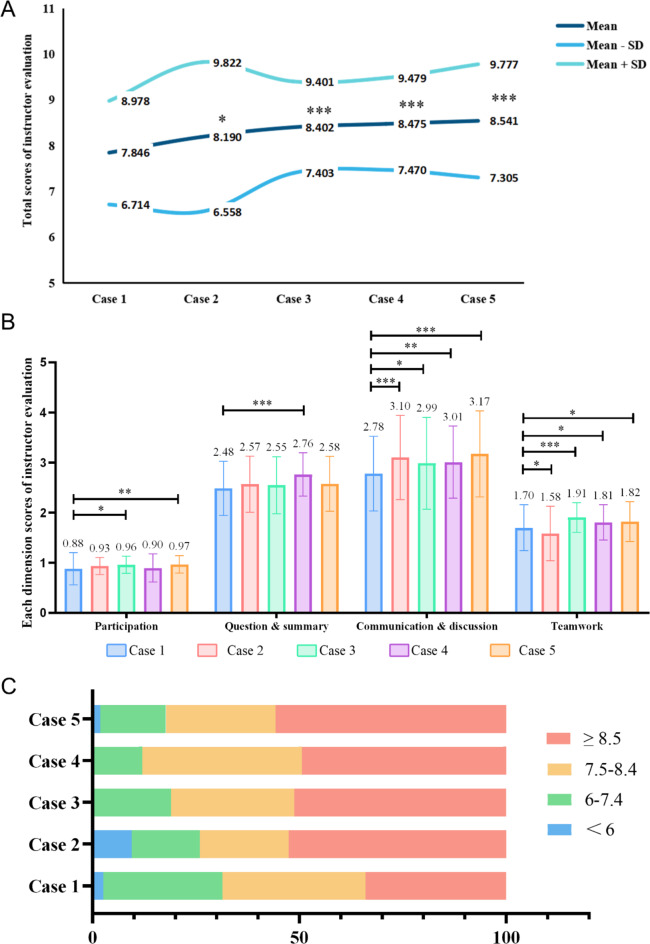
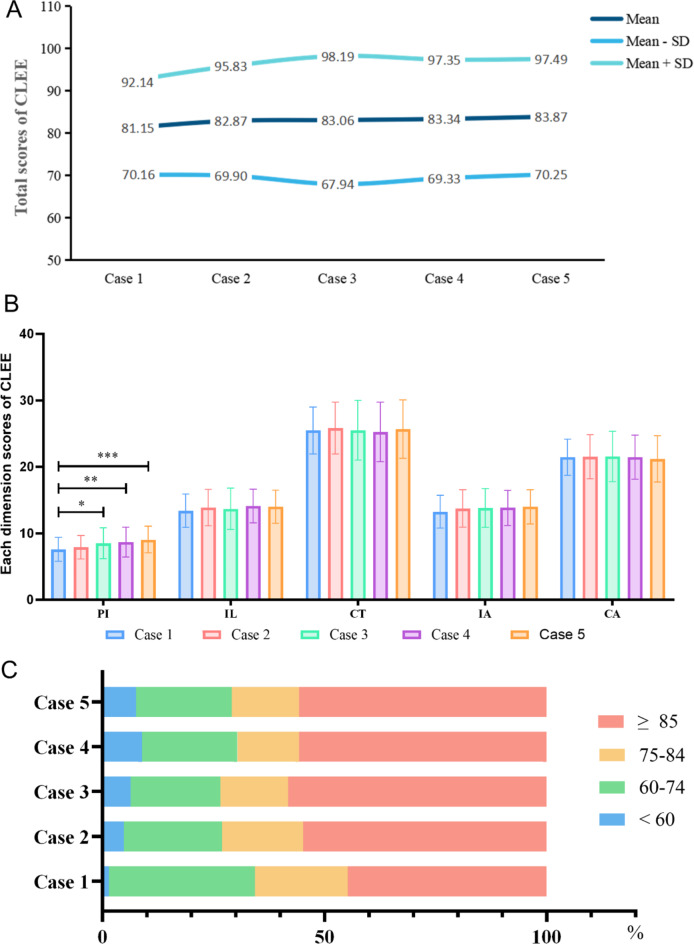
Results: In contrast to the traditional approach, which yielded a final score of 69.2, the case-based students achieved an average of 77.62. The results of instructor evaluation showed that students' academic performance, problem-solving capabilities, research cooperation and communication, and learning attitude all improved significantly following case-based learning (P < 0.05). The self-assessment scores for all five case discussion courses exceeded 75 points, suggesting that students believed their overall competence had increased significantly. The CLEE demonstrated that CBL had a positive impact on students' learning and was highly advantageous for students.
Conclusions: It is deserving of active promotion in medical education reform that case-based learning can enhance students' comprehensive quality and classroom participation. Further research is required to ascertain whether it can replace traditional teaching methods.
期刊介绍:
BMC Medical Education is an open access journal publishing original peer-reviewed research articles in relation to the training of healthcare professionals, including undergraduate, postgraduate, and continuing education. The journal has a special focus on curriculum development, evaluations of performance, assessment of training needs and evidence-based medicine.





 京公网安备 11010802042870号
京ICP备2023020795号-1
京公网安备 11010802042870号
京ICP备2023020795号-1

 分享
分享
 求助内容:
求助内容: 应助结果提醒方式:
 扫码关注我们
